
When to replace an AC unit in Owensboro, KY

Get matched with a pro who works on air conditioners in Daviess County.

Match me with a pro

Most air conditioners last 12 to 15 years, and in Owensboro summers that run hot and sticky from May into September, your system logs long hours every one of those years. If yours is in that range and the repair bill is climbing, replacing it usually makes more sense than fixing it again. A unit that cycles constantly, struggles to keep the house cool on the muggy days, or needs a part replaced every summer is telling you it's near the end. R-22 refrigerant is another sign: if your system still uses it, repairs get expensive fast since that refrigerant is no longer produced. Age combined with a failing part, rather than age alone, is usually what decides it. A newer, properly sized system will handle a Daviess County summer with less strain and keep your power bill more predictable. If your AC is old and struggling now, the next hot stretch will only push it harder.

An outdoor air conditioning condenser unit on a concrete pad beside a house with horizontal lap siding, with a gray electrical disconnect box and conduit on the wall, mulch bed and shrub to the right, and mown grass in the foreground.

Running the way it should

A condenser that's doing its job sits clean on its pad, coils clear, nothing stacked around it. It cycles on, cools the house, and shuts off. If yours still looks like this and the house cools evenly, repair is worth asking about before replacement.


An outdoor air conditioning condenser unit on a concrete pad beside a house with light blue horizontal siding, with a shrub to the left and a conduit and disconnect box on the wall to the right.

Signs it's past its best

Coils caked in dust block airflow and make the unit work harder to move the same heat out of the house. Paired with an aging system, that extra strain is often what turns a repair call into a replacement conversation.

An older woman with gray hair in a cream knit sweater sits under a blanket on a sofa by a window, looking outside toward yellow-leaved trees, with a lamp, shelves and an armchair in the room behind her.
A gray-haired woman in a chunky knit sweater sits in an armchair with a blanket, looking out a window at yellow autumn foliage, with bookshelves and a potted plant behind her.
A gray-haired woman in a navy sweater sits in an armchair with a knit blanket beside a window, looking out at yellow autumn foliage, with a dining table and houseplant in the room behind her.
A gray-haired woman in a gray cowl-neck sweater sits in an armchair with a blanket, looking out a dark-framed window toward yellow autumn trees.

Why age catches up with it

A compressor that has run every muggy Owensboro summer since it was installed has put in thousands of hours more than one a few years newer. The oil inside thins, the windings wear, and the refrigerant charge that used to hold steady starts to drop a little each season. None of that shows up as a single breakdown. It shows up as the unit running longer to hit the same temperature and the power bill creeping up along with it. By year twelve or thirteen, that wear is doing the damage, not any one part failing.

What a repair bill is telling you

R-22 systems cost more to service now because that refrigerant is no longer made, and a contractor pricing a recharge on one will tell you that straight. On any system, once a repair quote starts running a third or more of what a new unit costs, it is rarely the last repair that unit needs. A compressor or coil failure on a system already past 12 years is usually the point where paying again next summer stops making sense compared to paying once for a new one.

A woman in a cream knit sweater sits in an armchair with her eyes closed near a window showing yellow autumn foliage, with a mug on a round wooden side table beside her.
A gray-haired man with a beard in a blue button-placket shirt reclines on a couch with his eyes closed, beside a sunlit window with a green plant.

How Your AC Actually Cools

  • The outdoor unit pulls heat from inside the house and the refrigerant carries it out through the coil.
  • A compressor that can't build enough pressure will still run, but it takes longer to pull the house down to temperature.
  • Low refrigerant doesn't get used up like fuel; if the level has dropped, something in the line set or coil is leaking.
  • The condenser fan has one job, moving outside air across the coil so the heat in the refrigerant has somewhere to go.
  • A system that short cycles, shutting off a few minutes after it starts, is often reacting to a dirty coil or a failing part rather than the thermostat.
  • Warm air at the vents with the unit running outside usually points to the refrigerant side, not the ductwork.

Your air conditioner doesn't make cold air. It moves heat from inside your house to the outside, and the refrigerant is what carries it. Indoors, that refrigerant absorbs heat from the air passing over the evaporator coil. It travels out to the condenser, and the outdoor fan blows air across that coil so the heat has somewhere to go, into the Owensboro air instead of your living room. The compressor is what keeps the refrigerant moving and pressurized enough for this whole exchange to work. As it ages, it can still run, it just takes longer to get the house down to temperature, and you'll notice it staying on longer without the house feeling any cooler.

None of this works if the refrigerant charge is off. Unlike fuel, refrigerant isn't consumed as the system runs. If it's low, it's low because it's leaking out somewhere in the line set or the coil itself, and that's a problem that gets worse, not one that fixes itself with a top-off.

Warm air blowing from the vents while the outdoor unit is clearly running is usually this same refrigerant side acting up, not a duct problem. And if the system shuts off a few minutes after starting and kicks back on repeatedly, that short cycling is more often a dirty coil or a part on its way out than anything to do with the thermostat setting.

A gray outdoor air conditioning condenser unit on a concrete pad beside a house with horizontal siding and a stone veneer base, with refrigerant line and electrical disconnect box on the wall and flowering shrubs to the left.
Clean coil, clear airflow, and a quiet pad are what a unit still worth repairing looks like.
An outdoor air conditioner condenser unit on a concrete pad beside a house with light gray horizontal siding, with mulch and green shrubs on either side and a concrete walkway in the foreground.
Fins packed with dirt and a casing worn down like this are a sign the next repair may not be the last one.

Is your AC telling you it's done?

You might notice the house takes longer to cool down after you've been out, or the air coming from the vents isn't as cold as it used to be on a 90-degree afternoon. Maybe the unit runs almost nonstop through July and August and your power bill shows it. Some units get loud, a rattle or a hum that wasn't there before. Others leak water near the indoor coil or trip the breaker when they try to start. If you're topping off refrigerant more than once, the coil or lines likely have a leak that will keep draining your wallet. Left alone, a struggling system can run up your electric bill all summer and still leave parts of the house warmer than they should be.

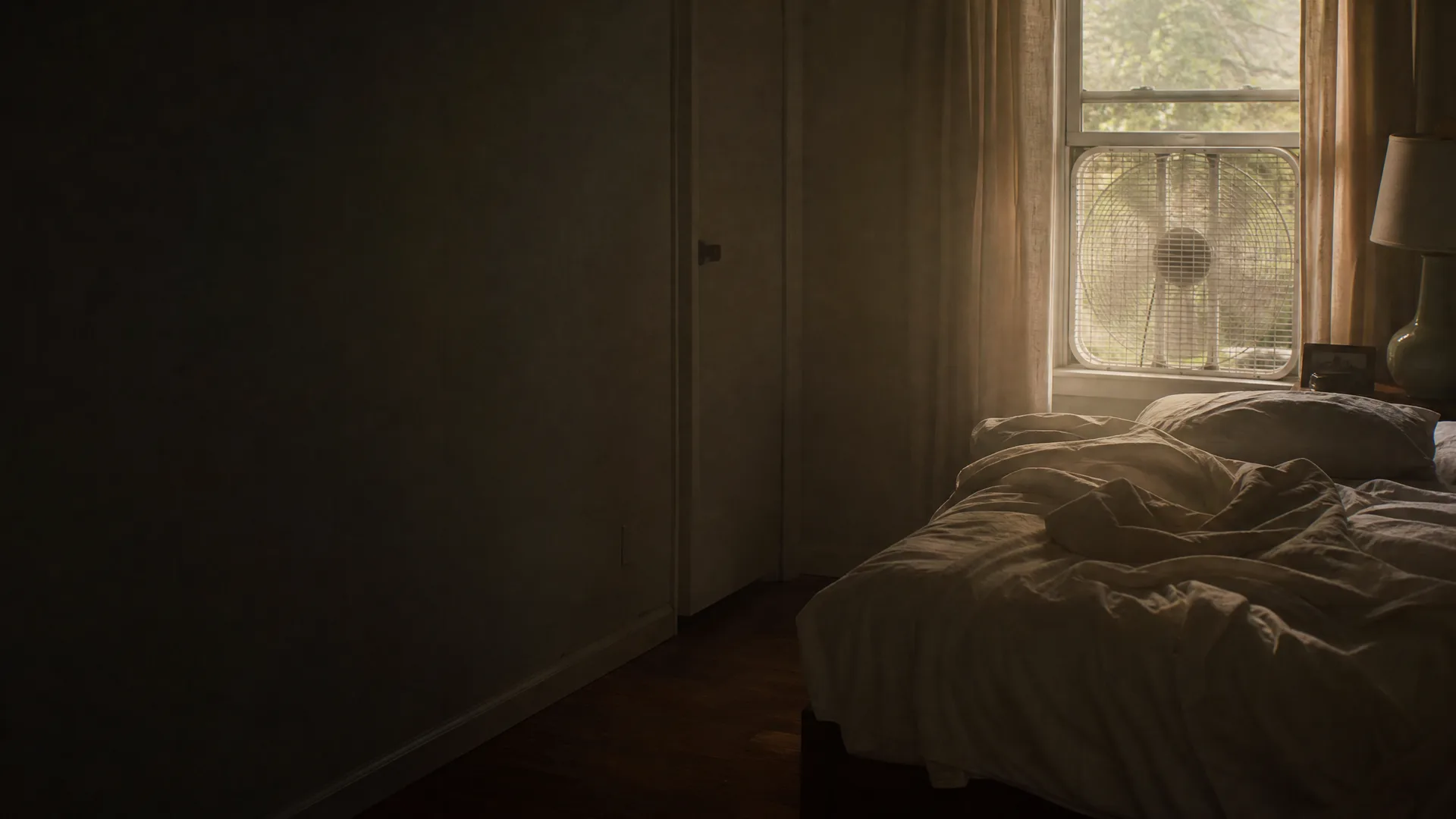
A dim bedroom with an unmade bed beside a window holding a box fan, with sheer curtains, a lamp at right and a large blank wall at left.

It's past nine and still ninety upstairs. The box fan in the window just pushes the same warm air around the room. You've got a sheet kicked to the foot of the bed and the window cracked, but the air coming in off the street isn't any cooler than what's already in here. Down the hall the unit kicks on again, you can hear it through the floor, and you know it's been running most of the evening already. You lie there doing the math on how many hours of sleep you'll get before it's light out and this starts over.

Get matched with an air conditioner pro in Daviess County

One request ends the search for an air conditioner installer.

It costs nothing to send, and you don't have to hire anyone.

A two-story cream-colored house with horizontal siding and a gray hipped roof, flanked by large green trees and shrubs, with a concrete walkway crossing a lawn to a wet street in the foreground.

Summer air in Daviess County carries a dew point that averages 67°F across June, July and August, which is the sticky, heavy kind of air that makes a 90-degree day feel worse than the thermometer says. Your air conditioner has to pull that moisture out of the house before the house feels cool, not just drop the temperature. That's extra work on top of the heat itself, and it's why the system can run long stretches and still leave the air inside feeling damp. A unit nearing the end of its life struggles more with this than a newer one, and you'll notice it first as a house that cools slow and still feels clammy.

NASA POWER T2MDEW

Repair It or Replace It

Repair

  • A single part failure, like a capacitor or a contactor, is a straightforward fix that doesn't call the rest of the system into question.
  • If the unit is under 10 years old and this is its first real breakdown, paying for the repair usually costs less than a new install.
  • A system still under warranty can mean the part itself is covered, so the repair bill is only labor.
  • If the compressor still builds pressure and the coils are clean, the rest of the system has life left to give.
  • One repair bill, even a few hundred dollars, is still less than financing a full replacement this year.

Replace

  • A unit past 12 to 15 years old has likely put in more summers than it has left, and the next failure could come mid-August.
  • Repeated repair bills in the same year or two add up fast and start to rival what a new unit would have cost outright.
  • Older units often ran on refrigerant that's harder to find and more expensive by the pound, so a leak gets costlier to fix every year.
  • If the compressor is weak and the house won't cool down on a 90-degree day no matter how long it runs, that's the core of the system failing, not a part around it.
  • A new system is sized and rated for how Owensboro summers run, which means fewer surprise repairs the first several years.
A gray outdoor air conditioner condenser unit on a concrete pad beside a house with horizontal siding and a light stucco wall, with a disconnect box and refrigerant lines on the wall and a shrub and mulch bed at left.

Keep paying for repairs

A unit still under ten years old that's had one part fail and nothing else wrong is usually worth fixing. Parts cost less than a new system, and if the compressor is sound, a new capacitor or contactor gets you back to full cooling the same day. Ask what else is showing wear before you commit, but a single clean failure on a younger unit is a reasonable bet.

A gray outdoor air conditioning condenser unit on a concrete pad surrounded by gravel, next to a white horizontal-lap-sided house wall with an electrical box and conduit, against a blank white background on the left.

Put the money into new

A unit past 12 years that's lost a capacitor, then a fan motor, then started short cycling is telling you the next part isn't far behind. Once the compressor itself is weakening, no single repair fixes the pattern. Replacing it gets you a system sized and charged correctly for Daviess County summers instead of one limping through August on borrowed time.

Cooling runs May through September

Five months of cooling a year is enough to wear a system down faster than one that only runs now and then. Every May through September day it works adds to the hours on the compressor, and those hours are what age it, not the calendar on the wall.

NOAA nClimDiv 1991-2020

A weathered outdoor air conditioning condenser unit on a concrete pad beside a house with light horizontal siding, an electrical disconnect box and conduit on the wall, and mulched soil on either side.
Before you get your air conditioner installation
A gray outdoor air conditioner condenser unit on a concrete pad beside a house with horizontal vinyl siding, surrounded by mulch, flowering shrubs, and lawn.
After you get your air conditioner installation

Repair

A single failed part on a system that's still cooling the house fine the rest of the time is worth fixing, especially if the unit is under 10 years old.

Find my pro

Replace

Multiple repairs in a couple of years, or a compressor that's struggling, usually means the next fix is just a delay before the bigger expense.

Find my pro
A man in a dark blue shirt stands in an open front doorway of a stucco and wood-clad house, facing a blond woman seen from behind in the foreground on a stone walkway.

Where that leaves you

If your unit is in that 12 to 15 year range, the compressor has worked, and the repairs keep stacking up, replacing it is the straight path forward. If it's younger and this is its first real problem, fixing it is still the right call. The age and the repair history together tell you which side you're on, not just the calendar.

Figuring out which one fits your situation, and finding someone to size a new system right for your house, is its own job. Send in the form and a contractor who handles installations in Daviess County will reach out and go over what you've got. That part stops being something you have to chase down on your own.

Interior corner of a living room with a beige upholstered sofa and dark cushion in the foreground, a ceramic vase of leafy branches on a dark side table by a curtained window, a framed picture on the wall, and a wood-surround fireplace at right.
An outdoor air conditioner condenser unit sits on a concrete pad beside a house with horizontal siding and stone veneer, next to mulch, shrubs, and grass.

Matched to your air conditioner job

New system or replacementCentral ACDaviess County, KY
Step 1 of 2

What ZIP code is the job in?