








AC can't keep up on hot days in Louisville, KY

RepairCentral ACJefferson County, KY
Step 1 of 2

What ZIP code is the job in?

When your AC can't keep up on a hot day in Louisville, the system is running but losing ground against heat and humidity it wasn't sized or able to handle. Most of the time the unit is low on refrigerant from a slow leak, or the outdoor coil is caked with dirt and can't shed heat the way it needs to, or the system was always a size too small for the house and just holds steady instead of catching up once it falls behind. A clogged filter or blocked return can do the same thing by starving the system of airflow. None of these get better on their own, and running the system harder only pushes a struggling compressor closer to failing outright. The fix depends on which of these it is, and that takes someone checking refrigerant charge, airflow, and the coil itself rather than guessing.

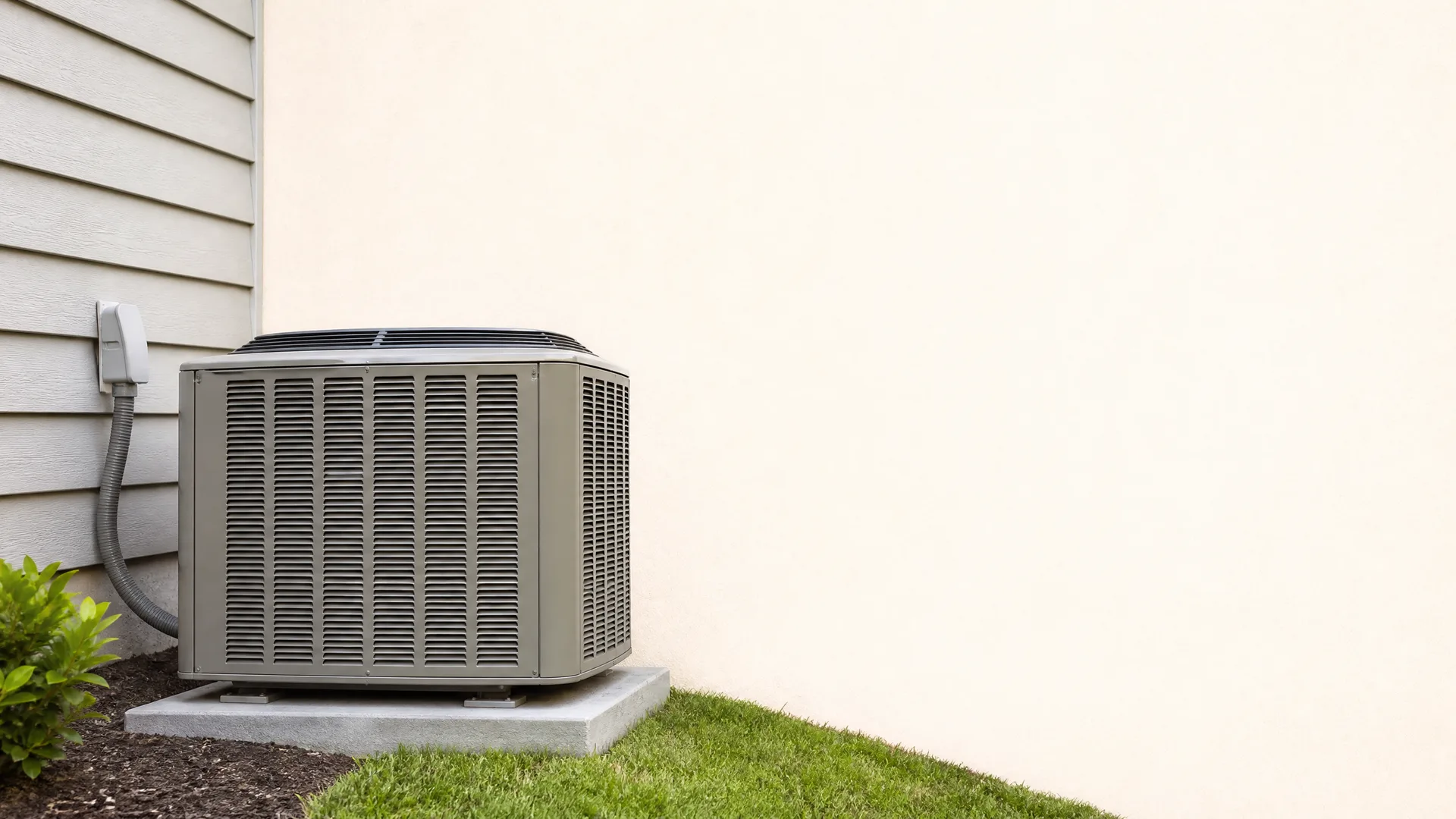
An outdoor air conditioning condenser unit on a concrete pad at the corner of a house, next to vinyl siding and a plain light-colored wall, with grass and a mulch bed in the foreground.

Why humidity makes it worse

Your AC has to pull moisture out of the air before it can cool it. On a muggy Louisville afternoon that takes real work, and a system already low on refrigerant or fighting a dirty coil can't do both jobs at once. Cooling drops off first. You'll notice the house feels clammy even when the thermostat says it's close to the set temperature.

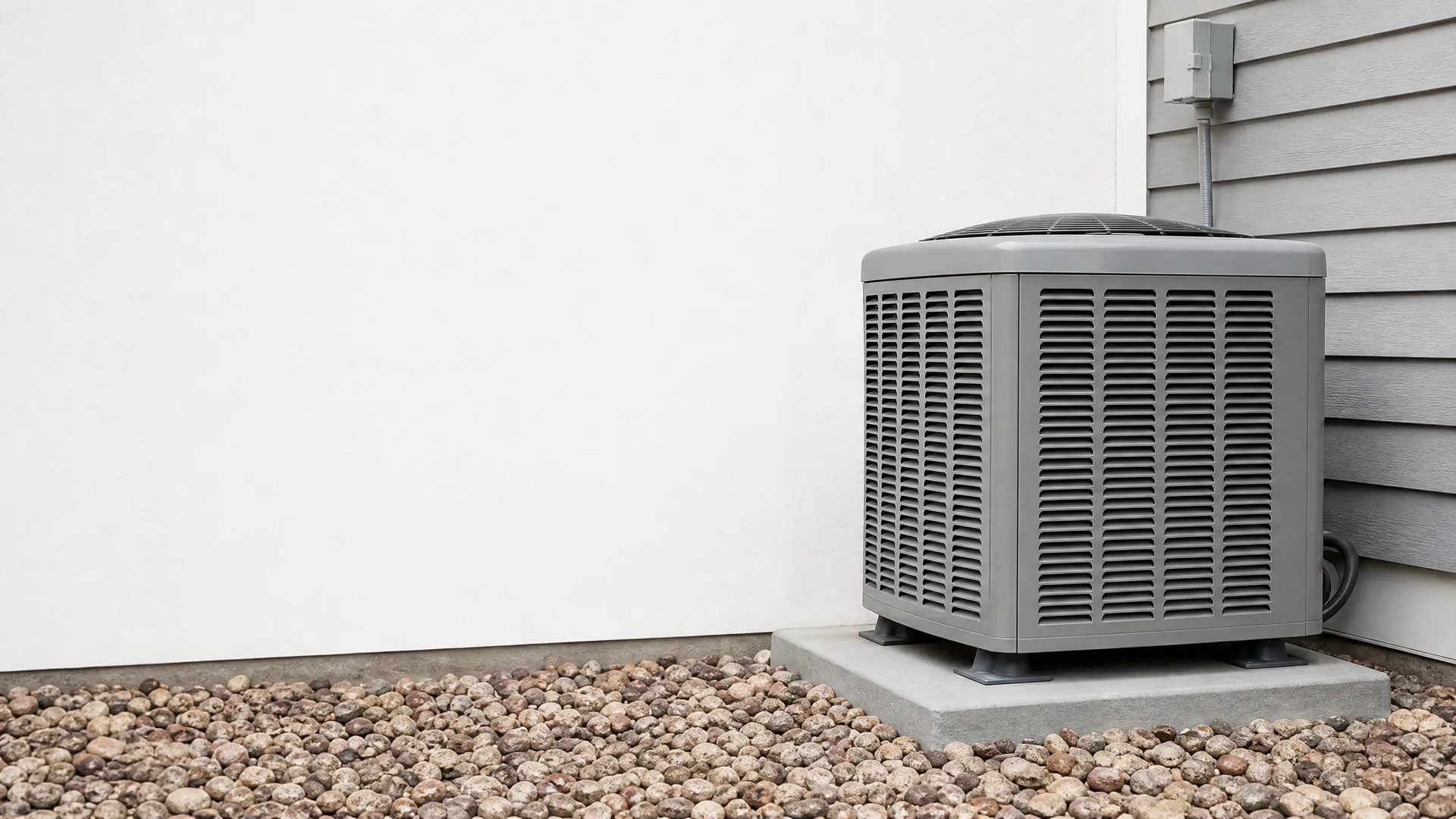
A gray outdoor air conditioning condenser unit sits on a concrete pad beside a white stucco wall and gray horizontal siding, surrounded by rounded landscaping gravel, with an electrical disconnect box mounted on the siding above.

What the outdoor unit needs

The outdoor coil has to shed heat into the air around it, and it can only do that if air moves freely through the fins. Grass clippings, cottonwood seed, and leaves packed against the cabinet block that airflow. On a 95 degree day in Jefferson County, a coil that can't dump heat fast enough leaves the whole system working harder for less cooling inside.

Cooling runs May through September

Five months of cooling is a long stretch to ask a struggling system to cover. From May into September, your AC barely gets a break to recover between hot stretches, so a slow leak or a dirty coil that seems minor in June is working against you by August.

NOAA nClimDiv 1991-2020

A woman in a cream cowl-neck sweater stands in a lamp-lit room looking out a window at a snow-covered yard with shrubs and bare trees at dusk.
A woman in a gray turtleneck sweater stands near a large window in a lamp-lit living room, looking out at falling snow and snow-covered conifers.
A woman in a chunky knit sweater stands by a large window looking out at snow-covered ground, with a dimly lit living room containing a gray sofa, framed artwork, shelves and table lamps behind her.
A woman in a gray turtleneck sweater stands in a dimly lit living room with a lamp and bookshelves, looking out a multi-pane window at falling snow.
An outdoor air conditioning condenser unit on a concrete pad beside a house with white horizontal lap siding, with an electrical disconnect box and insulated refrigerant line on the wall and a shrub over mulch to the right.
An AC like this holds its temperature on a 95 degree day because the coil is clean and the charge is full.
An outdoor air conditioner condenser unit on a concrete pad beside a house with light horizontal lap siding, with an electrical disconnect box and conduit on the wall behind it.
A unit this worn loses ground by mid-afternoon because age and weather have caught up with the coil and the lines.

How the cooling loop breaks down

  • A thermostat set to 72 only tells the system what to aim for, not how hard it has to work to get there.
  • The compressor moves refrigerant through the outdoor coil, the lines, and the indoor coil in a loop, and a low charge weakens every stage of that loop at once.
  • Warm air crosses the indoor coil and gives up heat to the refrigerant inside it, so a coil coated in dust can't pull as much heat out per pass.
  • The outdoor fan has to push that absorbed heat back into the outside air, and a blocked or dirty outdoor coil slows that release down.
  • A return air filter that's clogged starves the whole system of airflow before the air ever reaches the coil.
  • Once the indoor coil runs colder than it should, it can ice over, which cuts airflow even further and makes the problem worse.

The system is a loop, and every part of it depends on the part before it. Refrigerant runs from the compressor out to the outdoor unit, through the indoor coil, and back again, picking up heat inside the house and dumping it outside. Your thermostat just sets the target. It has no way of knowing if the loop behind it is actually able to hit that number on a 95 degree afternoon.

Start at the indoor coil. Air from your home passes over it and the refrigerant inside pulls the heat out. A coil that's picked up a layer of dust over time has less clean surface to do that work, so less heat comes out of the air with each pass. Before the air even reaches that coil, though, it has to get through the return filter, and a filter that's clogged chokes off airflow before cooling even starts.

On the other end, the outdoor coil has to release the heat that got pulled out of your house, and the outdoor fan is what pushes it into the outside air. Dirt or debris packed against that coil slows the release down, so heat backs up in the system instead of leaving it.

Low refrigerant touches every one of these stages at once, not just one. And once the indoor coil starts running colder than it should, ice can form on it, which blocks airflow further and drags the whole system down even more.

An outdoor air conditioning condenser unit on a concrete pad beside a house with white horizontal vinyl siding, with a gray electrical disconnect box and refrigerant lines on the wall behind it.
Before you get your air conditioner repair
A gray outdoor air conditioner condenser unit on a concrete pad beside a house with white horizontal siding and a brick foundation, with a wall-mounted disconnect box and conduit, and a green shrub with mulch at left.
After you get your air conditioner repair

Matched to your air conditioner job

A system that falls behind on a 95 degree day in Jefferson County usually isn't a mystery to someone who works on these units all summer. A low charge, a coil packed with cottonwood and cut grass, a contactor starting to wear, these show up the same way call after call, and a local tech has likely already seen your exact unit's failure a dozen times this season. That's worth more than a guess over the phone. Getting matched means one licensed contractor who works in your area takes on your case, not a handful of companies competing for the callback. They can look at your specific system, your ductwork, how it's held up through past summers, and tell you what's actually failing instead of what fails in general. With months of heat still ahead, a system that's losing ground now will keep losing ground, and the sooner someone who knows this equipment gets eyes on it, the less margin you lose on the next hot afternoon.

What you notice first

The air still feels thick even though the vents are blowing. You bump the thermostat down a couple degrees and nothing changes, or it takes until evening to catch up. Upstairs stays warmer than the rest of the house. Bedrooms feel clammy at night even with the unit running the whole time. Some homeowners notice the outdoor unit running nonstop through the afternoon without the house ever feeling done. None of this means the thermostat is wrong. It means the system is working hard and still losing the fight against the heat outside.


What it costs you

A system straining to keep up runs longer to do less, and that shows on the power bill even with Louisville's lower electric rates. A low charge or a dirty coil rarely fixes itself, so the gap between what you set the thermostat to and what the house actually feels like tends to grow as the summer goes on. Left alone through a full season of heat, the extra strain on the compressor and the lines can turn a minor repair into a bigger one, especially once temperatures stay in the 90s for days at a time.

A bearded man in a plaid flannel shirt sits indoors looking out a window at snow-covered trees, with a steaming mug on the sill and wooden kitchen shelves behind him.
A smiling man in a dark blue T-shirt sits on a light gray sofa in a living room with a wooden shelf and window behind him, with a laptop edge visible in the foreground.

A repair now

Cleaning the coil, adding refrigerant to the right charge, or swapping a worn contactor gets the unit back to holding its temperature through August afternoons.

Find a local pro

Waiting it out

The same unit keeps losing ground as the summer goes on, and whatever is wrong with it now still has to get fixed once the heat breaks.

Find a local pro
A woman in a gray sweater and jeans stands in an open wood front door of a white stucco house while a man in a dark jacket walks toward her on the entry path.

An AC that can't keep up has a reason, and a fix

A system that falls behind on a hot Jefferson County afternoon is doing it for a reason you can find and fix. A low charge, a dirty coil, a contactor on its way out, these are the usual answers, not a mystery you have to live with through September.

Getting matched means a local contractor who works on these units all summer long looks at your system specifically, not a general call center reading from a script. One contractor reaches out, someone who's seen what Louisville summers do to a coil or a charge and knows where to look first. You end up with an answer for your unit, not a guess.

Interior corner with sheer white curtains at a window, a brown upholstered sofa in the foreground, and a wooden multi-drawer cabinet holding a round ceramic vase with leafy branches.
A sunlit room corner with cream walls, white baseboard and window sill molding, a wood floor, and a dark wooden cabinet on the right holding a pale vase with leafy branches below a framed picture.
A round woven basket with a cream fringed throw draped over its rim sits in a corner on a wood floor, beside a dark wooden cabinet holding a stone vessel, with sunlight from a nearby window on the beige walls.
Interior corner of a room with a white-trimmed window and sill, beige walls, white baseboard molding, and a wood floor with sunlight falling across it; green foliage is blurred outside the window.
Interior corner of a room with cream walls, white baseboard molding, a window with a white sill showing blurred green foliage outside, and a wood plank floor lit by sunlight.
Sunlit interior corner showing a beige wall with a small crack above white baseboard molding, wood plank flooring, a patterned rug edge at lower left, and a window with sill at upper left.

Get matched with an air conditioner pro in Jefferson County

A licensed pro who repairs air conditioners in Jefferson County gets your request.

Get a licensed local pro

There's no charge for the request.