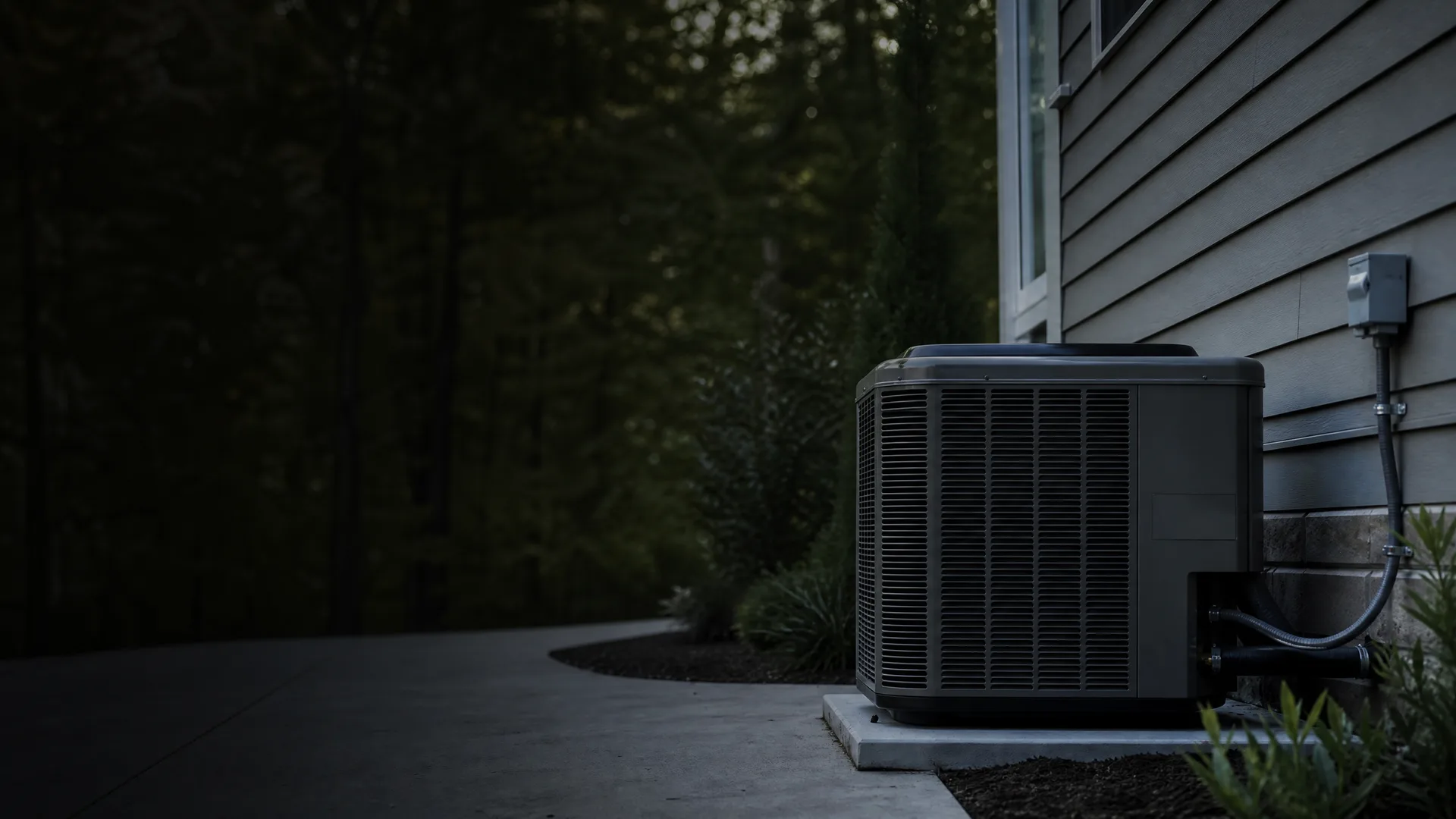
AC keeps tripping the breaker in Bowling Green, KY
One request and the search for a pro is handled.
A breaker that trips once might be a fluke. One that trips every time your AC kicks on is telling you something is wrong, and it will keep tripping until that's fixed. Running the unit on a breaker that keeps cutting out doesn't fix anything. It just delays the repair and risks the compressor.
In Bowling Green, that's not a problem you want hanging over a July afternoon. Summers here run long and stay sticky well into September, and an AC that won't stay on is a real problem, not an inconvenience you can put off.
A tripping breaker like this usually points to the compressor pulling too much current, a failing capacitor, a short in the wiring, or a condenser fan motor that's seized up. Some of those a homeowner can rule out by looking. Most of them need a meter and a trained eye to actually find.
That's the part that eats a weekend: calling around to find someone licensed who works on AC systems, explaining the breaker keeps tripping, getting put off until next week, then doing it again with the next company because the first one never called back. Warren County has contractors who do this work every summer, but finding one who's free and will actually show up takes its own kind of effort.
Send the form on this page and that search is done. You're not the one calling three more places or waiting on a callback that doesn't come. A licensed contractor gets your information and the problem you described, and from there it's on them to reach out and get it sorted. You've done your part already.
Kentucky summers don't leave much room for a system that keeps shutting itself off. The sooner that breaker issue gets looked at, the sooner the house cools back down and stays that way.
Why does my AC keep tripping the breaker?
You've reset the breaker more than once now, and it trips again as soon as the AC starts up or sometimes while it's already running. In Warren County summers that run hot and long, a few hours without cooling is more than an annoyance, and resetting the breaker over and over isn't a fix. Something in the system is pulling more current than that circuit is built to carry, and it's worth knowing what's actually behind it before you call anyone.
A failing part inside the unit is pulling too much current
Most of the time this comes down to the compressor or the capacitor that starts it. A compressor working harder than it should, a capacitor that's weakened, or a motor with a short in its windings all draw more amps than the breaker is rated for, so it trips to protect the wiring. A dirty condenser coil outside can push the compressor into that same overload, especially after a summer of running most days. Low refrigerant does it too, since the compressor strains trying to move it. None of these get better by resetting the breaker again. The part causing the draw needs to be found and replaced before the AC can run a full cycle without tripping it again.
Running the way it should
A unit that starts, runs, and holds the breaker is pulling the current it was built to pull. The pad is clear, the coil is clean, and nothing around it is blocking airflow. This is what cooling your house all summer without a fight looks like.
Drawing more than the breaker allows
Dirt packed into the coil grilles makes the compressor work harder to move the same heat, and that extra strain shows up as extra amperage. A breaker doing its job will cut power before that strain turns into a burnt wire or a failed compressor.
Describe your air conditioner job once, to one pro.
You only hire the pro if you want to.
What pulls extra current
A compressor that's failing draws more current than it should the moment it kicks on, and that's the load a breaker is built to catch. A capacitor that's weakened can't give the compressor the push it needs to start, so the motor pulls harder trying to get going. A fan motor with a bad bearing fights to turn and draws more current doing it. None of these show up by looking at the unit from across the yard. A contractor checks this with a meter, reading the actual draw against what the compressor and fan are rated for, not by guessing from how the unit sounds or how long it's been running.
Why the wire matters too
The breaker isn't only protecting the AC. It's sized to the wire running to it, and that wire has to be rated to carry what the unit pulls. If a breaker was swapped at some point, or the AC itself was replaced with a unit that draws more than the original, the breaker and the wire can end up mismatched to what's actually running through them now. A breaker that trips in that case is doing exactly what it's supposed to do. Finding out whether that's the issue, or whether the unit itself is the problem, is why this isn't something to keep resetting and hoping it holds.
How a breaker actually trips
A breaker trips when the current through it crosses the amp rating stamped on the handle, nothing fancier than that.
Most AC breakers are sized 20 to 60 amps depending on the unit, so the trip point is fixed and never drifts on its own.
The trip almost always lines up with the compressor's start, the single biggest current draw the circuit ever sees.
A breaker that's grown weak with age can trip under a load the unit has always pulled without issue before.
Double-pole breakers tie both legs together, so a fault on just one side still shuts off the whole circuit.
Wire sized too small for the run, or a connection that's loosened at the disconnect box, raises resistance and heat right along with the current.
A breaker is a simple switch built to open when current crosses the number stamped on its handle. There's no sensor reading your compressor or guessing at wear. It's measuring amps, and when they go over the line, it trips. That number is fixed from the day it's installed. It doesn't creep up or get more sensitive as the unit ages, which is why a breaker that's handled years of summers without issue can still be the thing that fails first.
Almost every trip happens the moment the compressor starts, not while it's running steady. Starting a compressor takes a hard pull of current, several times what it draws once it's up and spinning, and that spike is exactly what a breaker is built to watch for. If something in the circuit is already drawing more than it should, that start-up moment is where it shows.
The breaker itself can also be the problem rather than the messenger. Breakers wear with age and heat cycles, and one that's grown weak can trip under a load the same unit has pulled for years without tripping it before. On a 240-volt AC circuit, that's usually a double-pole breaker, which ties both legs together. A fault on just one leg still shuts down the whole circuit, not half of it. Loose wiring at the disconnect box or a wire run sized too small for the circuit adds resistance, and resistance means heat, which pushes current and temperature up together until something trips.
A unit like this starts up quiet and holds its breaker, because nothing around it is forcing the compressor to work harder than it should.
Dirt and dead leaves packed around the base choke airflow across the coil, and that's often what's pushing the amp draw past the trip point.
Warren County summers hold a dew point around 67°F through June, July and August, National Weather Service data shows. That's heavy, damp air, the kind that sits on you the moment you step outside. Your AC has to pull that moisture out of the air it's cooling, not just drop the temperature, and that extra work means the compressor runs longer and draws harder each time it starts. A unit already struggling with a weak capacitor or a dirty coil feels that load first, and a muggy stretch in July is exactly when a marginal breaker trip turns into one that happens every time the system kicks on.
NASA POWER T2MDEW
A breaker that keeps tripping isn't a breaker problem. It's the compressor, the capacitor, or something blocking the coil forcing the unit to pull more current than it was built to draw, and the breaker doing its job by cutting the power before that current does worse damage. Resetting it again won't change that. The fix is whichever part is causing the draw, found and replaced by someone who can test the unit under load and see which one it is. You could spend an evening searching for AC contractors around Bowling Green, calling a few, explaining the same thing about the breaker tripping to each one, then waiting on quotes to compare. Or you could send this and let that part be done for you, so the next call you get is from someone ready to look at the unit. Warren County summers don't leave much room for a cooling system that's down, and a breaker that trips on a hot afternoon is not something that waits well.
Let someone else find the pro
Explain the air conditioner problem once instead of to every shop in Warren County.