





A tabby cat rests on a made bed in a dark modern bedroom equipped with a wall-mounted split air conditioner.

Mini Split Installation in Owensboro, KY

Tell us about the job

Takes about a minute. No obligation.

New system or replacementMini-splitDaviess County, KY
Step 1 of 2

What ZIP code is the job in?

Ask what the contractor is basing the sizing on, not just the square footage but a real look at your windows, insulation and layout. A unit that's too big will cool the room fast then shut off, leaving the space clammy because it never ran long enough to pull moisture out of the air. Ask how many zones the system supports and whether each indoor head can be set on its own, since that matters if some rooms get more sun or stay closed off. Ask about the line set length and where the outdoor condenser will sit, because a longer run between units can affect how the system performs. Find out what the warranty covers on the compressor versus the labor, and whether it stays valid only if a certified installer handles the work.

7 months
October through April, your system heats
5 months
May through September, it cools
28°F
the average winter night it heats against
87°F
the average summer afternoon it cools against
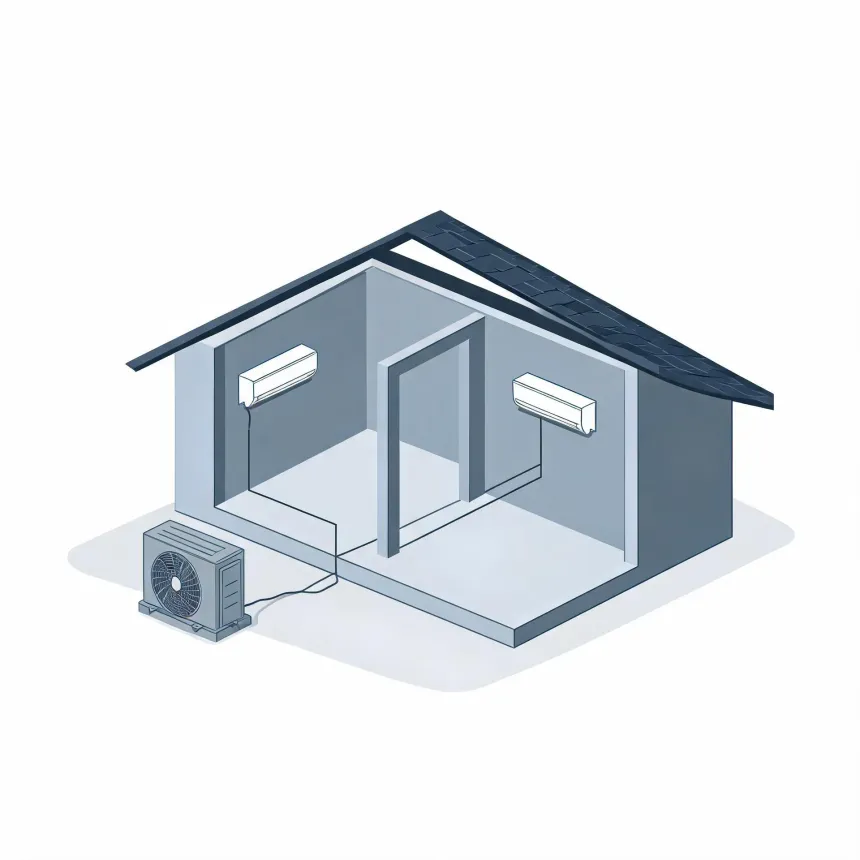
Isometric illustration of a cutaway house showing two wall-mounted indoor air conditioning units connected by lines to a single outdoor condenser unit on the ground outside.
Your system heats October through April and cools May through September.

NOAA nClimDiv, 1991–2020 normals

Owensboro runs air conditioning May through September, with afternoon highs averaging 87°F in June, July and August.

A mini split sized for this summer heat doesn't need to be bigger than that.

A normal size mini split handles Owensboro summers fine

Half the homes here were built by 1977
Cooling runs May through September
Summer afternoons average 87°F
What Owensboro homes heat with nowGas heats 62.8% of homes here, electricity heats most of the rest

Electricity in Kentucky runs about 12.79 cents per kilowatt-hour, well below what most of the country pays. That changes the math on which mini split to buy. A higher-efficiency model costs more up front and takes longer to earn that back when power is already cheap here. So the SEER2 number on the spec sheet matters less than whether the unit is sized right and holds up when it needs to run. Put the money toward a system that fits the space and a condenser built to keep working through a bad storm, not toward chasing the highest efficiency rating on the shelf.

Any system installed here has to clear a set efficiency floor

Daviess County falls in climate zone 4A, which asks real work of both heating and cooling. Any mini split installed here, ductless or not, has to meet 14.3 SEER2 for cooling and 7.5 HSPF2 for heating under the federal standard that took effect in 2023. That narrows the field before you even start comparing brands. A federal tax credit is available on qualifying systems, which is worth factoring into the decision now.

Find a contractor
A man in a cap, gray long-sleeve shirt and tan pants climbs concrete steps toward a dark green front door, carrying a worn canvas tool bag.
A white mini-split air conditioner outdoor condenser unit mounted on metal brackets against a beige stucco exterior wall, with a blue sky and scattered clouds in the background.

What makes one installation cost more than another

The quote difference between installers usually comes down to what's hidden in the walls, not what's sitting on the showroom floor. A single zone system with a short line set run is straightforward work. Add zones, and the installer has to run refrigerant lines and a condensate drain to each head, which means more penetrations through exterior walls and more time on the line hide to keep it looking clean. Where the condenser sits matters too. It needs a mounting pad or bracket, plus enough clearance for airflow and service access, and that takes planning on a tight lot. The electrical side counts as well, since the outdoor unit needs its own dedicated circuit and disconnect, and that job looks different depending on how far the panel is and how much capacity it has free. None of this shows up in a square footage number, but it's most of what separates a quick install from a long one.

Sizing comes from a load calculation, not a tape measure

A contractor works out the right size by walking the room and checking what adds or pulls heat from it. Window area matters, and which way those windows face. Wall and attic insulation matter too, along with ceiling height and what else nearby is throwing off heat. Square footage alone leaves out all of that. Rooms that look the same on paper can call for different size heads once you account for glass and sun.
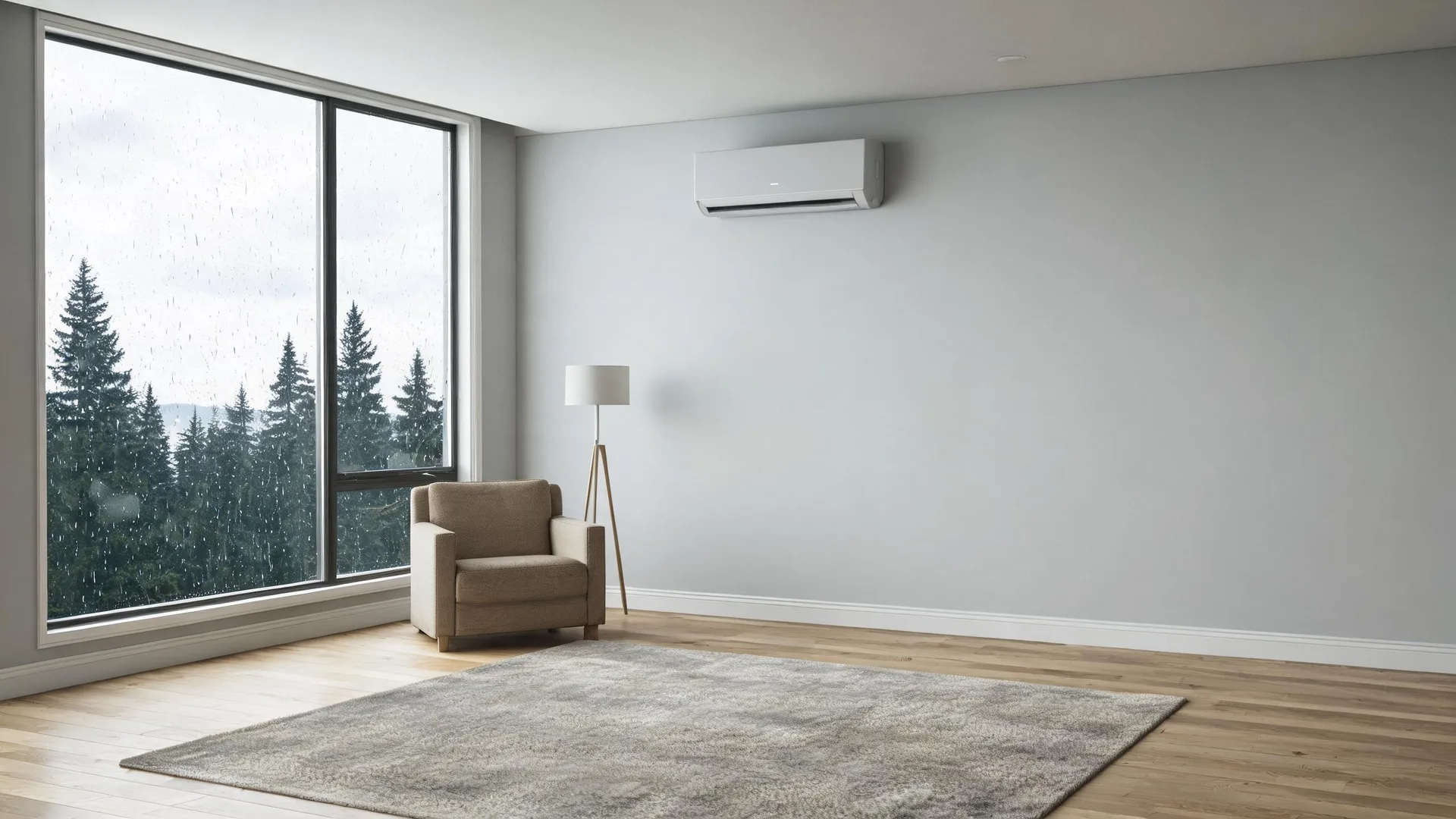
Oversized hits the thermostat and undersized never gets there

A head that's too big for the room cools the air fast and shuts off before it's run long enough to pull the moisture out. The room reads cold but still feels damp. One that's too small runs and runs trying to catch up and still falls short on the hardest days. Either way the system is fighting the room instead of matching it, and that fight wears on the compressor over time.

If you're replacing a central system, the old equipment doesn't just get unplugged and left. Refrigerant in the lines has to be recovered with a recovery machine before anything gets cut apart, since venting it to the air is illegal and any licensed contractor will handle it that way. Once the lines are clear, the old condenser, air handler and any ductwork being abandoned get hauled out, and the refrigerant lines and electrical whip serving the old unit get capped or removed. If you're switching from a ducted system to mini splits entirely, ask what happens to the ductwork still in the walls and attic. Leaving it in place is fine if it's sealed off, but open duct runs feeding nowhere can pull conditioned air where you don't want it going. Ask the installer to walk you through disposal and what gets left behind before the work starts, not after.

The SEER2 number is a ratio, cooling output divided by the power it takes to produce it, measured over a full season rather than at one single moment. A higher number means the compressor is doing more with less electricity, but it doesn't tell you how big a space it can handle or how well it'll hold up over the years. Systems with the same rating can still feel different in daily use depending on how well the ductless heads were matched to each room. The rating also assumes the system is sized and installed correctly. Put an efficient unit in the wrong size for the room, or run the line set further than it should go, and the real-world performance falls well short of what's on the label. The label is a starting point for comparing models, not a promise about what you'll see on your own system.