Running clean
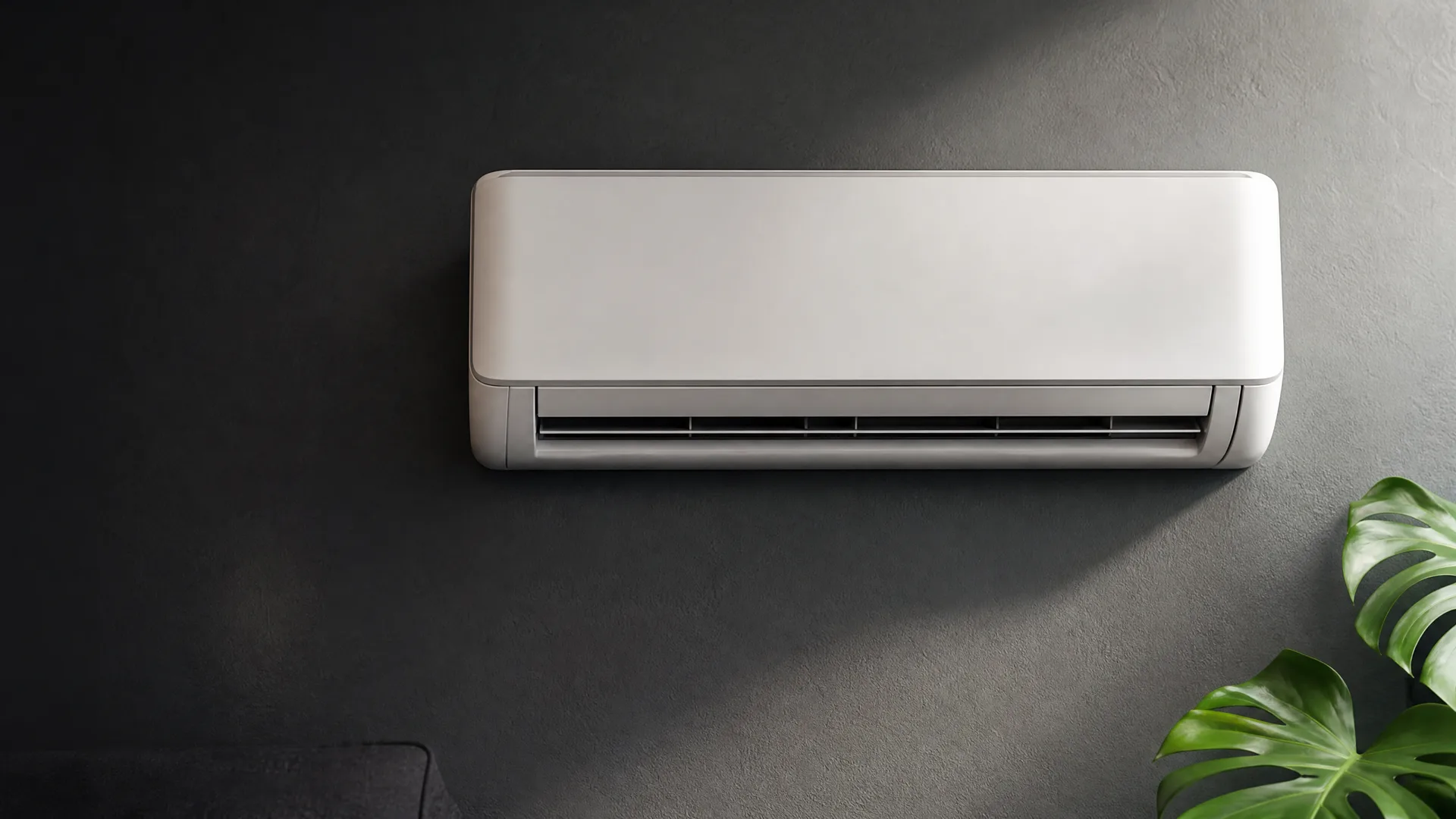
This is what a mini split should look like. Air moves freely across the coil behind that panel, condensation drains where it's supposed to, and the wall below stays dry. Nothing backs up because nothing's in the way.

Done looking for a mini split pro
Water pooling under your indoor unit or dripping from it usually means the condensate drain line is clogged or the line has come loose, though a dirty filter or a low refrigerant charge can cause it too. This page walks through why it happens and what it takes to stop. Once you send the form, finding someone to look at it is off your plate.
Hand it offThat water on the floor usually means the condensate drain line is clogged. Mini splits pull a lot of moisture out of the air, especially with how sticky summers get around Owensboro, and that water has to leave through a small drain line and hose. Algae and dirt build up in there over time and the line backs up, so the water finds another way out, usually down the front of the indoor unit or across your floor. A dirty filter can cause the same thing, because it lets the coil ice over, and when that ice melts it melts faster than the drain can handle. A low refrigerant charge does it too, for the same reason. None of these stop the unit from running, so you can have a wet floor for a while before anyone notices. Left alone, it can stain the wall or floor underneath or get into the drywall.


The indoor unit has no pump of its own for this. It relies on gravity, so the line has to run downhill the whole way to wherever it empties, whether that's a PVC stub outside or a condensate pump tucked near the unit. Either of those points can clog before the other does. Inside the line, algae and dust collect slowly, over months, until what was a clear path narrows down to a trickle. Once that happens, water backs up into the drain pan. Most mini splits have a float switch sitting in that pan, and when the water rises high enough, it shuts the system off rather than letting it overflow. That's often the first sign something's wrong, the unit just quits cooling. A line that sags somewhere along its run can hold water the same way a clog does, even with nothing actually blocking it. And if the insulation around the refrigerant lines has slipped or worn down, it can sweat enough to drip on its own, which looks a lot like a drain problem but isn't one.






Look at the wall below the unit first. A stain spreading across the drywall, paint starting to bubble, or a soft spot in the floor means that drip has been going on longer than you think. Check the line itself where it runs through the wall to outside. If it looks cracked or the water near the unit smells musty, algae has probably built up inside it. A towel under the unit that never seems to dry out, or water that shows up again within a day of wiping it, points to the same clog. Left alone, that water sitting against drywall or a wood sill can start to rot it, and standing water indoors is an easy place for mold to take hold.

This is what a mini split should look like. Air moves freely across the coil behind that panel, condensation drains where it's supposed to, and the wall below stays dry. Nothing backs up because nothing's in the way.

That buildup on top and in the vents isn't just dusty. It's the same grime that coats the coil inside, and dust on a wet coil turns to sludge that washes into the drain line. Once that line narrows, the water has nowhere to go but out.


The air around Owensboro holds a summer dew point that averages 67°F across June, July and August, per NOAA climate records for Daviess County. That's heavy, damp air, and it means your mini split is pulling more water out of the air than it would somewhere drier, for longer stretches at a time, since the moisture load barely lets up from June through August. More water moving through that drain line means more chances for algae and gunk to build up and slow the flow, so the clog that causes a leak shows up sooner here than it would in a place with drier summers. If yours starts dripping, it helps to have someone local who works on these systems all summer and already knows which line fittings clog first in this kind of air, and who you can reach directly instead of waiting on a string of callbacks.
NASA POWER T2MDEW
The pro who reaches out is licensed in Kentucky.
Asking costs nothing, and the choice to hire stays yours.
The drain line has to run downhill the whole way to wherever it empties outside. Even a short flat stretch, or a dip where the hose sags, gives water a place to sit instead of keep moving. Sitting water is where algae gets started, and that buildup narrows the line until it backs up into the unit. If the line was routed through a wall or along framing, a sagging section can happen anywhere along its length, not just near the indoor unit.
Mini split drain lines are narrow on purpose, usually around three quarters of an inch, since the pump or slope only has to move the water the coil actually pulls out of the air. Swapping in a wider line doesn't help if the slope is wrong or algae's already built up inside it. The fix is keeping that narrow path clear and sloped correctly, not making room for more water to sit in. A clear three quarter inch line moves water fine on its own.
Five months of cooling means five months of condensate running through that drain line without a break. A clog that starts in June has all of July and August to back up before anyone notices the floor or wall underneath.
NOAA nClimDiv 1991-2020
Ignore the leak and it keeps draining somewhere you can't see, into the drywall or the subfloor, until the stain or the soft spot shows up and the repair is bigger than a cleared line.
Clear the clog now and the fix stays small: a flushed line, a clean filter, water moving the way it's supposed to, and nothing behind the wall to worry about.
Cooling runs May through September
Cooling runs May through September
Heat runs October through April
Heat runs October through April
Power here costs 14.33 cents per kilowatt-hour
Power here costs 14.33 cents per kilowatt-hour
NOAA nClimDiv 1991-2020 · EIA-861 2025
Water on the floor or the wall under your mini split is almost never the compressor or the coil failing. It's a line that got clogged with algae or dust, or slipped loose from the fitting, so the condensate has nowhere to go but down the wrong side of the pan. That's true whether the unit is three years old or ten. The fix that matches that cause is small: clear the line, rinse or swap the filter, reseat the hose where it connects. Most leaks stop right there.
What makes this worth handling soon rather than later is what's still running through that line. Owensboro summers keep a mini split pulling moisture out of the air for months at a stretch, and a clog that starts quiet in July has August to turn into a stain on the drywall or a soft patch in the floor. The repair doesn't get harder because the unit is older. It gets harder because more water went through a line that wasn't draining.
Finding someone who knows this specific machine helps too. A contractor who works on mini splits around here all summer has already seen which models back up first and where the hose tends to pull loose, because they've cleared that same line in a dozen other houses on the same kind of system. You'll be connected with one of them, not a handful of companies calling at once, so the person who shows up already knows what to check first.
Hand off the search today
