
Running clean
This is a heat pump draining the way it should. The pad is dry, the line to the disconnect is secure, and nothing is pooling at the base. Water that collects inside leaves through the drain line without backing up anywhere.
You walked by your outdoor unit or your indoor air handler and found water where it shouldn't be. Maybe it's pooling near the unit, maybe it's dripping from a line, maybe you noticed a damp spot on the ceiling below an attic air handler. Either way, something is draining where it isn't supposed to, and you want to know whether this is a quick fix or a sign of something worse.
A heat pump pulls moisture out of the air it cools and sends that water down a condensate line. When the drain line clogs with algae or debris, the water backs up and finds another way out, often through the pan or the access panel. If the water shows up as a puddle after the unit has been running hard, the coil may have frozen over and is now thawing and draining faster than the pan can handle. With summers here running long and muggy, Owensboro heat pumps work through a lot of humid air, and that steady moisture load gives drain lines more chances to clog over a season than they'd get somewhere drier. Either cause is a repair, not something to wait out.





A heat pump's indoor coil pulls moisture out of the air it handles, same as it does running cooling through an Owensboro summer. That water drips into a pan and runs out through a drain line to the outside. In winter, the outdoor unit does the same thing in reverse during defrost cycles, melting the frost that builds up on the coil. Either way, the water has to go somewhere. When the path out is blocked or damaged, it backs up instead.

The condensate line runs downhill from the pan to wherever it empties outside, using gravity the whole way. If a section sags or the line was run with a low spot, water sits there instead of moving along, and algae builds up faster in standing water than in a line that drains clean. That's one reason the same unit can run fine for months and then start backing up with no change in the weather or how hard the system's working.
Winter nights average 28°F
Nights average 28°F here in December and January, so your outdoor unit is defrosting often, and every defrost cycle makes water that has to drain somewhere.
Heat runs October through April
Heat runs October through April here, about seven months, which is seven months of condensate and defrost water looking for a clear path out.
Cooling runs May through September
Cooling runs May through September, so the indoor coil is pulling moisture out of the air most of the year too, and that drain line rarely gets a break.
NOAA nClimDiv 1991-2020
This is a heat pump draining the way it should. The pad is dry, the line to the disconnect is secure, and nothing is pooling at the base. Water that collects inside leaves through the drain line without backing up anywhere.

Dust and grime have built up on the cabinet here, and that kind of neglect outside often means the drain line and pan haven't been checked either. A unit left to weather like this is more likely to be the one you find standing in water.
Check the ceiling under the air handler for a brown ring or a soft spot in the drywall. Look at the closet or utility room floor for a damp patch near the unit. Outside, water sitting at the base of the pad after a defrost cycle, or ice forming where it shouldn't, both point to the same kind of problem. You might smell something musty near a vent, which usually means water has been sitting in the drain pan or line long enough to grow algae. Left alone, that water finds the drywall, the subfloor, or the insulation around it, and what starts as a stain becomes rot or mold that costs a lot more to put right than the drain line did.
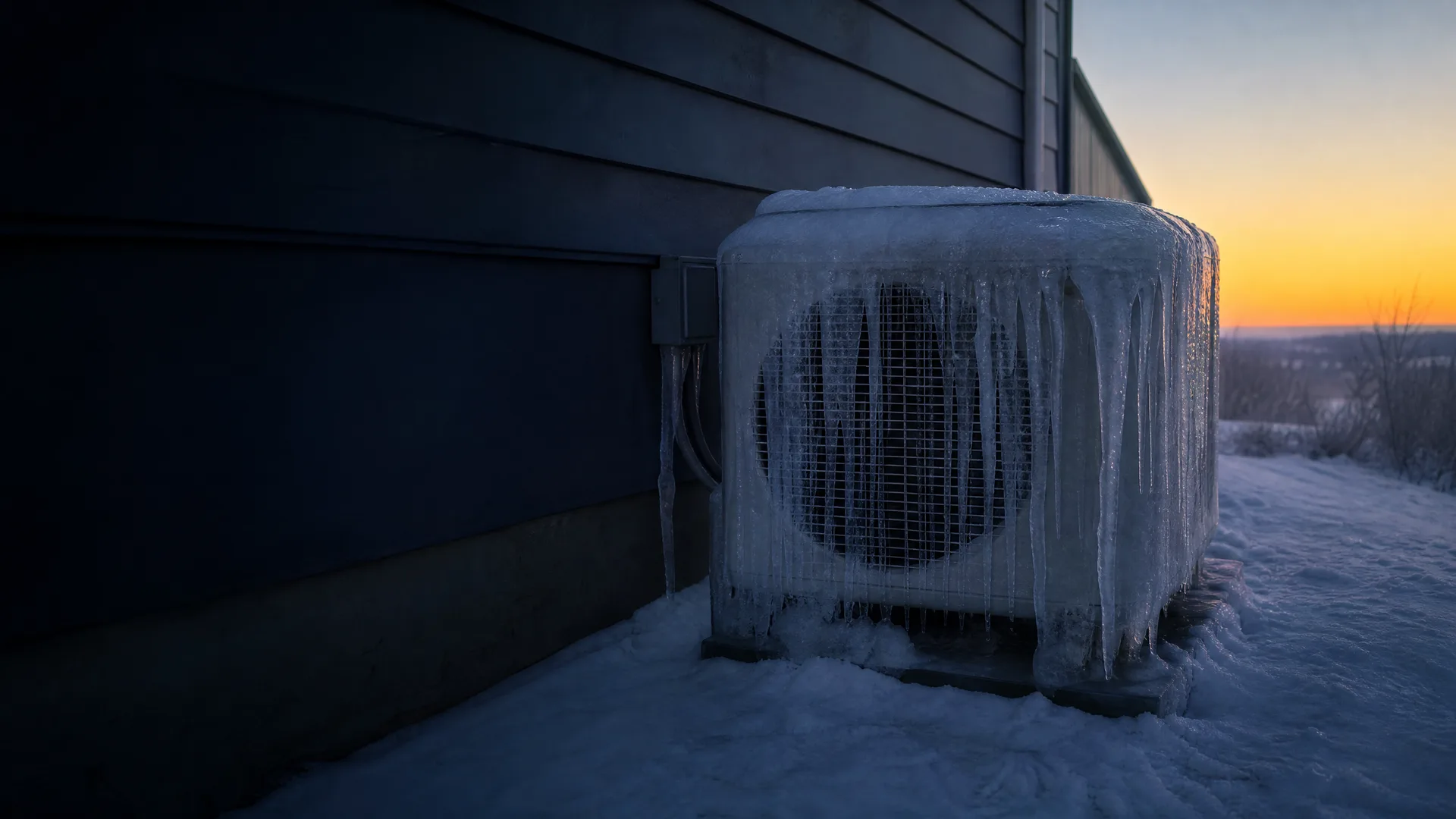
You go out for the paper a little after six and the yard is still dark. The outdoor unit sits against a sheet of ice, thick over the coils and down the sides onto the pad. It's been cold all week, the kind of January cold Daviess County gets most years, and the unit has been defrosting itself through the night to keep up. Under the ice a thin stream of water has run off the pad and across the concrete, already skinned over. No hum, no fan turning. Just the ice, and the quiet, and the porch light picking out the drip line frozen halfway down the cabinet.
Get the heat pump repair search off your mind today.
No fee to send it, and nothing to sign.

The pad under this unit stays dry. Mulch and grass around it show no standing water, no mud, no path cut by runoff. The disconnect box on the siding is clean and dry too, nothing dripping down from above it onto the wiring.

Grime has built up across the fins on this one, the kind that holds water against the metal instead of letting it run off. A unit that stays wet like this corrodes faster, and dirt packed into the coil slows the airflow it needs to defrost itself clean.


Nothing about a leak fixes itself. The clog in the drain line doesn't clear on its own, and a cracked pan doesn't seal back up. Left alone, the water keeps finding the same path: down through the ceiling drywall, across the utility room floor, into the subfloor under the air handler. A stain that's the size of a dinner plate now can spread to the size of a ceiling fan by spring. If the float switch is doing its job, the system may shut itself off rather than keep flooding the pan, and then you've lost heat in January along with a dry ceiling. Mold can start in wet drywall and framing within a couple of days, and that's a separate problem from the leak itself, one that costs more to put right the longer it sits.
A clogged drain line is often a quick clear, not a teardown. Flushing the line or clearing it at the access point stops new water from backing up, and a contractor can check the pan and the float switch in the same visit. Catching it while the damage is still a stain, not a sag in the ceiling, keeps the repair to the drain and the pan instead of the drywall and the floor underneath it too. It also means someone can look at why it's happening here, a dirty coil, a drain line pitched wrong, ice built up from a cycle that isn't defrosting the way it should, so the same puddle doesn't show up again next winter.
At 14.33 cents per kilowatt-hour, running a condensate pump or an auxiliary heater to work around a drain problem adds up fast. A clogged line or a cracked pan doesn't raise your bill by itself, but ignoring it long enough that the system struggles to keep up will.
EIA-861 2025
A heat pump leaking water in Owensboro almost always comes down to one of two things: a clogged condensate drain line or a cracked drain pan. The refrigerant side rarely has anything to do with it. Water pools because it has nowhere else to go, not because the system is losing charge or failing outright.
Check the pad under the outdoor unit and the floor or closet under the air handler. Dry means the condensate is draining the way it should. Standing water, a damp patch, or a brown ring on the ceiling below the air handler means it isn't, and hasn't been for a while. Ice on the outdoor coil during a hard freeze is a different thing entirely. That's defrost runoff, normal for a Daviess County winter, not a sign anything is wrong.
What doesn't happen is the problem fixing itself. A clogged line stays clogged. A cracked pan stays cracked. The water keeps finding the same path, whether that's down through drywall or across a utility room floor, until something is done about the line or the pan itself.
A contractor can trace the water back to where it starts, clear the line or repair the pan, and get the unit draining the way it's supposed to again. Once the form is in, the job of finding someone to handle it isn't yours to carry anymore. That part is off your plate, whether the fix turns out to be a quick clear of the line or something more involved.

Sending the form costs nothing.
A clogged drain line left alone can stain a ceiling or warp a floor before you ever see the pool that caused it. Sending a request now gets a contractor looking at your specific setup, so you're not the one tracking down who's free or what's wrong with it.
