A lit brick residential street at dusk showing a row of two-story homes with covered porches and mature trees.

AC Repair in Shelbyville, KY

Tell us about the job

Takes about a minute. No obligation.

RepairCentral ACShelby County, KY
Step 1 of 2

What ZIP code is the job in?

Check the thermostat and the breaker first

Make sure the thermostat is set to cool and the set point is actually below room temperature. Then check the breaker panel for the AC and the furnace or air handler, since most systems split power between an outdoor unit and an indoor one. A tripped breaker that resets and trips again means a short or a locked compressor, and that's not a job to keep retrying.

Look at the filter and the outdoor unit

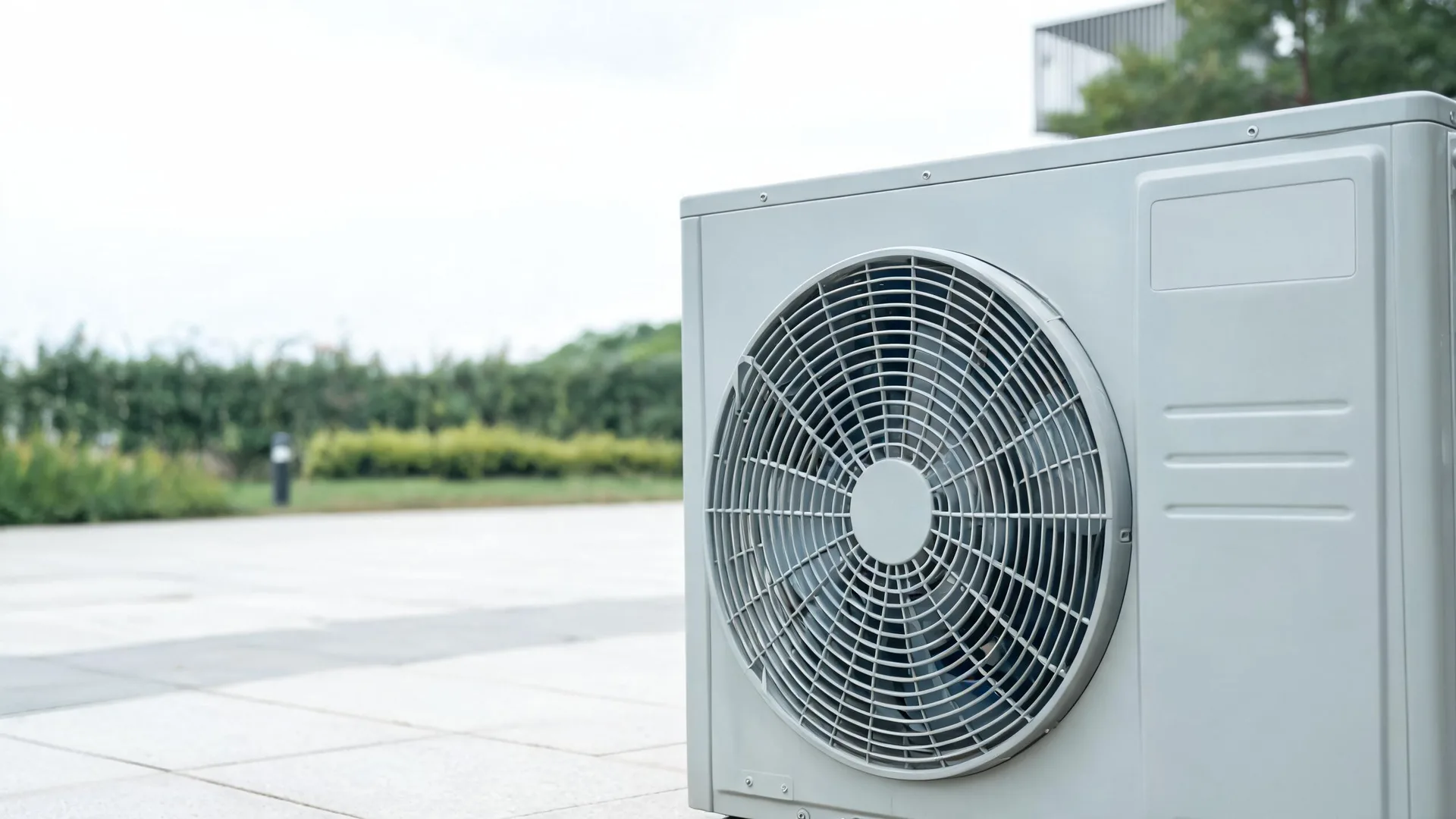
Pull the air filter and hold it up to light. If you can't see through it, that's likely choking airflow and can cause ice on the indoor coil. Outside, look at the condenser for leaves, grass clippings or a fence line blocking airflow, and clear anything pressed against the fins. Don't open the panel or touch any wiring on the unit itself.

5 months
May through September, your air conditioner is on duty
85°F
the average summer afternoon it cools against
21 hail events
in ten years, and hail bends the fins on outdoor coils
50 wind events
in ten years, and wind drives debris into outdoor units
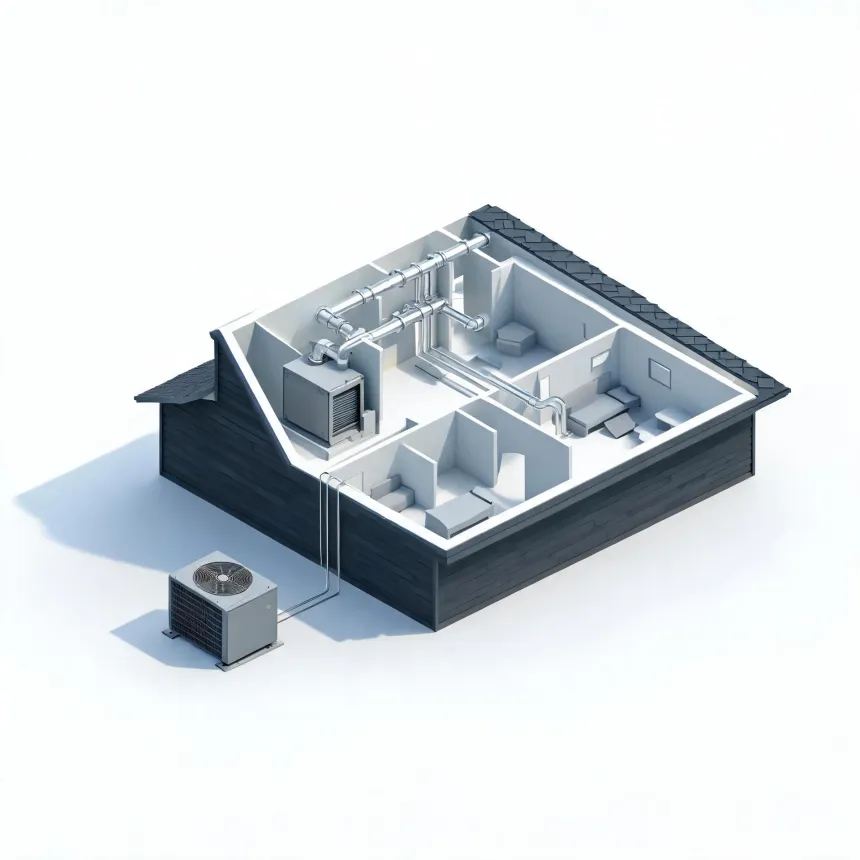
Isometric 3D cutaway render of a house with dark siding showing interior rooms, ductwork and an air handler, connected by lines to an outdoor condenser unit on a white background.
Your air conditioner works hardest from June through August.

NOAA nClimDiv, 1991–2020 normals

A capacitor weakens months before it fails outright, so the compressor or fan struggles to start long before it quits.

If the outdoor unit hums or clicks but the fan won't spin, that's a dying capacitor, not a dead system.

Half the homes in Shelby County were built in 1993 or later, so a lot of these systems still have years left in them

Half the homes here were built by 1993
Cooling runs May through September
Summer afternoons average 85°F
Shelbyville weather isn't why your AC quitShelby County saw 50 damaging wind events between 2015 and 2024, but most AC calls still come down to a capacitor or a dirty coil.

Five months of real cooling load here, May through September, with afternoon highs averaging 85 through the summer. That's enough work for normal wear to show up, nothing more. Shelby County sees its share of hail and wind, but that shows up as a dented cabinet or bent fins, not a dead capacitor or a clogged coil. The parts inside your AC fail the same way they would anywhere else in this climate zone. So when something's wrong, look at what actually broke before you blame the weather or the age of the house.

Repair it

If your system came with a newer house, it likely has plenty of life left. Repair is usually the right call.

Find a contractor
A man in a worn dark jacket and tan pants, seen from behind, climbs porch steps toward a dark green paneled front door while carrying a canvas tool bag holding a hammer and other tools, with a potted conifer shrub to the right.
An outdoor air conditioning condenser unit mounted on a concrete pad beside a house, with electrical conduit running to a wall-mounted disconnect box.

What years of running tells you

An AC that's run steady for years will start showing wear in the same few spots every time. Warm air from the vents when the thermostat still says cool usually means the compressor is struggling or the refrigerant charge has dropped. Short cycling, where the system kicks on and off every few minutes, wears out the compressor faster and points to a failing capacitor or a thermostat sensor gone bad. A fan that spins slow or not at all, even after the hum you'd expect from the motor trying, is a clear capacitor sign. Water pooling near the indoor unit means the condensate line is clogged or the pan has cracked, and either one needs attention before it reaches the subfloor or ceiling below. Any grinding, squealing or a hard metallic bang when the system starts is a motor bearing or a loose part, not something that gets better on its own. The longer any of these run unaddressed, the more they tend to take out the part next to them.

A frozen coil can wreck the compressor

Once ice builds up on the indoor coil, airflow drops even further, and the system keeps pulling in refrigerant that never picks up enough heat to evaporate. Liquid refrigerant can end up back at the compressor instead of gas, and a compressor isn't built to handle that. Shutting the system off and letting the coil thaw fully is the only thing to do once ice shows up, since running it longer just feeds the problem.

A struggling capacitor takes the motor with it

When a capacitor is too weak to get the fan or compressor started cleanly, the motor draws extra current every time it tries. That extra draw heats the motor windings past what they're built for. A motor that keeps hard-starting like this eventually burns out, and at that point the fix is a new motor, not a new capacitor.

An outdoor air conditioning condenser unit positioned beside a blue-sided house at sunset.

A new air conditioner would cut about $30 a year off cooling for a typical Shelby County home.

  • A new one at the federal minimum, 14.3 SEER2$240 a year
  • An older air conditioner$270 a year

Estimates for a typical Shelby County home, compared with an older unit built to the previous federal minimum, from EIA household energy data, Kentucky fuel prices and NOAA climate normals. Your home will differ.

Repair makes sense when a part like a capacitor or contactor has failed.

Replacement makes sense when the compressor has failed or the system uses R-22 refrigerant, which is no longer made.

A compressor is usually where the repair or replace question turns serious. Fixing a capacitor or a fan motor is straightforward, and a tech can tell you fast whether that's all that's wrong. A failed compressor is a different conversation, since replacing just that part can cost close to a new system, and most contractors will walk you through both numbers before you decide. What matters most is catching the small failure before it becomes the big one. A capacitor that's weak but caught early is a cheap fix. The same capacitor ignored for months forces the compressor to hard start every cycle, and that's how a small problem turns into the expensive one. Ask the tech which part actually failed and whether it damaged anything else on the way down.