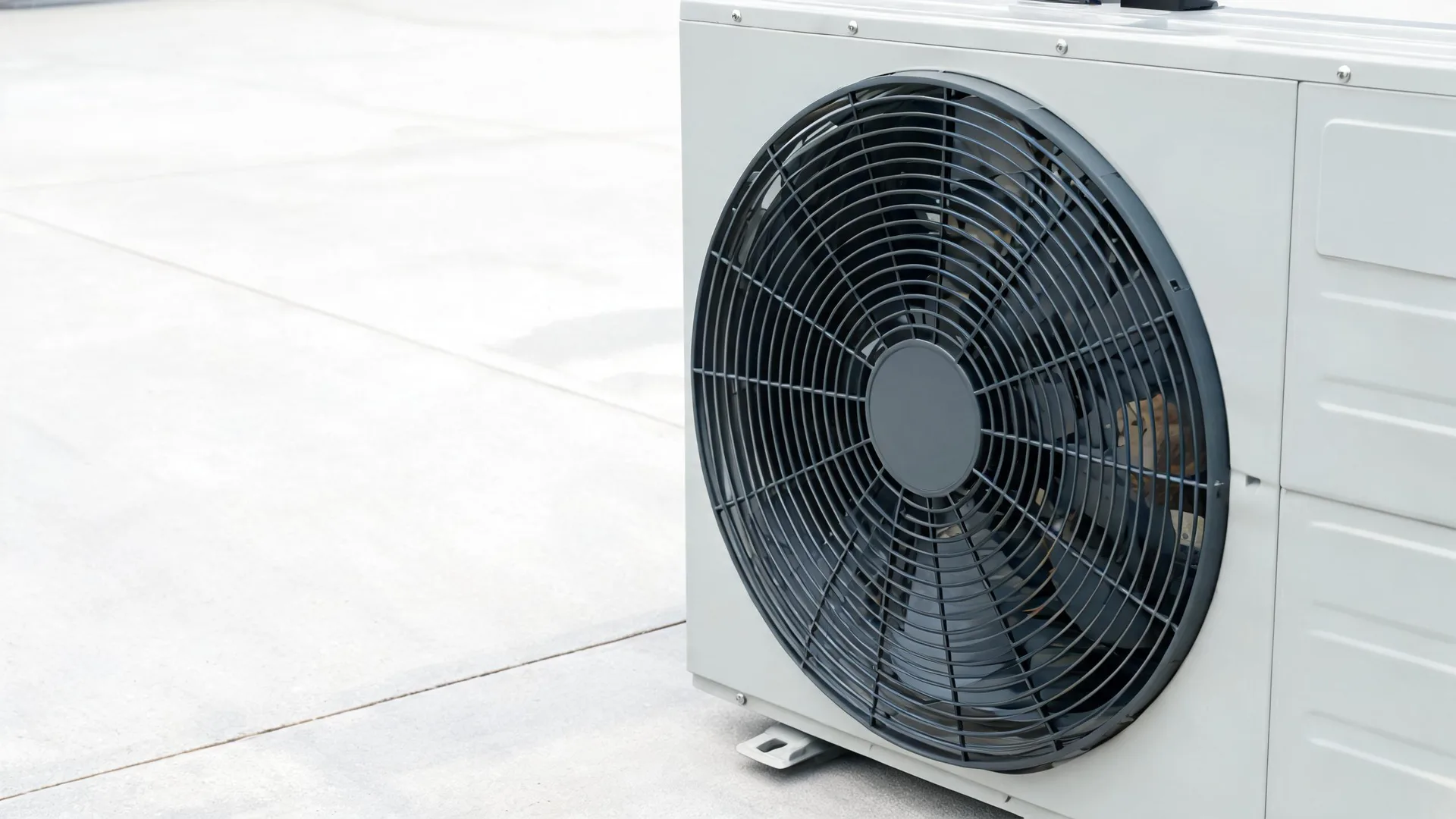
A normal summer's work
AC in Russellville runs May through September, with afternoon highs averaging 88°F in June, July and August. That is ordinary cooling equipment doing what it was built to do, not a machine pushed past its limits.
Takes about a minute. No obligation.
AC in Russellville runs May through September, with afternoon highs averaging 88°F in June, July and August. That is ordinary cooling equipment doing what it was built to do, not a machine pushed past its limits.
A weak capacitor, a low refrigerant charge, or a dirty coil are the common reasons an AC unit struggles anywhere, in any summer. A tech should check those first rather than assume this heat did something unusual to the system.

NOAA nClimDiv, 1991–2020 normals
A dirty air filter starves the whole system and can look like a much bigger problem.
Check the filter, check that the thermostat is set to cool, and check the breaker before calling anyone.




Logan County gets its share of rough weather. 69 damaging wind events between 2015 and 2024, along with tornadoes, hail and winter storms in that same stretch. None of that is what shows up on a summer repair call. Wind and ice explain a tree limb on a condenser or a system that lost power overnight. They don't explain a capacitor that failed from ordinary wear, or a coil that's dirty because a filter went unchanged for a while. If the unit took a direct hit from a storm, that's worth telling the tech. Otherwise, treat it like any AC that's had one too many summers on the same part.
Nothing about this area is especially hard on it. It's most likely the usual problem with the usual fix.
Find a contractor
A failing part rarely stays failing at the same rate. A capacitor that's weak but still kicking the compressor over will wear out faster once it's working harder to do the same job. A compressor running on low refrigerant charge runs hotter than it should, and heat is what kills a compressor. A coil that's dirty restricts airflow, so the system runs longer to hit the same temperature, which means more hours on every part downstream. The unit doesn't know to protect itself. It just keeps running until something trips a safety switch or burns out for good. A call made at the first sign, a system that runs long, cycles oddly, or blows warm, usually means a part swap. The same problem ignored for another few weeks can take the compressor with it, and that's a different repair entirely.
Warm air out of the vents is the most common complaint. The system runs and runs without hitting the set temperature, or it short cycles, kicking on and off every few minutes. Sometimes there's a smell, musty from a dirty coil or faintly electrical from a strained part. Sometimes it's a sound, a hard clunk at startup, a hum with no air moving, a rattle that wasn't there last summer. Water pooling near the indoor unit usually means a clogged condensate line, or a frozen coil that's started to thaw.
Each sign points somewhere specific. Warm air with the outdoor fan still running points at the compressor or the refrigerant charge. Short cycling points at a thermostat problem, a dirty filter, or a capacitor that can't hold the motor steady. Ice on the coil almost always means airflow is restricted or the charge is low. Telling the tech exactly what the system is doing, not just that it's broken, cuts down the guesswork before the panel even comes off.
Estimates for a typical Logan County home, compared with an older unit built to the previous federal minimum, from EIA household energy data, Kentucky fuel prices and NOAA climate normals. Your home will differ.
Repair makes sense when a part like a capacitor or contactor has failed.
Replacement makes sense when the compressor has failed or the system uses R-22 refrigerant, which is no longer made.
A diagnostic call starts outside, at the condenser. A tech checks the capacitor first since it's a common failure point and quick to test, then moves to refrigerant pressures with a gauge set. Low charge shows up fast that way, and so does a charge that's fine but moving through a dirty coil badly. Inside, that means pulling the filter and looking at it, then checking the indoor coil and the condensate line for a clog. Electrical connections get checked too. A connection that's loose or corroded can mimic a bad part, and replacing the part without fixing the connection means the same call again later. By the time the panel goes back on, the tech should know which part failed and why, not just that the system isn't cooling.