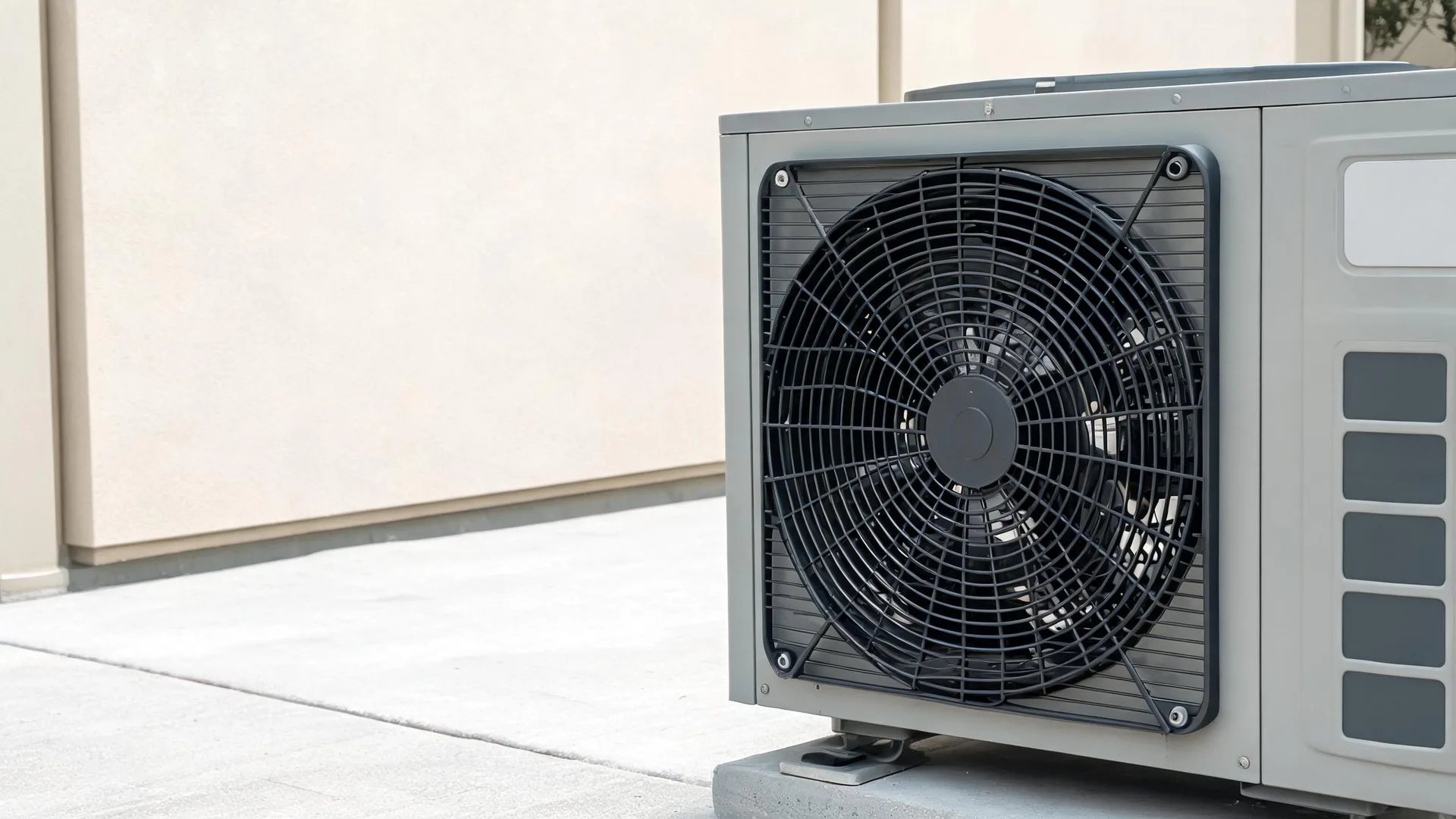
Aerial view of a gray outdoor air conditioning condenser unit mounted on a concrete pad next to a house with vinyl siding.

AC Repair in Prestonsburg, KY

Tell us about the job

Takes about a minute. No obligation.

RepairCentral ACFloyd County, KY
Step 1 of 2

What ZIP code is the job in?

Check the thermostat and the breaker first

Make sure the thermostat is set to cool and set below room temperature, and check that the batteries aren't dead if it has them. Then look at the breaker panel. A tripped breaker will shut the whole system down and reset it yourself before assuming the worst.

Look at the filter and the outdoor unit

Pull the filter and hold it up to light. If you can't see through it, air can't move through it either, and that alone can cause the system to ice up or shut off. Walk outside and check that the condenser isn't buried in leaves or grass clippings, since it needs clear airflow on all sides to work.

4 months
June through September, your air conditioner is on duty
86°F
the average summer afternoon it cools against
16 hail events
in ten years, and hail bends the fins on outdoor coils
98 wind events
in ten years, and wind drives debris into outdoor units
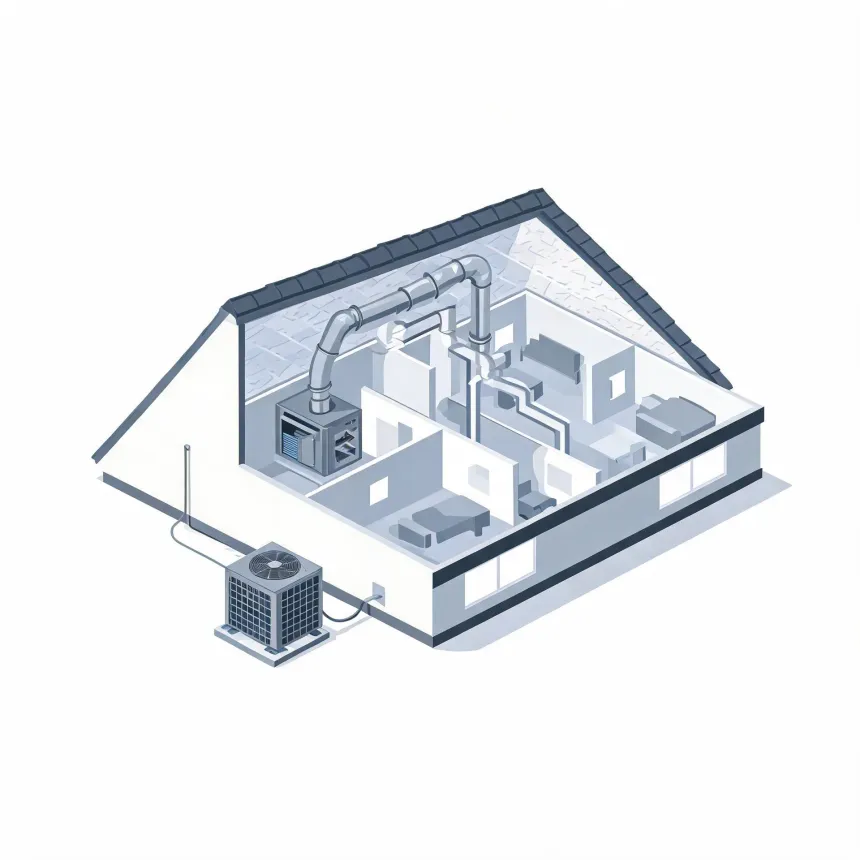
Isometric illustration of a cutaway house showing interior rooms, an attic furnace with large ducts, and an outdoor condenser unit connected by a line set, on a white background.
Your air conditioner works hardest from June through August.

NOAA nClimDiv, 1991–2020 normals

A diagnostic visit starts with tracing the problem, not guessing at parts.

The technician checks refrigerant charge, electrical connections and airflow before anything gets replaced.

June is when a weak AC shows itself here

Cooling runs June through September
Summer afternoons average 86°F
98 damaging wind events from 2015 to 2024
Most AC trouble here isn't about the houseHalf the homes in Floyd County were built in 1982 or earlier, half later, and age alone doesn't explain a system acting up.

Summers here run June through September, with afternoon highs averaging 86. That's enough heat to run an AC hard for four months straight, but it's not extreme, and the system under repair now is almost always failing for an ordinary reason. A dirty filter, a low refrigerant charge, a capacitor going weak. These are the same problems a tech finds in any mixed climate, not something particular to Prestonsburg. The one thing worth checking after a storm is whether the outdoor unit took a hit, since damaging wind has come through Floyd County close to a hundred times in the past decade.

Get it looked at early

Problems tend to show up in the first weeks of the season, when the load hits a part that was already weak.

Find a contractor
A gray residential air conditioner condenser unit mounted on a concrete pad in an open grass field.

Running it longer doesn't buy time

A weak capacitor still starts the compressor most of the time, so the system keeps running while it fails a little more on every cycle. A refrigerant leak is the same story. The system keeps cooling, worse each week, while the compressor runs hotter and wears against a low charge it wasn't built to run on. Ice on the coil is the clearest case. Once airflow is restricted enough to let frost form, running the system longer just builds more ice, blocks more air, and the compressor can end up flooded with liquid refrigerant it was never meant to see. None of these fix themselves by running. They get to be bigger repairs, and in the capacitor and compressor cases, they can turn a part replacement into a compressor replacement.

Most failures start small

A capacitor weakens before it quits outright. A contactor pits and starts sticking. A blower motor bearing wears loose and gets noisy long before it seizes. Almost nothing in an AC fails out of nowhere. It wears down over seasons of starting and stopping until the day it can't do the job anymore.

Airflow problems cause other problems

A clogged filter or a coil caked with dust makes the system work harder to move the same amount of air. The compressor runs longer to hit the set temperature. The coil can ice over. Parts that were fine under normal load start failing under the extra strain. A lot of repairs trace back to something blocking airflow upstream.

An outdoor air conditioning condenser unit on a concrete pad next to the gray vinyl siding of a residential home.

A new air conditioner would cut about $40 a year off cooling for a typical Floyd County home.

  • A new one at the federal minimum, 14.3 SEER2$230 a year
  • An older air conditioner$270 a year

Estimates for a typical Floyd County home, compared with an older unit built to the previous federal minimum, from EIA household energy data, Kentucky fuel prices and NOAA climate normals. Your home will differ.

Repair makes sense when a part like a capacitor or contactor has failed.

Replacement makes sense when the compressor has failed or the system uses R-22 refrigerant, which is no longer made.

Repair or replace usually comes down to what else is likely to fail next, not just what already did. A compressor is the one part that's expensive enough and hard enough to replace on its own that a tech will weigh the system's condition before touching it. If the compressor is the problem, that's the moment to ask what else in the system is original and how it's held up, because paying to replace a compressor in a system that fails again next season somewhere else is a bad trade. If the failure is a capacitor, a contactor or a blower motor, that math doesn't apply. Those parts fail on their own, get replaced on their own, and don't say much about the rest of the system. The age of the parts around the failure matters more than the age of the house.