






An outdoor central air conditioning unit mounted on a concrete pad beside a blue-sided house at sunset.

AC Repair in Owensboro, KY

Tell us about the job

Takes about a minute. No obligation.

RepairCentral ACDaviess County, KY
Step 1 of 2

What ZIP code is the job in?

A warm house is an inconvenience. A compressor running low on refrigerant is a different problem, because it starts damaging itself the longer it keeps cycling. The same goes for a blower motor straining on a failing bearing, or a condenser fan pulling too many amps. These parts are built to work within a range, and once something forces them outside it, every hour of runtime adds wear that a repair can't undo later. A system that trips its breaker and gets switched back on and off a few times can take out a compressor that an early service call would have saved. If the air coming out is warm, the unit is short cycling, or you hear a new sound when it runs, the better move is to shut it down and get it looked at rather than let it keep trying.

5 months
May through September, your air conditioner is on duty
87°F
the average summer afternoon it cools against
27 hail events
in ten years, and hail bends the fins on outdoor coils
95 wind events
in ten years, and wind drives debris into outdoor units
Isometric illustration of a cutaway house showing interior ductwork, an indoor air handler and furniture, connected by lines to an outdoor condenser unit on a pad.
Your air conditioner works hardest from June through August.

NOAA nClimDiv, 1991–2020 normals

Half the homes in Daviess County were built in 1977 or earlier, half after.

Either way, the AC unit itself is probably a lot younger than the house, and it fails for the same reasons they all do.

Summers here run normal. Five months of heat, same as a lot of places

Cooling runs May through September
Summer afternoons average 87°F
95 damaging wind events from 2015 to 2024

Most AC failures trace back to a handful of parts, and they wear out in predictable ways. A capacitor loses its charge over years of starting the compressor and fan, until one day it can't deliver the kick needed and the unit hums but won't start. Contactor points pit and burn from the arc of switching on and off, thousands of cycles over a lifetime, until they stick or stop making contact. Refrigerant doesn't get used up, so a system low on charge has a leak somewhere in the coil or line set, and it'll keep losing capacity until that's found and sealed. Condenser coils outside collect dirt, grass clippings and dust until airflow across them drops and the compressor works harder to shed heat than it was built to. A blower motor bearing wears from running hours, and the sound changes before the motor actually quits. None of these fail without a reason, and most of them give some warning before they take something bigger down with them.

Storms here are hard on an outdoor unit

Daviess County has logged 146 severe weather events between 2015 and 2024, hail among them. Hail dents fins and wind throws debris into the coil, and a unit can keep running after either one while it loses capacity underneath. If yours has been through a storm, worth having it checked even if the air is still cold.

Find a contractor
A man in a dark shirt and brown work pants, seen from behind, carries a worn duffel bag up stone steps toward a dark green front door of a house with light siding and a potted shrub.
An outdoor residential air conditioning condenser unit mounted on a concrete pad, surrounded by gravel with a blue sky in the background.

What you can check before you pick up the phone

Before you call anyone, there are a few things worth checking yourself. Go to the thermostat first and make sure it's set to cool, with the set point below room temperature, and change the batteries if it's been a while. Next, find the indoor air handler and check the filter. If you can't see light through it, that's enough to choke airflow and ice up the coil, and no repair will hold until it's replaced. Walk outside to the condenser and look at the breaker panel. A tripped breaker that won't reset, or trips again right away, means leave it off and call someone rather than keep flipping it. While you're out there, look at the unit itself. Clear away anything piled against it, grass clippings, leaves, a fallen branch, so it can breathe. Listen for a hum with no fan turning, or a fan that spins slow and labors. That's not something to fix yourself, but it tells the tech a lot before they arrive. What you shouldn't do is pour water on the coil, pull the unit apart, or keep resetting a breaker that won't stay on. Those either delay the real fix or turn a repair into a replacement.

The signs rarely start with warm air

A failing capacitor shows up as a hum and a fan that won't turn, or a unit that starts hard and shudders before it catches. A dirty coil shows up as a system that runs long and still doesn't quite get there. Warm air is usually the last sign, not the first, because most parts struggle for a while before they quit outright.

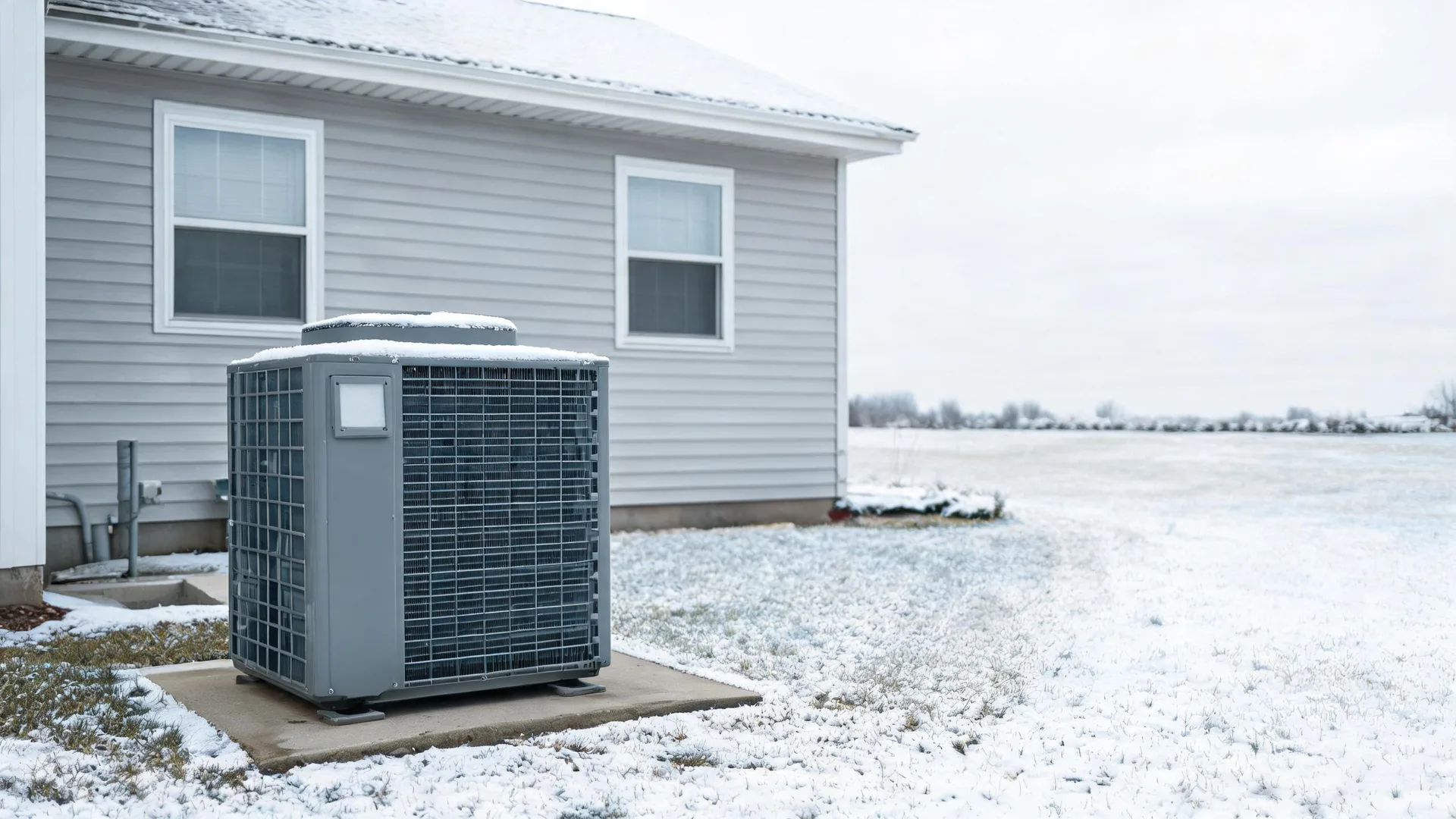
The sound is often the earliest warning

A grinding or squealing blower motor, a new rattle at startup, a clicking that wasn't there last season. These point to a specific part working harder than it should, and they almost always show up before that part fails completely. Catching the sound early is usually what keeps a repair a repair instead of a replacement.

Aerial view of a square outdoor air conditioning condenser unit on a concrete pad beside a house wall with a sliding glass door.

A new air conditioner would cut about $40 a year off cooling for a typical Daviess County home.

  • A new one at the federal minimum, 14.3 SEER2$290 a year
  • An older air conditioner$330 a year

Estimates for a typical Daviess County home, compared with an older unit built to the previous federal minimum, from EIA household energy data, Kentucky fuel prices and NOAA climate normals. Your home will differ.

Repair makes sense when a part like a capacitor or contactor has failed.

Replacement makes sense when the compressor has failed or the system uses R-22 refrigerant, which is no longer made.

A diagnostic call usually starts at the condenser outside and the air handler inside, because the complaint at the thermostat could trace to either end. The tech checks refrigerant pressure first. That one reading points toward a leak, a failing compressor, or a dirty coil choking airflow before anything else gets touched. Next comes the electrical side, a capacitor reading, the condition of the contactor points, amp draw on the compressor and fan motor while the system is actually running. A weak part often tests fine sitting still and only shows the problem once it has been running a few minutes, so the tech wants to watch it work, not just look at it. Airflow gets checked too, the filter, the return, the supply vents, since warm air at the register does not always mean the compressor is the problem. By the time the panel goes back on, the tech should be able to point to the one part causing the trouble and say what happens if it gets left alone.