





Aerial view of a gray central air conditioning condenser unit on a concrete pad next to a house with vinyl siding.

AC Repair in Nicholasville, KY

Tell us about the job

Takes about a minute. No obligation.

RepairCentral ACJessamine County, KY
Step 1 of 2

What ZIP code is the job in?

AC here runs May through September. April is a good month to get a repair looked at before the system is running every day. A lot of trouble shows up in the first real hot stretch, when a part that was already weak gets pushed past where it was coping. If your AC struggled last summer or needed a repair that kept coming back, that same part is often what fails first once it's running daily again.

5 months
May through September, your air conditioner is on duty
85°F
the average summer afternoon it cools against
9 hail events
in ten years, and hail bends the fins on outdoor coils
37 wind events
in ten years, and wind drives debris into outdoor units
Isometric line illustration of a cutaway house showing interior rooms with furniture and ceiling ductwork, connected to an outdoor condenser unit with a fan beside the building.
Your air conditioner works hardest from June through August.

NOAA nClimDiv, 1991–2020 normals

Nicholasville summers run May through September, with afternoon highs around 85 in June, July and August.

Five months of a system running close to every day is long enough for one weak part to be the whole problem.

The weather here doesn't wear out an AC any faster than normal. Most breakdowns in Jessamine County still come down to one worn part.

62 severe weather events from 2015 to 2024
24% of homes statewide lost power a day or more in 2024
37 damaging wind events from 2015 to 2024

Half the homes in Jessamine County were built in 1992 or later. If yours is one of them, the AC giving you trouble probably isn't failing from old age. A system that age still has plenty of working life left when it's kept up. So when something quits, the more likely story is a capacitor, a contactor or a refrigerant leak, not a unit that's simply worn out. That's usually worth fixing rather than replacing. Mobile homes are a small share of the housing stock here, so most of what a contractor sees is the standard setup, a house-mounted condenser that a repair can get back to normal.

A newer system is a repair, not a replacement

A system that age is worth getting fixed, not replaced. Have a contractor find the part that failed and repair it.

Find a contractor
A gray metal air conditioning condenser unit mounted on a concrete pad in a flat grassy field under a partly cloudy sky.

The signs show up before the system quits

Watch what it does before it quits altogether. Short cycling, where it kicks on, runs a few minutes, then shuts off before the house cools, usually points to a dirty coil or a thermostat sensor gone bad. Warm air out of the vents with the fan still running often means the compressor can't keep up or the refrigerant charge is low. A system that runs and runs without ever hitting the set temperature is losing the fight somewhere, maybe the coil, maybe the charge. Listen for it too. A hard clunk at startup or a hum with no spin points to a failing capacitor. Grinding or squealing from the outdoor unit usually means a motor bearing is going. None of these mean the system is done. They mean one part is failing, and the rest of the system is still waiting on it.

Check the simple things first

Make sure the thermostat is set to cool and set below room temperature, and check that its batteries are good. Look at the breaker box for a tripped breaker on the AC circuit. Check the outdoor unit for leaves, grass clippings or a shrub blocking airflow around it. Pull the filter and hold it up to a light. If you can't see through it, swap it for a new one and give the system a few minutes to respond before deciding it's still a problem.

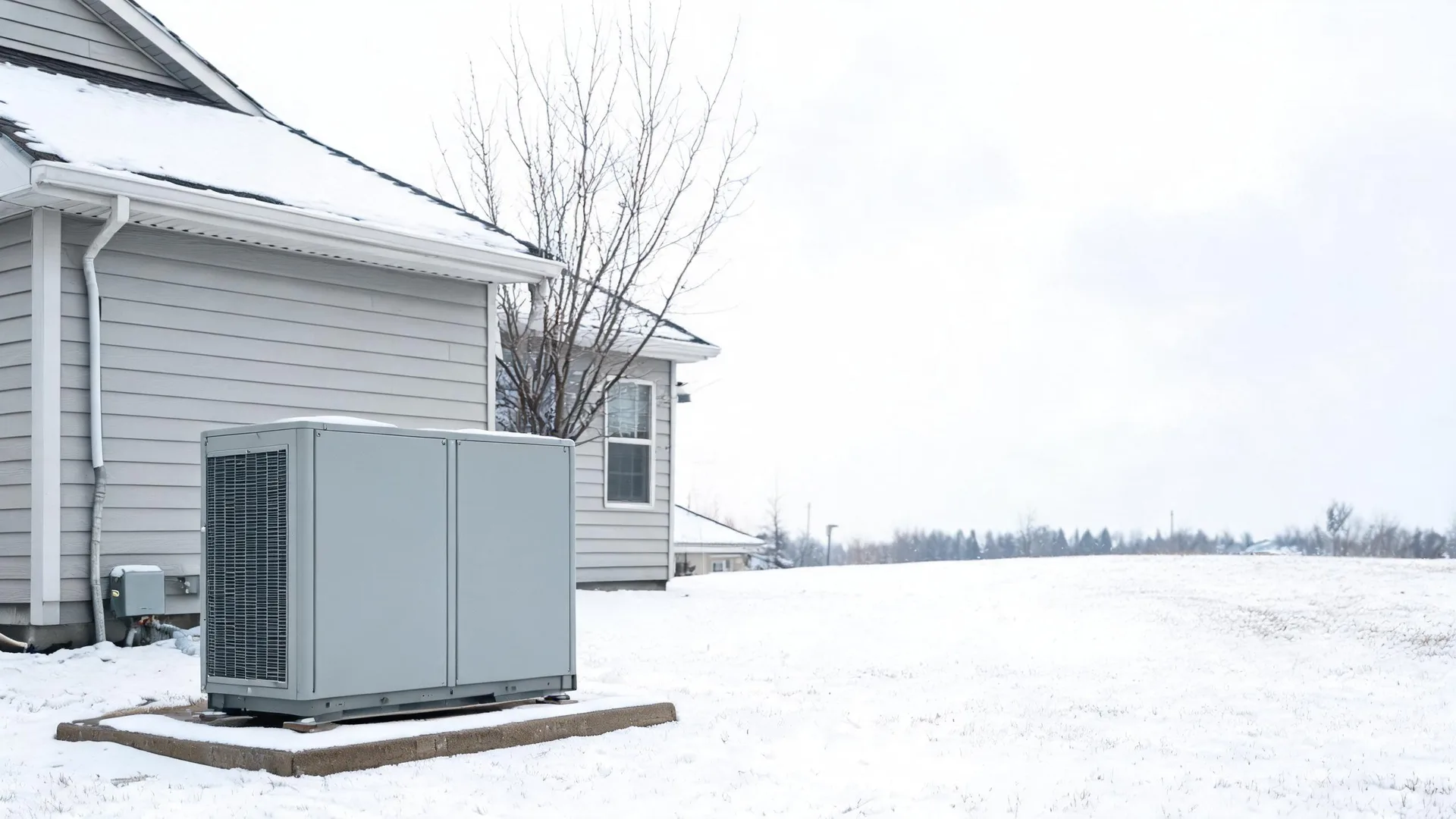
Know what to describe when you call

A contractor can often narrow things down faster if you can tell them what you saw before the call. Was the air coming out warm or just weak? Did the outdoor fan spin, or was it just humming? Did the system shut off on its own, or did you turn it off? Any smell, any water near the indoor unit, any breaker that tripped more than once. These details point toward the failing part faster than just saying the AC isn't working.

An overhead view of a residential air conditioning condenser unit mounted on a concrete pad next to a house with vinyl siding.

A new air conditioner would cut about $40 a year off cooling for a typical Jessamine County home.

  • A new one at the federal minimum, 14.3 SEER2$240 a year
  • An older air conditioner$280 a year

Estimates for a typical Jessamine County home, compared with an older unit built to the previous federal minimum, from EIA household energy data, Kentucky fuel prices and NOAA climate normals. Your home will differ.

Repair makes sense when a part like a capacitor or contactor has failed.

Replacement makes sense when the compressor has failed or the system uses R-22 refrigerant, which is no longer made.

A diagnostic visit starts outside at the condenser, checking that the fan spins freely and the compressor is drawing power the way it should. Next comes the refrigerant charge, checked with gauges rather than guessed at, since both a low charge and an overcharge cause the same warm-air complaint. Inside, the tech checks the coil for dirt or ice and pulls the filter if it hasn't already been swapped. Electrical parts get tested under load, not just looked at, because a capacitor or contactor can look fine sitting still and still fail the moment the system calls for it. The thermostat gets checked last, confirming it's actually telling the system to run when it should. By the end, the point isn't just naming what broke. It's confirming nothing else nearby is close to going the same way.