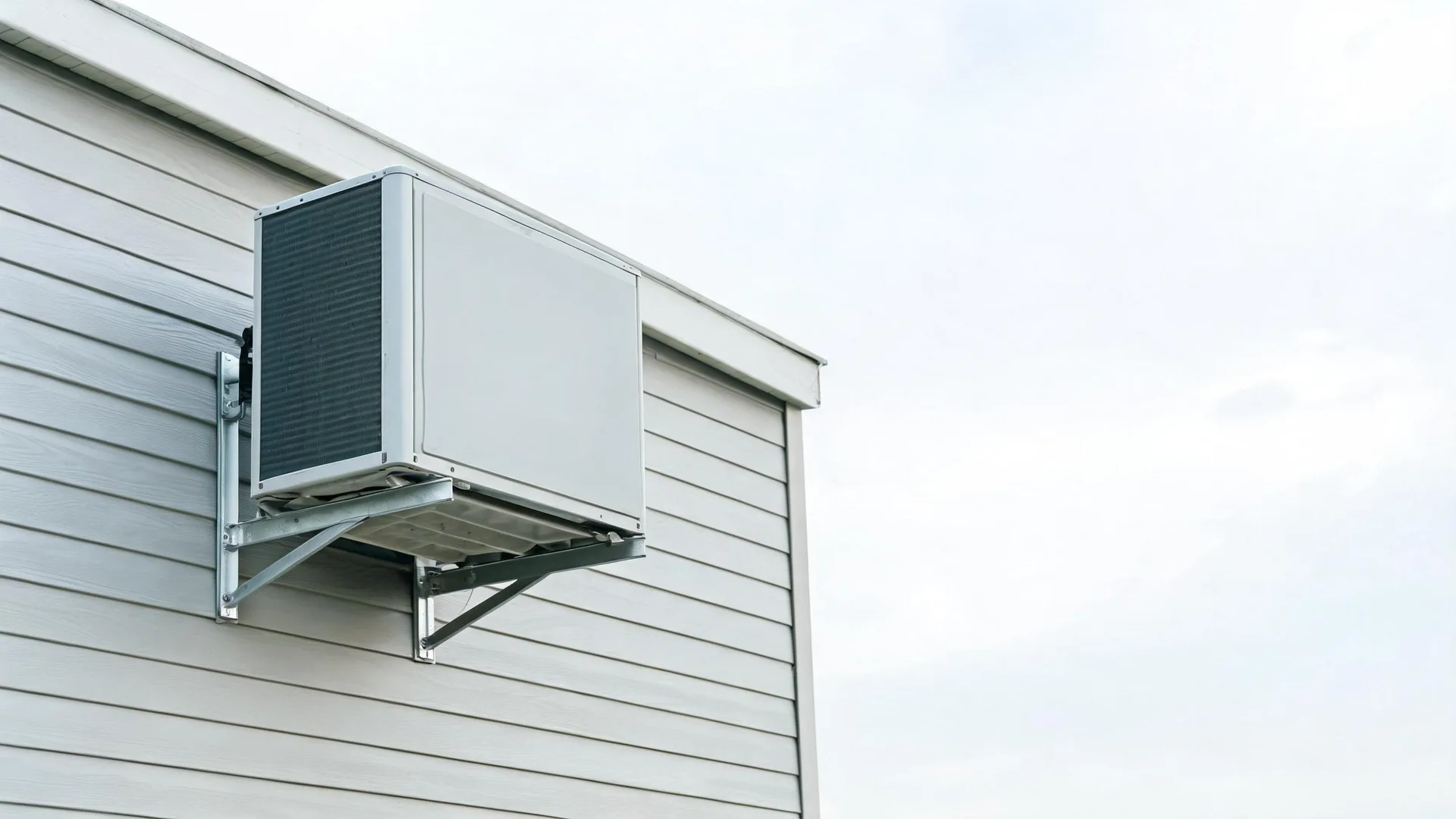
Weather here is rough on outdoor units
Montgomery County logged 112 severe weather events in the past decade, most of them damaging wind. An AC condenser sits outside through all of it, exposed to wind-driven debris and ice.
Takes about a minute. No obligation.
Montgomery County logged 112 severe weather events in the past decade, most of them damaging wind. An AC condenser sits outside through all of it, exposed to wind-driven debris and ice.
Bent fins, a cracked fan blade or a hit coil do not always stop a condenser from starting up. If yours has been through a storm, running fine today is not proof nothing was damaged.

NOAA nClimDiv, 1991–2020 normals
Summers in Mount Sterling run four months, June through September, with afternoon highs averaging 85.
A cooling load like that is normal, so most AC trouble here is the same fix a tech sees anywhere.

After a storm, a quick check is worth asking for even if the AC is cooling fine. A tech can look at the fan blade for cracks, check the coil fins for dents, and make sure nothing worked loose inside the cabinet. Hail is rare here, only 3 events in the past decade, but damaging wind hit the county 91 times in that span, and wind throws branches and debris that hail doesn't. None of that shows up as a problem right away. It shows up later as a harder-working unit, then a bigger repair.
Half the homes in Montgomery County were built in 1987 or later. If your AC came with a newer house, it's probably still within its working life, storm wear and all. That's worth knowing before anyone talks about replacing it instead of fixing it.
Find a contractor
Listen for it before you see it. A clicking sound when the unit tries to start, a hard hum that fades without the fan turning, or a compressor that kicks on and off in short bursts are all signs something electrical is giving out, usually a capacitor or a relay. Warm air blowing from the vents while the outdoor unit runs means it's not a dead system, it's one that's lost its ability to move heat, often a refrigerant leak or a failing compressor. Ice on the copper lines or the indoor coil points the other way, to airflow that's too weak to carry the cold where it needs to go. A system that runs longer than it used to, or never seems to shut off, is working harder to do the same job, and that strain lands on the compressor first. None of these faults fix themselves. Left alone, a part under strain usually takes another part down with it.
A clogged filter starves the indoor coil of airflow, and that shows up as weak cooling or ice on the lines. Pull it and hold it up to a light. If light barely gets through, replace it. This is the one check that solves real problems on its own.
Check the thermostat batteries, check the breaker hasn't tripped, and look at the outdoor unit for leaves or grass clippings packed against the fins. Do not open the cabinet, touch the wiring, or add refrigerant. Past the filter and the breaker, anything else is a reason to get a tech out, not a repair to attempt.
Estimates for a typical Montgomery County home, compared with an older unit built to the previous federal minimum, from EIA household energy data, Kentucky fuel prices and NOAA climate normals. Your home will differ.
Repair makes sense when a part like a capacitor or contactor has failed.
Replacement makes sense when the compressor has failed or the system uses R-22 refrigerant, which is no longer made.
A diagnostic starts outside at the condenser, then moves in. The tech checks refrigerant pressure at the service ports, tests the capacitor and contactor, and watches how the compressor behaves when it cycles on. Inside, they check the coil for ice or buildup, check static pressure in the ducts, and make sure the blower is pulling the airflow it's supposed to. Electrical readings catch a lot of this before any panel comes off, a weak capacitor or a failing relay shows up as a number that's off from what it should be. What they find points to the fix. A low charge means a leak somewhere in the line set or coil, and that leak has to be found before anyone adds refrigerant back in. A good charge with weak airflow points back to the duct work or the blower instead. Either way, the diagnosis is what tells you whether it's a small part or a bigger job, not a guess made from the sound it's making.