Aerial view of a gray central air conditioning condenser unit on a concrete pad next to a house with vinyl siding.

AC Repair in Madisonville, KY

Tell us about the job

Takes about a minute. No obligation.

RepairCentral ACHopkins County, KY
Step 1 of 2

What ZIP code is the job in?

Warm air from the vents means something past the thermostat failed

A clogged filter, a low refrigerant charge, or a compressor that quit can all leave you with air that never gets cold. The thermostat still says it's working. The vents say otherwise, and that gap is the surest sign something downstream needs a tech to look at it.


A noise that wasn't there before is the unit telling you what broke

A grinding sound points to a failing motor bearing. A hard clicking that doesn't resolve into a run cycle often means a capacitor can't kick the compressor on. Either way the part making the noise is under strain right now, and it keeps running under that strain until someone shuts it off or it fails on its own.

5 months
May through September, your air conditioner is on duty
87°F
the average summer afternoon it cools against
19 hail events
in ten years, and hail bends the fins on outdoor coils
68 wind events
in ten years, and wind drives debris into outdoor units
Isometric line illustration of a cutaway single-story house showing interior rooms, ductwork, an indoor air handler or furnace, and a refrigerant line running to an outdoor condenser unit on a pad.
Your air conditioner works hardest from June through August.

NOAA nClimDiv, 1991–2020 normals

AC runs May through September in Madisonville.

May is when a part that was already weak gives out under the first real load.

Half the homes in Hopkins County were built in 1976 or earlier, half later. Neither tells a tech much on its own. An AC unit's wear comes from how many summers it has run and whether it's been serviced, not from the year the house went up. A coil or compressor swapped in recently works the same whether the walls around it are old or new. What matters is the equipment itself, when it went in, whether it's sized right for the space, and what's been done to it since. That's worth checking before guessing at what's wrong.

Get it looked at early

Problems tend to show up in the first weeks of the season, when the load hits a part that was already weak.

Find a contractor
A man in a dark long-sleeve shirt, cap, and tan work pants walks up wooden steps toward a dark green front door, carrying a canvas tool bag with hand tools, beside a potted shrub.
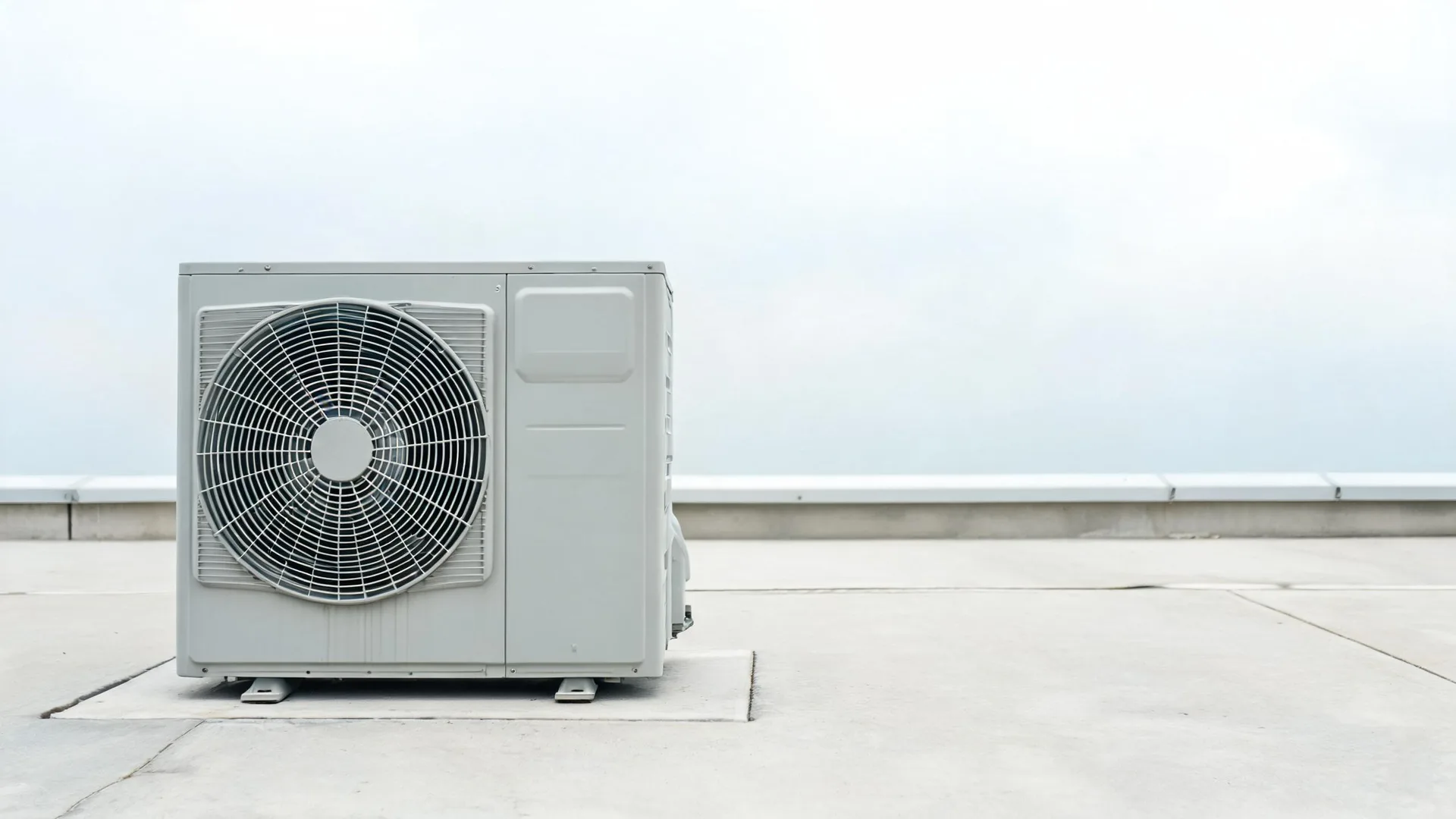
An outdoor residential air conditioning condenser unit mounted on a concrete pad, surrounded by gravel with a blue sky in the background.

Before you call, rule out the easy ones

Check the filter first. Hold it up to a light. If you can't see through it, air isn't getting past it either, and the coil behind it can freeze over. Next go outside and look at the condenser. Leaves, grass clippings and cottonwood seed pack into the fins and choke it the same way a dirty filter does. Clear them off by hand, don't hose it out under pressure. Inside, check that every vent is open and nothing's pushed a couch or a box in front of a return. Look at the condensate line too, the PVC pipe near the indoor unit. If it's dripping or backed up, a float switch may already be shutting the system down to keep water off your floor, and that's not a fault, that's the system doing its job. Last, check the breaker. A unit that trips once might just be a surge. A unit that trips every time you reset it has a short or a locked compressor, and that one isn't a homeowner fix.

A weak capacitor won't get stronger by waiting

A capacitor that's struggling gives the compressor a harder start each time. Every cycle it survives leaves it a little further gone, and a compressor that's forced to start on a bad capacitor again and again can burn out its windings. What would have been a capacitor swap turns into a compressor replacement.

A frozen coil keeps freezing until something gives

Once ice forms on the coil, the system pulls in even less air past it, so more ice builds and less cooling gets through. Left running, that ice can hold moisture against the compressor housing or let liquid refrigerant back up into a part built to handle gas only. Shutting the unit off and letting the coil thaw is what stops that chain. Running it through the freeze does not.

An overhead view of a residential air conditioning condenser unit mounted on a concrete pad next to a house with vinyl siding.

A new air conditioner would cut about $50 a year off cooling for a typical Hopkins County home.

  • A new one at the federal minimum, 14.3 SEER2$310 a year
  • An older air conditioner$360 a year

Estimates for a typical Hopkins County home, compared with an older unit built to the previous federal minimum, from EIA household energy data, Kentucky fuel prices and NOAA climate normals. Your home will differ.

Repair makes sense when a part like a capacitor or contactor has failed.

Replacement makes sense when the compressor has failed or the system uses R-22 refrigerant, which is no longer made.

A tech weighing repair against replacement isn't just pricing a part. An AC unit is really a handful of systems, the compressor, the coils, the fan motors, the electrical controls, and age wears on all of them at different rates. A unit that needs a capacitor is a different conversation than one that needs a compressor, even though both can show up as warm air from the vents. The compressor is the expensive part to replace, and on some units it costs enough on its own that putting in a whole new system makes more sense than repairing the old one. A unit that's needed a few service calls in recent years is telling you something the current repair alone won't show. None of that means an old unit should automatically be replaced, plenty run fine for a long time with normal upkeep. It means the question isn't just what's broken, it's what else on that unit is close behind it.