Three illuminated two-story brick houses on a tree-lined residential street photographed at twilight, with warm window light and landscape uplighting visible against a deep blue evening sky.

AC Repair in Louisville, KY

Tell us about the job

Takes about a minute. No obligation.

RepairCentral ACJefferson County, KY
Step 1 of 2

What ZIP code is the job in?

A weak capacitor stops the compressor cold

The capacitor gives the compressor and fan motor the jolt they need to start. When it weakens, the outside unit hums and trips off, or the fan spins slow. It's one of the most common reasons a system stops cooling, and it fails with no warning.


That points to a quick fix, not a dying system

A bad capacitor or a dirty condenser coil is a straightforward repair that gets cooling back fast. The thing to rule out first is a low refrigerant charge, since that points to a leak instead, and a leak needs finding before anything gets recharged.

5 months
May through September, your air conditioner is on duty
86°F
the average summer afternoon it cools against
60 hail events
in ten years, and hail bends the fins on outdoor coils
249 wind events
in ten years, and wind drives debris into outdoor units
Isometric line illustration of a cutaway house showing interior rooms with furniture, ceiling ductwork, an indoor air handler, and an outdoor condenser unit connected by lines.
Your air conditioner works hardest from June through August.

NOAA nClimDiv, 1991–2020 normals

Cooling in Jefferson County starts in May and runs through September.

A capacitor that barely made it through last September is the one that quits in the first warm week of May.

Half the homes in Jefferson County are old enough that their AC isn't original equipment

Half the homes here were built by 1972
Climate zone 4A
Power costs 12.79 cents a kWh statewide
Five months of 86 degree afternoonsJefferson County summers push this system hard, May through September

A low refrigerant charge is the clearest case of a problem that gets worse left alone. The system is sealed, so if it's low, something let the refrigerant out, and that leak doesn't heal itself. Every week spent running low means the compressor works harder and runs hotter than it was built to. Most compressors don't recover from running hot for months at a time. A system that's just low once can be found and fixed. One that's been topped off and ignored before is already on its way to a bigger repair.

Get it checked after a storm

Storms hit hard here. If the outdoor unit took hail or debris, have it checked even if it still runs.

Find a contractor
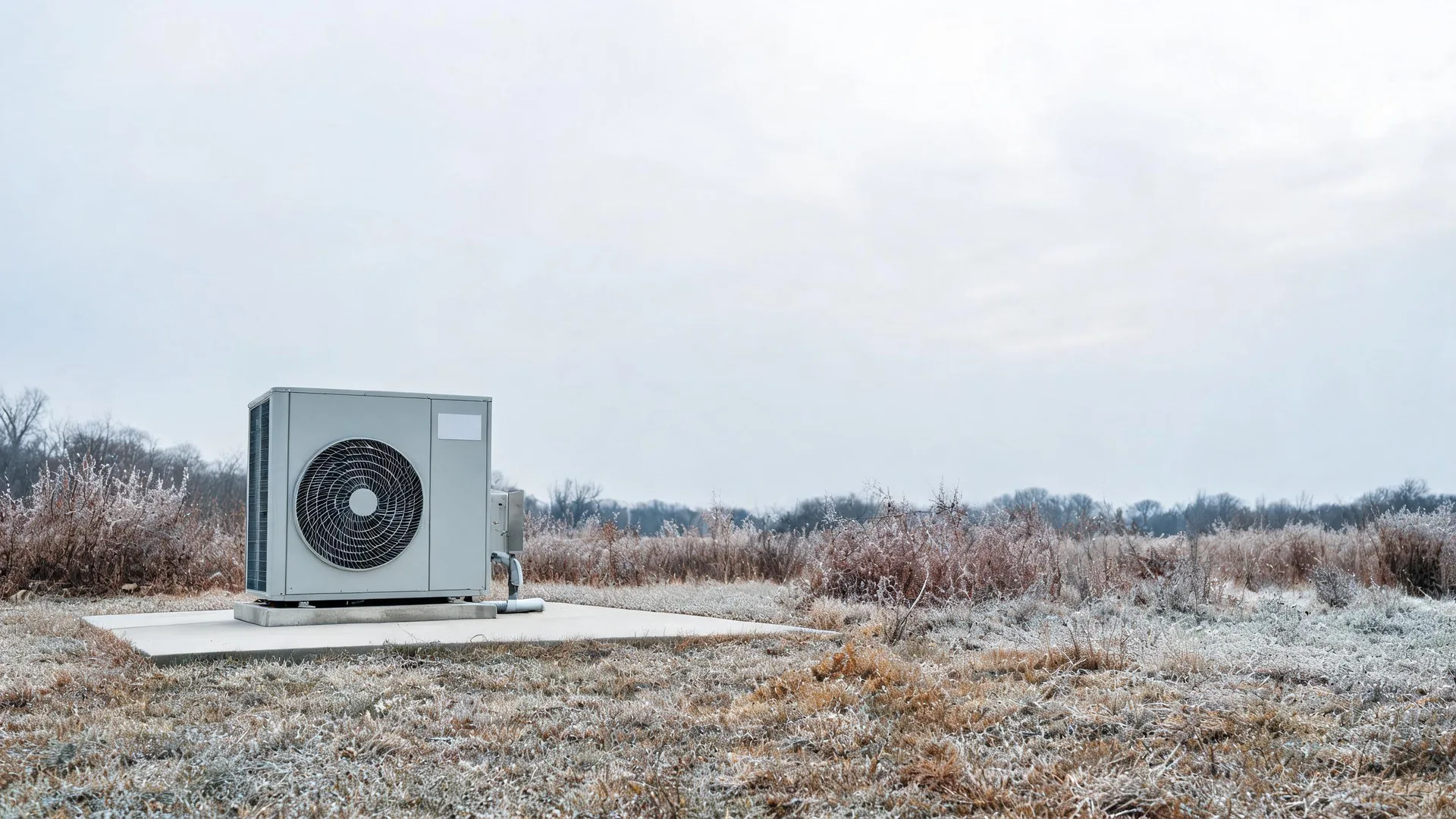
A gray residential air conditioner condenser unit mounted on a concrete pad in an open grass field.

Every hour of runtime is an hour something could give out

Runtime wears a system down in its own way, apart from the heat. Bearings in the outdoor fan motor wear from spinning, hour after hour, and a motor that runs constantly can start grinding or squealing before anything else goes. Contactors pit a little every time they close, and after enough cycles they stick or stop making contact, so the system won't start or won't shut off. A condenser coil collects dust and grass clippings the whole time it runs, and a caked coil makes the compressor push against higher pressure on every one of those hours. None of this means a system is failing. It means the parts that start and cool and blow air are logging hours, and long runtimes catch up with them sooner.

Check the thermostat and the breaker first

Set the thermostat below room temperature and listen for the outdoor unit to kick on. If nothing happens anywhere, check the breaker panel and the disconnect box next to the outdoor unit before assuming the worst. A tripped breaker or a switch bumped to off looks exactly like a dead system until you check it.

Look at the air filter before anything else

Pull the filter and hold it up to a light. If you can't see through it, air can't get through it either, and a starved system will ice up the indoor coil or shut itself down to protect the compressor. This is the one check that takes a minute and rules out a real cause, not just a symptom.

Overhead view of a gray residential air conditioning condenser unit mounted on a concrete pad beside a house with asphalt shingle roofing.

A new air conditioner would cut about $40 a year off cooling for a typical Jefferson County home.

  • A new one at the federal minimum, 14.3 SEER2$280 a year
  • An older air conditioner$320 a year

Estimates for a typical Jefferson County home, compared with an older unit built to the previous federal minimum, from EIA household energy data, Kentucky fuel prices and NOAA climate normals. Your home will differ.

Repair makes sense when a part like a capacitor or contactor has failed.

Replacement makes sense when the compressor has failed or the system uses R-22 refrigerant, which is no longer made.

A diagnostic visit starts with gauges on the refrigerant lines, because the pressure reading says whether the charge is right or something is leaking out. The electrical side gets checked too, the capacitor and contactor and the wiring into the compressor, looking for the part that's about to fail rather than the one that already has. Inside, the evaporator coil and the blower get a look, since a dirty coil or weak airflow can look like a refrigerant problem without being one. The job is to find what's actually causing the symptom, not just the first worn part that turns up. A system that's short cycling could be a weak capacitor, a dirty coil, or a stuck contactor, and each of those gets fixed a different way.