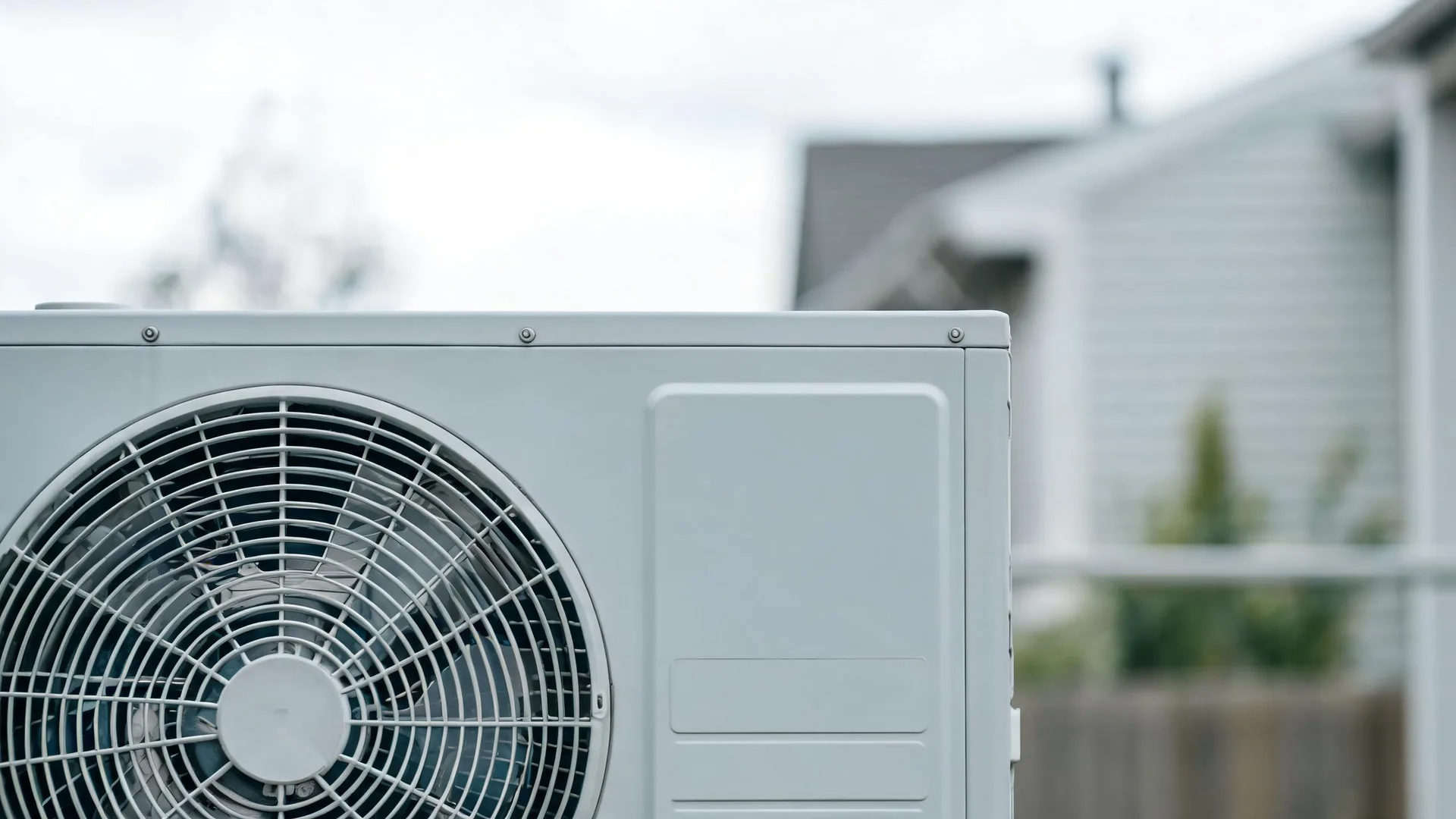
Overhead view of an air conditioning condenser unit on a concrete pad next to a house with asphalt shingle roofing and vinyl siding.

AC Repair in London, KY

Tell us about the job

Takes about a minute. No obligation.

RepairCentral ACLaurel County, KY
Step 1 of 2

What ZIP code is the job in?

Check the thermostat and the breaker first

Make sure the thermostat is set to cool and the temperature is actually below room temperature, not just sitting where it always sits. Then check the breaker panel for the outdoor unit and the indoor air handler. A tripped breaker or a thermostat bumped into heat mode looks exactly like a dead system, and both take a minute to rule out.


Look at the air filter and the outdoor unit

Pull the filter and hold it up to a light. If you can't see through it, air isn't moving through your system the way it should, and that alone can cause warm air, ice on the coil, or the unit shutting off on its own. Walk outside too. If the outdoor unit isn't running at all, or it's running but surrounded by grass clippings, leaves, or anything blocking the sides, that's worth clearing before deciding the problem is bigger than it looks.

4 months
June through September, your air conditioner is on duty
84°F
the average summer afternoon it cools against
21 hail events
in ten years, and hail bends the fins on outdoor coils
115 wind events
in ten years, and wind drives debris into outdoor units
Isometric grayscale illustration of a cutaway house showing interior rooms, ceiling ductwork connected to an indoor air handler, and an outdoor condenser unit linked by lines along the exterior wall.
Your air conditioner works hardest from June through August.

NOAA nClimDiv, 1991–2020 normals

A tech checks the capacitor and the contactor before touching anything else, since a weak start component can make a compressor hum but never kick on.

The gauges go on next, because low refrigerant and a failing compressor can look the same from inside the house but call for very different repairs.

June in London puts the first real load of the year on a system that sat idle since September

Cooling runs June through September
Summer afternoons average 84°F
115 damaging wind events from 2015 to 2024

Summer here runs June through September, with afternoon highs averaging 84. That's four months of steady work, not year-round strain, and most systems are built for exactly that kind of season. Nothing about London's climate pushes an AC harder than it was designed to handle. So when one fails in July, the cause is usually ordinary. A capacitor giving out. A dirty coil. A refrigerant leak that's been slow for a while. Worth ruling out the simple stuff before assuming it's something bigger.

Get it looked at early

Problems tend to show up in the first weeks of the season, when the load hits a part that was already weak.

Find a contractor
A man in a dark long-sleeve shirt and tan pants, seen from behind, carries a canvas tool bag up wooden porch steps toward a dark green front door of a shingled house.
An outdoor air conditioning condenser unit mounted on a concrete pad surrounded by gravel, photographed against a partly cloudy blue sky.

Your system has fewer years on it than you might think

Half the homes in Laurel County were built in 1992 or later. If yours is one of them, your AC is probably not the original unit, but it's also not carrying decades of wear. A system installed within the last decade or so still has plenty of life in it, and a breakdown now is more likely a single bad part than a system on its way out. Worth asking a tech to find that part and fix it rather than talking you into a new unit.

A weak start can hide a bigger problem

If the capacitor is going bad but still barely kicks the compressor over, the compressor keeps starting under strain every cycle. That strain is what eventually burns out a compressor that otherwise had years left in it.

Low refrigerant gets worse, not better

A slow leak doesn't fix itself. Running the system low on charge makes the compressor work harder to move heat, and it can let the coil ice over, which blocks airflow completely and can send liquid refrigerant back to the compressor.

An outdoor air conditioning condenser unit mounted on a concrete pad next to a blue-sided residential house at sunset.

A new air conditioner would cut about $30 a year off cooling for a typical Laurel County home.

  • A new one at the federal minimum, 14.3 SEER2$220 a year
  • An older air conditioner$250 a year

Estimates for a typical Laurel County home, compared with an older unit built to the previous federal minimum, from EIA household energy data, Kentucky fuel prices and NOAA climate normals. Your home will differ.

Repair makes sense when a part like a capacitor or contactor has failed.

Replacement makes sense when the compressor has failed or the system uses R-22 refrigerant, which is no longer made.

A repair is worth making when the part that failed is one part, and the rest of the system was running fine around it. A capacitor, a contactor, a fan motor, a control board. Any of these can quit on their own in a system that's otherwise sound, and replacing the one part brings it back. Replacement starts to make more sense when the compressor itself is failing, since that's the one part that costs as much as the system is worth and can't always be swapped on its own. It also makes sense when a tech finds more than one thing wrong at the same time, because that usually means age is catching up with the whole system, not just one component. Ask what exactly failed and why, before deciding which path you're on.