





Aerial view of a gray central air conditioning condenser unit on a concrete pad next to a house with vinyl siding.

AC Repair in Lexington-Fayette urban county, KY

Tell us about the job

Takes about a minute. No obligation.

RepairCentral ACFayette County, KY
Step 1 of 2

What ZIP code is the job in?

Fayette County logged 143 severe weather events between 2015 and 2024, and most of those were damaging wind. Wind throws branches and debris into an outdoor AC unit, and it bends the fins or cracks the fan blade without stopping the unit from running. Hail hit the county too, and it dents coils in ways you can't always see from a few feet back. If your unit took a hit and still runs, that's not proof it's fine. A system can keep cooling for weeks after hail damage before the coil gives out.

4 months
June through September, your air conditioner is on duty
85°F
the average summer afternoon it cools against
15 hail events
in ten years, and hail bends the fins on outdoor coils
108 wind events
in ten years, and wind drives debris into outdoor units
Isometric 3D cutaway render of a house with dark siding showing interior rooms, ductwork and an air handler, connected by lines to an outdoor condenser unit on a white background.
Your air conditioner works hardest from June through August.

NOAA nClimDiv, 1991–2020 normals

Half the homes in Fayette County were built in 1984 or later.

A system that came with a newer Lexington home likely still has working life left, and that's worth finding out before anyone talks about replacing it.

Cooling starts in June here, and that's when a weak unit fails first

Cooling runs June through September
Summer afternoons average 85°F
108 damaging wind events from 2015 to 2024

June through September is the only real cooling load here, and afternoon highs average 85. That's not a hard stretch as these things go. Most AC trouble in Lexington comes down to the ordinary wear any unit sees over a season. A capacitor weakens. A dirty coil chokes airflow. A refrigerant leak slowly drops the charge. None of that has much to do with this county specifically. If your unit is short cycling or blowing warm, a contractor can usually trace it to one of those common points fast, especially when there's no storm damage or standing water around the unit pointing somewhere else.

If your AC took a hit this season, get the outdoor unit looked at

Have the outdoor unit checked for bent fins, a cracked fan blade or a dented coil, especially if it's been through wind or hail this year. A unit can run fine for weeks after that kind of damage before it quits.

Find a contractor
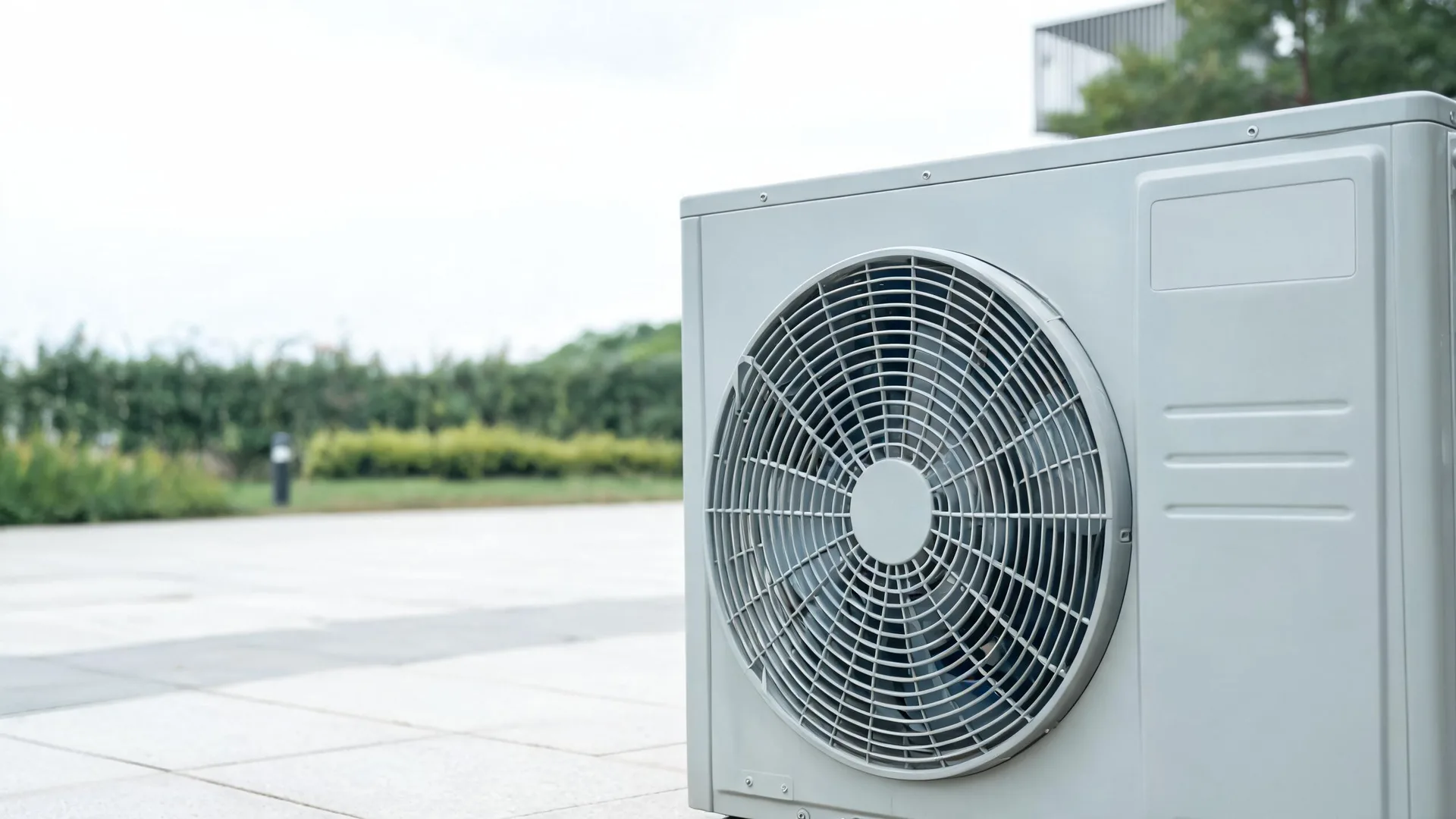
An outdoor air conditioning condenser unit mounted on a concrete pad beside a house, with electrical conduit running to a wall-mounted disconnect box.

Find out what's wrong before you decide what to do about it

Ask the contractor for a diagnosis before a replacement quote. A newer unit with a bad capacitor or a low refrigerant charge is a repair, not a reason to start over. Get the actual problem named first.

Warm air from the vents means the system can't keep up

If the air coming out feels barely cool or just like room temperature, the unit is running but not doing its job. That can be a refrigerant leak, a failing compressor, or a coil so dirty it can't pull heat out of the air. Warm air on its own doesn't tell you which, but it tells you the unit needs a look now, not at the end of the season.

Short cycling wears out the parts that are left

A unit that kicks on, runs a few minutes, then shuts off and starts again isn't resting, it's struggling. Short cycling puts extra strain on the compressor and the start components every time it restarts. Left alone, it tends to take out whatever part was already weak, so it's worth having someone trace the cause before another part fails behind it.

An outdoor air conditioning condenser unit positioned beside a blue-sided house at sunset.

A new air conditioner would cut about $40 a year off cooling for a typical Fayette County home.

  • A new one at the federal minimum, 14.3 SEER2$230 a year
  • An older air conditioner$270 a year

Estimates for a typical Fayette County home, compared with an older unit built to the previous federal minimum, from EIA household energy data, Kentucky fuel prices and NOAA climate normals. Your home will differ.

Repair makes sense when a part like a capacitor or contactor has failed.

Replacement makes sense when the compressor has failed or the system uses R-22 refrigerant, which is no longer made.

A contractor can fix almost anything on an AC unit given enough parts and time. That doesn't mean every repair makes sense. The question that matters is what's failing and what else is likely to follow it. A capacitor or a contactor is cheap and quick, and replacing one tells you nothing bad about the rest of the system. A compressor is a different story. It sits at the center of the refrigerant circuit, and when it's failing or already gone, the labor to replace it is high and the unit is old enough in its own life that another part can follow soon after. The age of the unit matters less than what's actually broken and how many other things have started going with it. One repair on an otherwise sound system is just maintenance. A second or third repair in close succession is the system telling you it's done being patched.