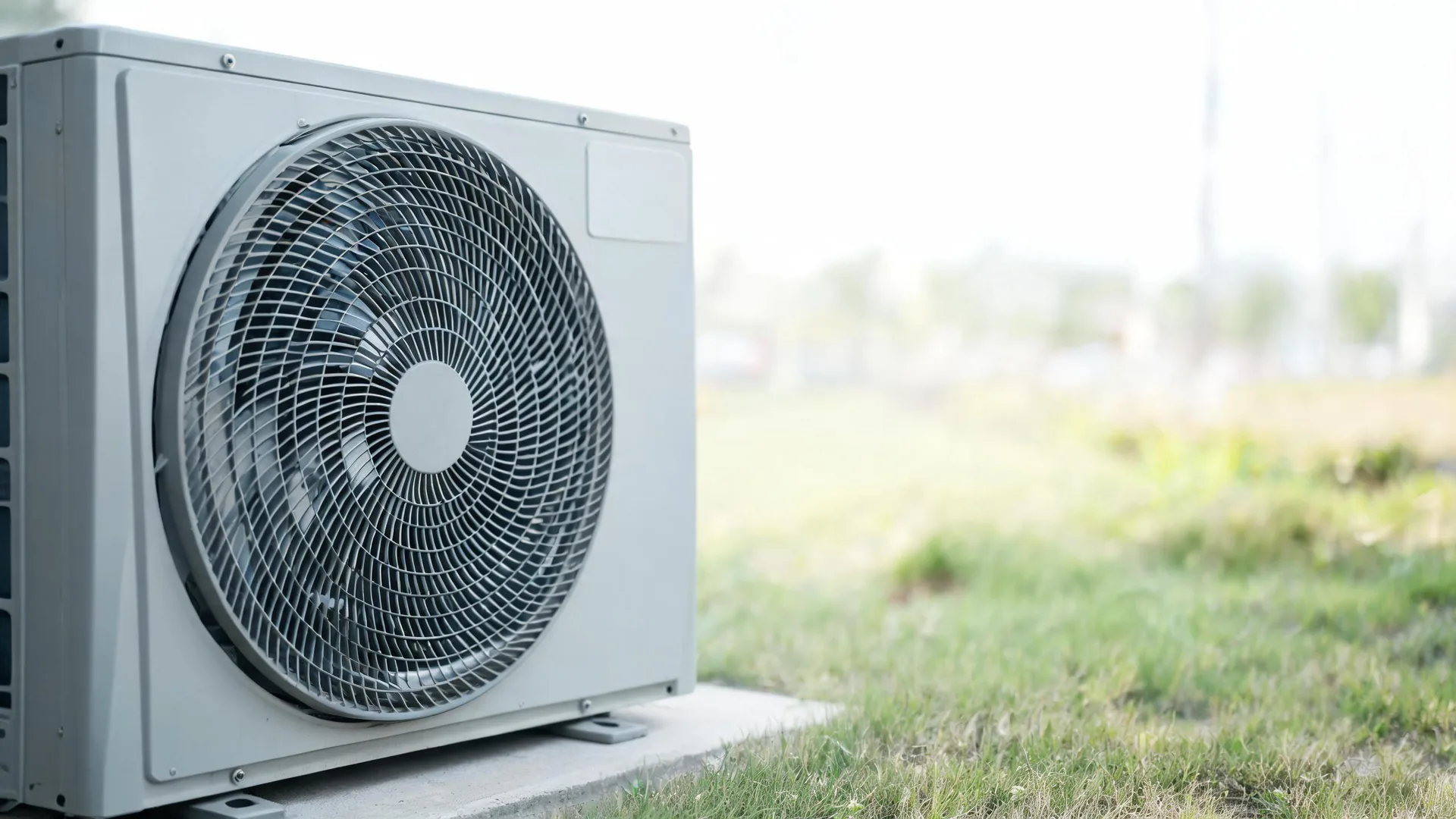
An overhead view of a residential air conditioning condenser unit mounted on a concrete pad next to a house with vinyl siding.

AC Repair in Hopkinsville, KY

Tell us about the job

Takes about a minute. No obligation.

RepairCentral ACChristian County, KY
Step 1 of 2

What ZIP code is the job in?

This county gets hit a lot

Christian County logged 169 severe weather events between 2015 and 2024, including damaging wind, hail and tornadoes. An outdoor AC unit sits outside through all of it, exposed to wind-driven debris and hail that a furnace or water heater never sees.


Running fine doesn't mean undamaged

Hail can dent coil fins and bend them closed without stopping the unit right away. Wind can drive debris into the coil or knock the unit out of level. If a storm has come through since the unit last ran well, it's worth having someone look at the coil and the pad it sits on, not just listening for whether it still starts.

5 months
May through September, your air conditioner is on duty
87°F
the average summer afternoon it cools against
26 hail events
in ten years, and hail bends the fins on outdoor coils
106 wind events
in ten years, and wind drives debris into outdoor units
Isometric cutaway illustration of a house with a dark shingled roof, showing interior ductwork connected to an indoor air handler and an outdoor condenser unit beside the building.
Your air conditioner works hardest from June through August.

NOAA nClimDiv, 1991–2020 normals

A weak compressor keeps drawing current even as it struggles to pump refrigerant.

Let it run that way long enough and it burns itself out instead of just losing cooling power.

Summers here run hot for five months, but that's not what's wearing out your AC

Cooling runs May through September
Summer afternoons average 87°F
106 damaging wind events from 2015 to 2024

Before calling anyone, check the thermostat batteries and make sure it's set to cool, below room temperature. Go outside and look at the condenser. If the fan isn't spinning at all, check the breaker for that unit, not just the main panel, since AC units often have their own disconnect box nearby too. Look at the coil through the side of the unit for anything matted against it, leaves, grass clippings, a bent fin. Inside, check the filter. A filter packed with dust chokes airflow and can make the whole system work harder than it should. If the outdoor unit is running but the air coming from the vents is warm, or there's ice on the indoor coil or the refrigerant lines, turn the system off and leave it off. Running it iced up risks the compressor, and that's not a part worth gambling on.

After the storm, look before you listen

If a storm has come through since the unit last ran well, have the coil and pad checked now, even if the air is still cold. A dented coil or a unit knocked off level won't always announce itself through the vents.

Find a contractor
A man in a dark long-sleeve shirt and tan pants, seen from behind, carries a canvas tool bag up wooden porch steps toward a dark green front door of a shingled house.
An outdoor air conditioning condenser unit mounted on a concrete pad surrounded by gravel, photographed against a partly cloudy blue sky.

Know what you're working with before you pay for a repair

If your AC came with the house, get the model and serial off the condenser's data plate before you call anyone. A repair tech can tell you right away whether parts are still available and whether the compressor is still under its original warranty. That's worth knowing before you spend money on a repair instead of asking about it after.

Refrigerant doesn't get used up

A low charge means the system is leaking somewhere, usually at a coil, a fitting or a rubbed-through line. Adding refrigerant without finding the leak just means doing it again in a few months.

Capacitors wear out on their own

The capacitor that kicks the compressor and fan motor into motion weakens with age and heat, even on a unit that's never had a problem before. When it goes, the unit may hum and not start, or the fan may stall while the compressor still hums.

Overhead view of an air conditioning condenser unit on a concrete pad next to a house with asphalt shingle roofing and vinyl siding.

A new air conditioner would cut about $40 a year off cooling for a typical Christian County home.

  • A new one at the federal minimum, 14.3 SEER2$310 a year
  • An older air conditioner$350 a year

Estimates for a typical Christian County home, compared with an older unit built to the previous federal minimum, from EIA household energy data, Kentucky fuel prices and NOAA climate normals. Your home will differ.

Repair makes sense when a part like a capacitor or contactor has failed.

Replacement makes sense when the compressor has failed or the system uses R-22 refrigerant, which is no longer made.

Age by itself doesn't mean replace it. What matters more is which part failed and what it would take to fix it. A bad capacitor or a failed fan motor is a straightforward repair on almost any unit, old or new. A compressor is a different question, since it's the most expensive part in the system and the labor to replace one isn't small either. If a compressor has failed on a unit that's already had other repairs, putting more money into it is a real decision, not an easy yes. Ask what failed before asking what it costs to fix.