Overhead view of an outdoor AC condenser unit on a concrete pad next to a house with a dark shingle roof.

AC Repair in Henderson, KY

Tell us about the job

Takes about a minute. No obligation.

RepairCentral ACHenderson County, KY
Step 1 of 2

What ZIP code is the job in?

A small fault spreads to bigger parts

A refrigerant leak starves the compressor of the cool gas it needs to stay at a safe temperature. Keep the system running and the compressor runs hotter than it should, and that wear doesn't reverse. A failing capacitor makes the compressor motor pull harder to start. Each hard start adds heat and strain that a healthy start wouldn't.


The signs tell you how urgent it is

Weak airflow or a system that's merely slow to cool can usually wait for a scheduled visit. Ice on the line, a hard rattle from the outdoor unit, or a breaker that keeps tripping means shut it off and get it looked at. Running it through those is how a repair turns into a compressor replacement.

5 months
May through September, your air conditioner is on duty
87°F
the average summer afternoon it cools against
9 hail events
in ten years, and hail bends the fins on outdoor coils
82 wind events
in ten years, and wind drives debris into outdoor units
Isometric cutaway illustration of a single-story house with a dark shingled roof, showing interior rooms with ductwork and an indoor air handler connected to an outdoor condenser unit beside the building.
Your air conditioner works hardest from June through August.

NOAA nClimDiv, 1991–2020 normals

AC here starts running in May.

Get it checked in April, before the first hot week finds the weak part.

Five months of heat, 87 degree afternoons, nothing out of the ordinary for this system

Cooling runs May through September
Summer afternoons average 87°F
82 damaging wind events from 2015 to 2024

Half the homes in Henderson County were built in 1976 or earlier, half in 1976 or later. Either way, nothing about the house changes what's likely wrong with your AC. A system that won't cool, trips its breaker, or ices up is almost always a refrigerant leak, a weak capacitor, or a dirty coil, the same handful of problems a contractor sees in an old house or a new one. The age of your house tells you about the ductwork and the wiring behind the walls, not about the condenser sitting outside it. If your AC came with the house, that's worth mentioning when someone comes to look. The fix is still the usual fix.

Get it looked at early

Problems tend to show up in the first weeks of the season, when the load hits a part that was already weak.

Find a contractor
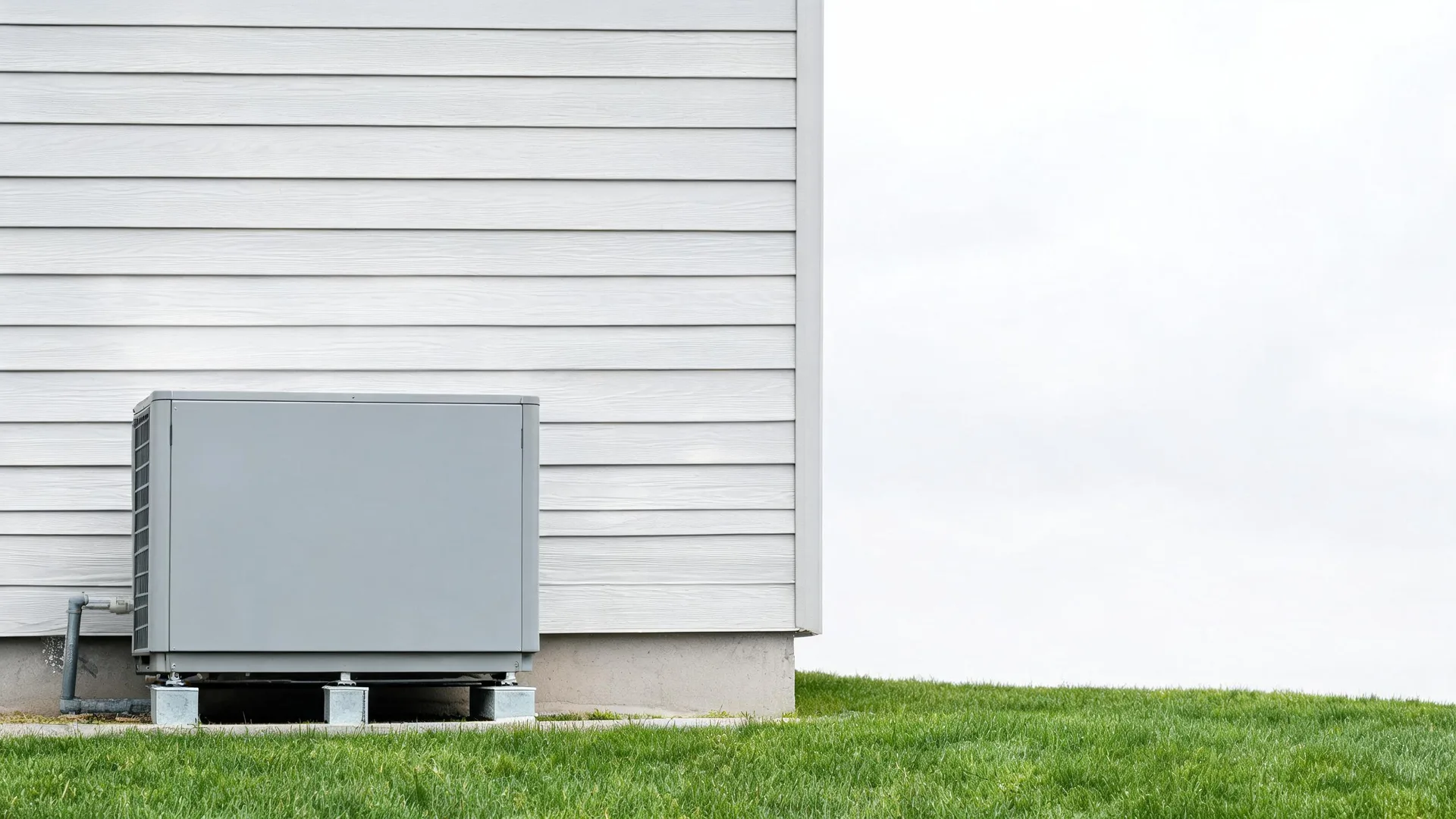
A gray cylindrical air conditioning condenser unit mounted on a concrete pad next to a light-colored vinyl-sided house exterior.

Your AC tells you before it quits

A system that's starting to fail doesn't usually just quit. It tells you first. Warm air from the vents when the thermostat is set low enough to cool means the compressor isn't doing its job, or the refrigerant charge is low. A short cycle, where the system kicks on and off every few minutes instead of running a full cycle, strains the compressor every time it restarts. Water pooling near the indoor unit points to a clogged condensate line, which seems minor until it backs up and damages the floor underneath it. A burning smell or a breaker that trips when the system starts is the electrical side telling you it's working harder than it should. None of these fix themselves, and left alone they tend to take the compressor down with them.

What you can check yourself

Look at the outdoor unit and clear anything blocking it, leaves, grass clippings, a branch leaning against the fan cage. Check the thermostat has fresh batteries and is actually set to cool below room temperature. Pull the filter and hold it up to a light. If you can't see light through it, swap it. A clogged filter starves the system of airflow and can look like a refrigerant problem from the vents.

What to leave alone

Don't pull the cover off the outdoor unit or touch anything inside its electrical panel. Don't add refrigerant yourself even with a gauge on hand, the wrong charge does more damage than running low does. If there's ice on the lines, switch the system off and let it thaw rather than chipping at it. Those are jobs for someone with the gauges and training to do them without turning a small fix into a bigger one.

An overhead view of a residential air conditioning condenser unit mounted on a concrete pad next to a house with vinyl siding.

A new air conditioner would cut about $50 a year off cooling for a typical Henderson County home.

  • A new one at the federal minimum, 14.3 SEER2$300 a year
  • An older air conditioner$350 a year

Estimates for a typical Henderson County home, compared with an older unit built to the previous federal minimum, from EIA household energy data, Kentucky fuel prices and NOAA climate normals. Your home will differ.

Repair makes sense when a part like a capacitor or contactor has failed.

Replacement makes sense when the compressor has failed or the system uses R-22 refrigerant, which is no longer made.

A diagnostic visit starts outside, at the condenser, before anyone touches the thermostat. A tech checks the refrigerant pressure with gauges on the lines, because that number says more about what's wrong than how warm the air feels at the vent. The capacitor gets tested under load, not just looked at, since a capacitor can read fine sitting still and still fail to kick the compressor over. The coil gets checked for ice or buildup, and the condensate line gets checked for a clog, because either one can mimic a bigger problem it isn't. Only after all that does the electrical side get a look, the contactor, the wiring, the breaker, to see if something is pulling more current than it should. The point of going in this order is to find the one small part that's actually failing before it takes a bigger one down with it.