






An outdoor central air conditioning unit mounted on a concrete pad beside a blue-sided house at sunset.

AC Repair in Hazard, KY

Tell us about the job

Takes about a minute. No obligation.

RepairCentral ACPerry County, KY
Step 1 of 2

What ZIP code is the job in?

Summers here run June through September, with afternoon highs averaging 84 in June, July and August. That is a normal cooling load, not an extreme one. A unit that is kept up should handle it without strain. When an AC in Hazard starts short cycling, blows warm air, or trips its breaker, the cause is usually ordinary. A low refrigerant charge. A failing capacitor. A dirty coil, or a clogged filter choking airflow. None of that points to anything unusual about the climate here. It points to a part that needs a trained eye to find and replace.

4 months
June through September, your air conditioner is on duty
84°F
the average summer afternoon it cools against
12 hail events
in ten years, and hail bends the fins on outdoor coils
56 wind events
in ten years, and wind drives debris into outdoor units
Isometric cutaway illustration of a single-story house showing interior rooms, ductwork and an air handler in the attic space, and an outdoor condenser unit connected by lines at the exterior wall.
Your air conditioner works hardest from June through August.

NOAA nClimDiv, 1991–2020 normals

A weak capacitor does not always stop the compressor cold, it just makes it struggle to start.

A compressor that struggles to start on every cycle wears down faster than one that starts clean.

May is when a weak AC gets found, right before June asks more of it

Cooling runs June through September
Summer afternoons average 84°F
56 damaging wind events from 2015 to 2024

Get the usual fix

Nothing about this area is especially hard on it. It's most likely the usual problem with the usual fix.

Find a contractor
A man in a dark shirt and tan pants, seen from behind, climbs porch steps toward a dark green paneled door while carrying a worn canvas tool bag, with a potted shrub beside the entry.
A gray residential air conditioning condenser unit mounted on a concrete pad outdoors, surrounded by green grass under a partly cloudy blue sky.

Running it through the problem does not buy you anything

A capacitor that is starting to go still lets the compressor run. It just makes the motor pull harder to get moving. Every cycle it runs weak adds a little more wear until it either fails to start at all or takes the compressor with it. A dirty coil works the same way. Airflow drops, heat does not transfer the way it should, and the compressor runs longer to make up for it. Run that for a full season and you have asked a part to work in a bad state far more hours than it would have needed to. A refrigerant leak is worse left alone, not better. The charge does not refill itself, and a compressor run low on refrigerant for weeks at a time is losing lubrication it needs to survive. None of these get gentler with time. They get caught early, or they get caught as a bigger repair.

What you can check yourself

Check the thermostat is set to cool and the setting is actually below room temperature. Check the breaker box for a tripped breaker, especially after a storm. Go outside and look at the condenser fan through the top grille. If it is not spinning, or spinning slow, that is worth noting for whoever comes out. Pull the filter and hold it up to a light. If you cannot see light through it, that is airflow the system is not getting.

What to leave alone

Do not pour water on the outdoor unit to cool it down, and do not add refrigerant yourself even if you have a gauge. Do not keep resetting a tripped breaker more than once. A breaker that trips again is telling you something is drawing too much current, and running it anyway risks the compressor. Leave the panel covers on. What you find before the call is a head start for the diagnosis, not a stand-in for it.

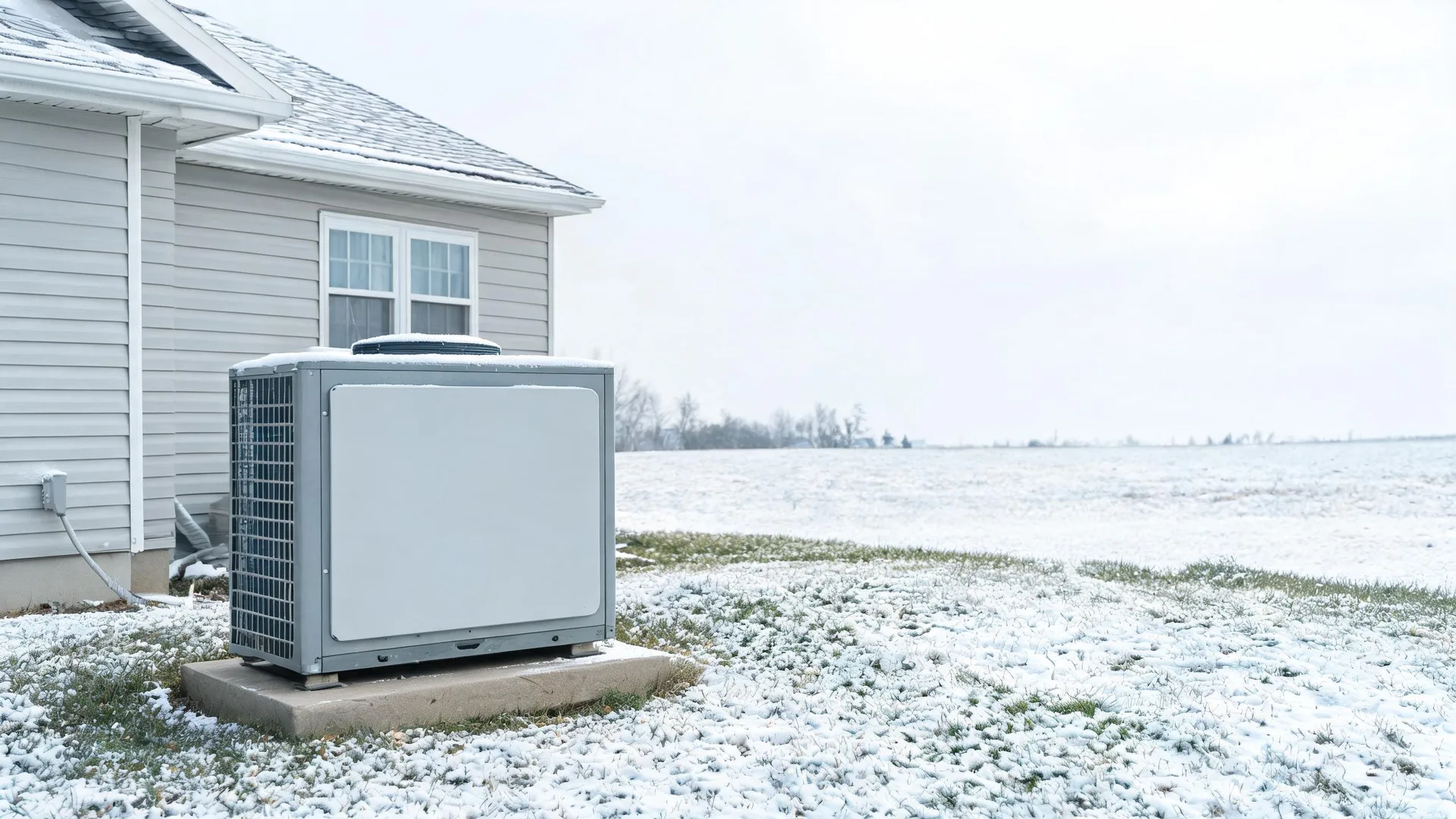
An outdoor air conditioning condenser unit installed beside the exterior wall of a blue vinyl-sided house at sunset.

A new air conditioner would cut about $30 a year off cooling for a typical Perry County home.

  • A new one at the federal minimum, 14.3 SEER2$220 a year
  • An older air conditioner$250 a year

Estimates for a typical Perry County home, compared with an older unit built to the previous federal minimum, from EIA household energy data, Kentucky fuel prices and NOAA climate normals. Your home will differ.

Repair makes sense when a part like a capacitor or contactor has failed.

Replacement makes sense when the compressor has failed or the system uses R-22 refrigerant, which is no longer made.

Repair makes sense when one part has failed and the rest of the system is sound. A capacitor, a contactor, a fan motor all fail on their own. Swapping the bad part brings the unit back to normal. Replacement starts to make more sense when the compressor itself is failing. That is the most expensive part in the system, and it cannot be patched. It also makes sense when the same unit keeps coming back with a different problem every year. That pattern usually means the whole system is wearing out at once, not that it has bad luck. A tech who finds the failed part can tell you which kind of problem you have. What matters most is getting that diagnosis before deciding anything, rather than guessing from how old the unit looks or how loud it has gotten.