





A dark horizontal-sided building corner in the left foreground beside a mowed lawn, with a light-colored single-story house and large deciduous trees under a pale sky in the background.

AC Repair in Georgetown, KY

Tell us about the job

Takes about a minute. No obligation.

RepairCentral ACScott County, KY
Step 1 of 2

What ZIP code is the job in?

Summers here run four months, June through September, with afternoon highs averaging 85 degrees. That's real work for a system, but nothing unusual for this area. Georgetown sits in a mixed climate zone, so the same unit has to handle cold winters too. None of that points to anything strange going on with your AC. If it's not cooling right or running longer than it should, the cause is probably what a tech finds in any home around here. A weak capacitor. A low charge. A dirty coil. Worth finding the actual cause before anyone talks about replacing anything.

4 months
June through September, your air conditioner is on duty
85°F
the average summer afternoon it cools against
6 hail events
in ten years, and hail bends the fins on outdoor coils
65 wind events
in ten years, and wind drives debris into outdoor units
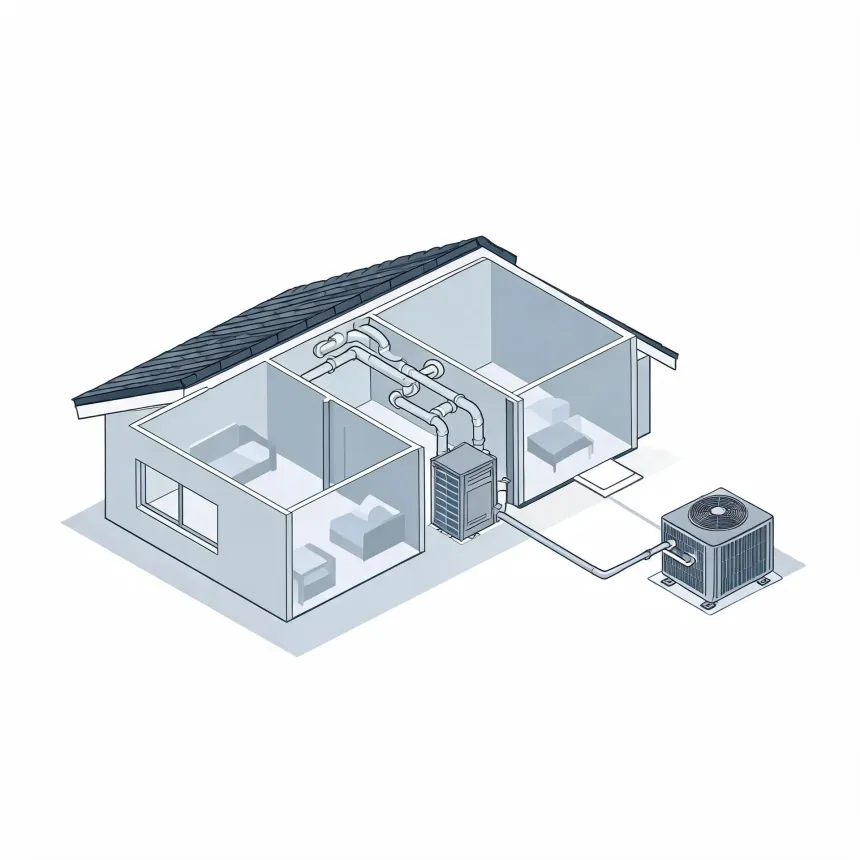
Isometric line illustration of a cutaway single-story house showing interior rooms, ductwork, an indoor air handler or furnace, and a refrigerant line running to an outdoor condenser unit on a pad.
Your air conditioner works hardest from June through August.

NOAA nClimDiv, 1991–2020 normals

A struggling compressor draws more current the longer it runs.

Letting it keep cycling can turn a capacitor job into a compressor replacement.

Half the homes here were built since 2000, the age where repair still makes sense

Half the homes here were built by 2000
Cooling runs June through September
Summer afternoons average 85°F
Georgetown weather isn't the problem65 damaging wind events in Scott County between 2015 and 2024, nothing more

If your AC came with a newer build, fixing the actual problem is worth doing. The unit itself is probably not old, even if it's acting up right now. A new capacitor or a fan motor gets a system like that running the way it was built to run, not just patched over. Ask whoever comes out what they found and why it points to repair rather than something bigger. In a house built since 2000, that's almost always the right call.

Get the usual fix

Nothing about this area is especially hard on it. It's most likely the usual problem with the usual fix.

Find a contractor
A man in a dark long-sleeve shirt, cap, and tan work pants walks up wooden steps toward a dark green front door, carrying a canvas tool bag with hand tools, beside a potted shrub.
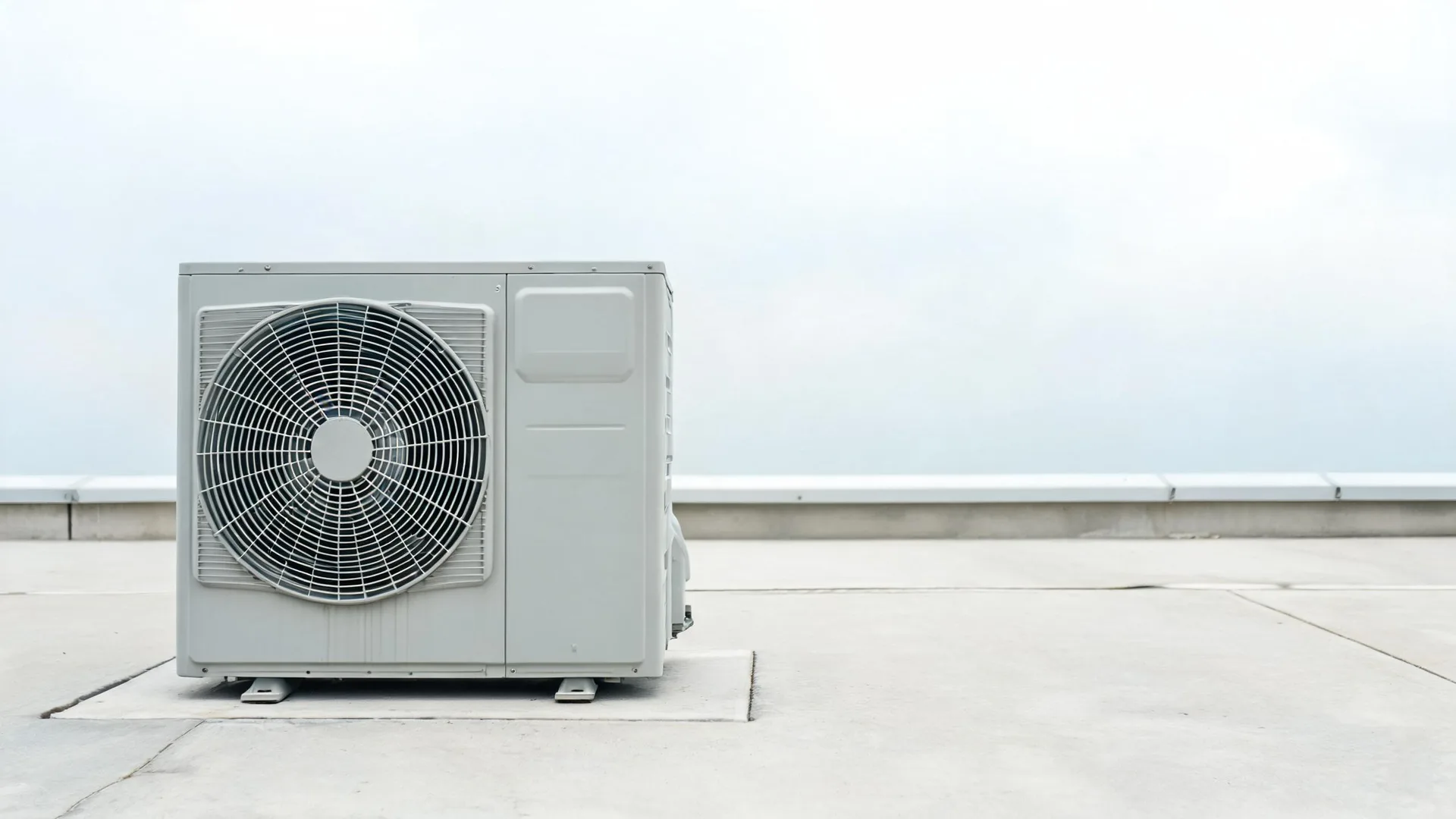
An outdoor residential air conditioning condenser unit mounted on a concrete pad, surrounded by gravel with a blue sky in the background.

A few minutes of checking before the call

Before anyone comes out, check the thermostat batteries and make sure it's set to cool, below room temperature. Go to the breaker panel and confirm the AC breaker hasn't tripped. Look at the outdoor unit. If the fan isn't spinning and you hear a hum, don't keep flipping the breaker, that's often a seized motor or failed capacitor, and repeated attempts can cook the wiring. Pull the air filter and hold it up to a light. If you can't see light through it, swap it or wash it before calling anyone, a clogged filter alone can cause weak airflow and ice on the coil. Check the vents in a few rooms to see if air is moving at all or just not cold. Look at the outdoor unit's coil, the fins around the outside, for leaves, grass clippings or a collapsed fence line blocking it, and clear anything you can reach by hand. If you see ice on the copper lines or the indoor coil, shut the system off at the thermostat and let it thaw before a tech arrives, running it iced up can flood the compressor with liquid refrigerant. None of this tells you what's actually wrong inside the unit, but it rules out the things that aren't a repair at all.

The capacitor takes the wear first

Every time the compressor and fan motor start, the capacitor gives them the jolt to get moving. That cycle wears it down over years until it can't deliver the jolt anymore. The motor hums and sits there, or the fan doesn't spin at all. It's the most common failure in the whole system because it's the part asked to do the most work, over and over, with no rest between cycles.

Refrigerant doesn't run out, it leaks out

A sealed system doesn't use up refrigerant the way an engine uses oil. If the charge is low, it's low because it's leaking out somewhere, usually at a fitting, a coil, or a line that's rubbed through. Adding refrigerant without finding the leak just means doing it again later. A tech who tops it off without looking for the source isn't actually fixing anything.

Aerial view of a gray central air conditioning condenser unit on a concrete pad next to a house with vinyl siding.

A new air conditioner would cut about $40 a year off cooling for a typical Scott County home.

  • A new one at the federal minimum, 14.3 SEER2$230 a year
  • An older air conditioner$270 a year

Estimates for a typical Scott County home, compared with an older unit built to the previous federal minimum, from EIA household energy data, Kentucky fuel prices and NOAA climate normals. Your home will differ.

Repair makes sense when a part like a capacitor or contactor has failed.

Replacement makes sense when the compressor has failed or the system uses R-22 refrigerant, which is no longer made.

A compressor doesn't fail out of nowhere. It usually fails because something smaller went wrong first and kept running anyway, a weak capacitor, a dirty coil, low airflow, and the compressor paid for it over weeks or months of strain. That's why the question is never just what's broken, it's whether the rest of the system got hurt while it was broken. A tech checks run capacitor strength, checks refrigerant pressures against what the system should be seeing, and listens to how the compressor sounds on startup. A unit that starts hard, hums, or trips the breaker on its own has earned a closer look before anyone commits to a repair. Most of the time the damage stopped where it started. Sometimes it didn't, and that's worth knowing before money goes into a part that won't save the rest.