A lit brick residential street at dusk showing a row of two-story homes with covered porches and mature trees.

AC Repair in Fort Thomas, KY

Tell us about the job

Takes about a minute. No obligation.

RepairCentral ACCampbell County, KY
Step 1 of 2

What ZIP code is the job in?

How old the unit is matters less than what's failing

A capacitor or a contactor is a cheap, quick fix on a system of any age, and replacing it is the right call almost every time. What changes the math is the compressor or a leak in the coil. Those repairs cost real money, and on an older system they're often the first sign more parts are near the end of their life too.


A system that keeps coming back is telling you something

One repair in a few years is just a repair. A unit that needs a tech out every season, even for small things, has a problem that keeps producing new problems. At that point the question isn't whether this repair is worth it, it's whether the next one will be too.

4 months
June through September, your air conditioner is on duty
85°F
the average summer afternoon it cools against
23 hail events
in ten years, and hail bends the fins on outdoor coils
43 wind events
in ten years, and wind drives debris into outdoor units
Isometric line illustration of a cutaway house showing interior rooms with furniture, ductwork leading to an indoor air handler, and an outdoor condenser unit connected by a line set.
Your air conditioner works hardest from June through August.

NOAA nClimDiv, 1991–2020 normals

Summer here runs June through September, with afternoon highs around 85.

Four months of real heat is normal work for any AC, not a reason for this one to be failing.

Half the homes here were built by 1972, and an AC can run out of years before it runs out of excuses

Half the homes here were built by 1972
Cooling runs June through September
Summer afternoons average 85°F
Your AC probably just needs a repair, not an explanation79 severe weather events hit Campbell County between 2015 and 2024, in line with the rest of the region.

Before paying for a compressor or coil repair on a system that old, ask the tech straight out how many years it likely has left. If your system came with a house built around 1972 or earlier, that answer matters more than the repair itself. A newer unit in an older house is a different question, since the house doesn't tell you anything about the equipment inside it. Either way, get the answer before you decide whether the repair is worth doing.

Get the usual fix

Nothing about this area is especially hard on it. It's most likely the usual problem with the usual fix.

Find a contractor
A man in a cap, gray long-sleeve shirt and tan work pants carries a canvas tool bag up concrete steps toward a dark green paneled front door, with a potted shrub to the right.
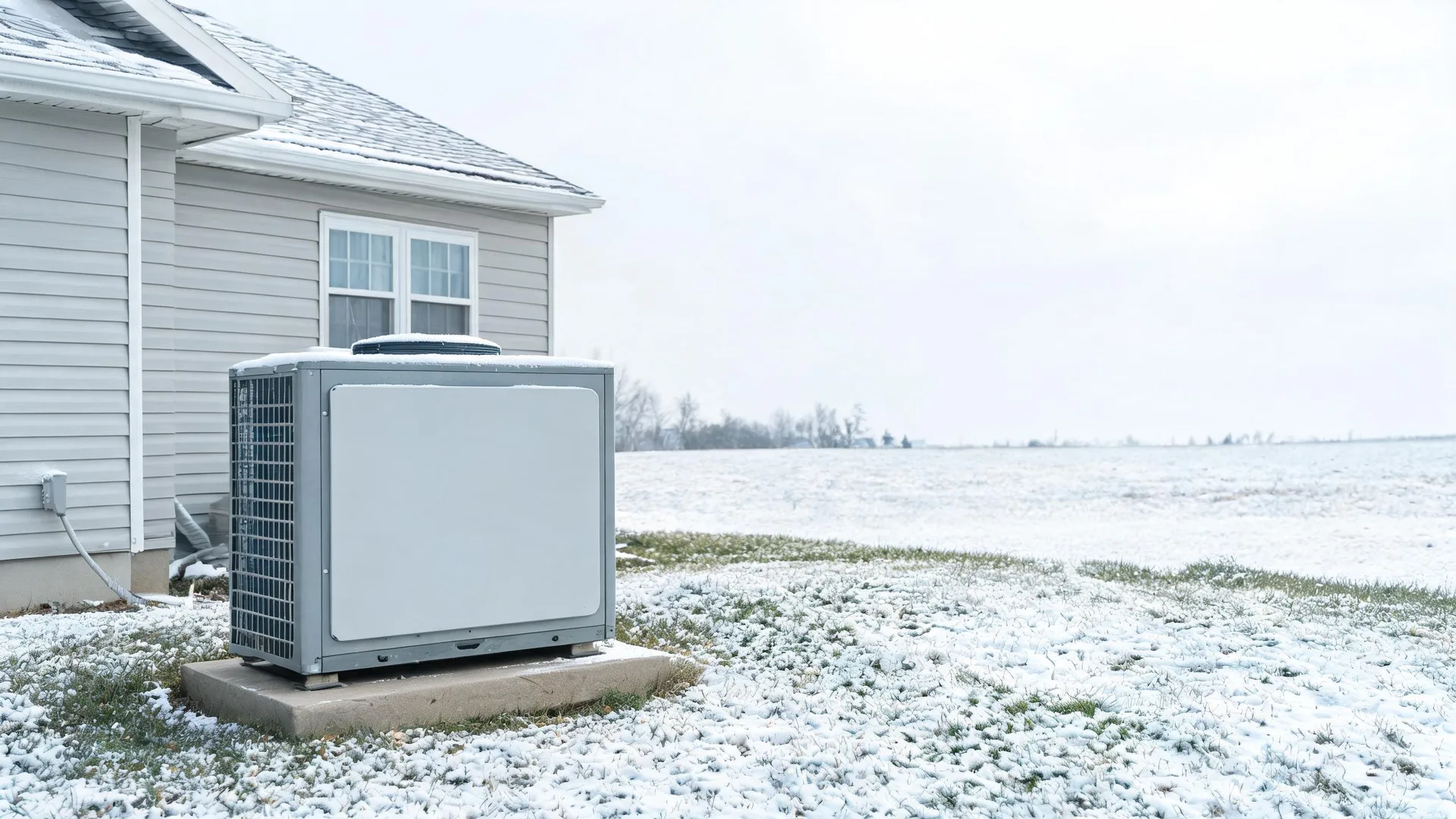
A gray cylindrical air conditioning condenser unit mounted on a concrete pad next to a light-colored vinyl-sided house exterior.

What to check before you pick up the phone

Check the thermostat first. Make sure it's set to cool and set below room temperature, and swap the batteries if it's been a while. Next, look at the air filter. A filter clogged with dust chokes off airflow and can make the whole system struggle or ice up. Go outside and look at the condenser unit. Clear away leaves, grass clippings or anything stacked against it, since it needs open air on all sides to shed heat. Check the breaker panel for a tripped breaker, especially if the system stopped suddenly. Inside, look for a shutoff switch near the indoor unit or furnace that may have gotten bumped off. If the system has a condensate line, see if it's draining or if water is pooled near the indoor unit, since a clogged line will shut some systems down on purpose. None of this fixes a bad capacitor or a refrigerant leak, but it rules out the simple stuff before anyone drives out.

Warm air from the vents means the system is working against itself

A failing capacitor can't keep the compressor or fan motor running at full strength, so the air coming out turns weak and warm even though the unit is running. Ice on the refrigerant line does the same thing from a different cause, starving the coil of airflow until it can't pull heat out of the air at all.

A new sound or smell is the system telling you what broke

A hard rattle usually means a loose or failing motor mount. A squeal points to a motor bearing giving out. A burning smell means wiring or a motor winding is overheating, and that one is worth shutting the system off for until a tech looks at it.

An outdoor air conditioning condenser unit installed beside the exterior wall of a blue vinyl-sided house at sunset.

A new air conditioner would cut about $40 a year off cooling for a typical Campbell County home.

  • A new one at the federal minimum, 14.3 SEER2$230 a year
  • An older air conditioner$270 a year

Estimates for a typical Campbell County home, compared with an older unit built to the previous federal minimum, from EIA household energy data, Kentucky fuel prices and NOAA climate normals. Your home will differ.

Repair makes sense when a part like a capacitor or contactor has failed.

Replacement makes sense when the compressor has failed or the system uses R-22 refrigerant, which is no longer made.

A diagnostic starts outside at the condenser, with the system running if it's safe to run. The tech checks refrigerant pressure on the gauges, looks at the compressor and fan motor for how hard they're working, and checks the capacitor since a weak one throws the readings off before anything else does. Inside, they'll check the temperature split between the air going into the system and the air coming out, which says a lot about whether the coil is actually pulling heat out of the air. They'll pull the filter if it hasn't been checked already and look at the coil itself for ice or buildup. Electrical connections get checked too, since a loose wire or a failing contactor can cause the same symptoms as a bigger problem. By the end they can usually point to one part and tell you straight whether it's a quick fix or something more involved.