





A row of single-story houses with dark siding and gray shingled roofs behind large deciduous trees, with a trimmed hedge in the left foreground and a mown lawn under an overcast sky.

AC Repair in Elizabethtown, KY

Tell us about the job

Takes about a minute. No obligation.

RepairCentral ACHardin County, KY
Step 1 of 2

What ZIP code is the job in?

Most AC failures trace back to one of a few parts. The capacitor wears out from heat cycling and the compressor won't start, or the fan won't spin, or both. A dirty condenser coil outside makes the whole system work harder until something gives, usually the compressor itself. Low refrigerant almost always means a leak somewhere in the lines, not normal use, and running it low burns out the compressor faster. The evaporator coil inside can freeze over if airflow is blocked, whether that's a dirty filter or a failing blower motor, and ice on the lines outside is a sign to shut it off rather than wait. Electrical connections and relays also loosen or corrode over time, especially in the outdoor unit, and that alone can stop a system that's otherwise fine.

5 months
May through September, your air conditioner is on duty
86°F
the average summer afternoon it cools against
32 hail events
in ten years, and hail bends the fins on outdoor coils
74 wind events
in ten years, and wind drives debris into outdoor units
Isometric line illustration of a cutaway house showing interior rooms, ceiling ductwork, an indoor air handler unit, and an outdoor condenser connected by lines along the exterior wall.
Your air conditioner works hardest from June through August.

NOAA nClimDiv, 1991–2020 normals

A frozen evaporator coil won't fix itself by running the system longer.

Ice keeps building on the coil until the compressor is trying to pump liquid refrigerant instead of gas, and that's what cracks it.

Cooling starts in May. A weak capacitor usually shows itself in the first hot week, not the last.

Cooling runs May through September
Summer afternoons average 86°F
74 damaging wind events from 2015 to 2024
A newer county, younger systemsHalf the homes in Hardin County were built in 1988 or later.

Summers here run about five months, May through September. Afternoon highs average 86 in June, July and August. That's a normal cooling load, not an extreme one, and it doesn't ask anything special of the equipment. It just means steady use across most of the warm season, and whatever part was already weak gets the chance to show it. If the capacitor was marginal going into summer, a run of 86-degree afternoons is usually what finishes it off. The fix is the same one that works anywhere else. Find the failed part and replace it.

If your AC came with the house, repair is likely the right call

A system in a house built in the last few decades usually hasn't run long enough to justify replacing it outright. Get the broken part diagnosed and fixed first.

Find a contractor
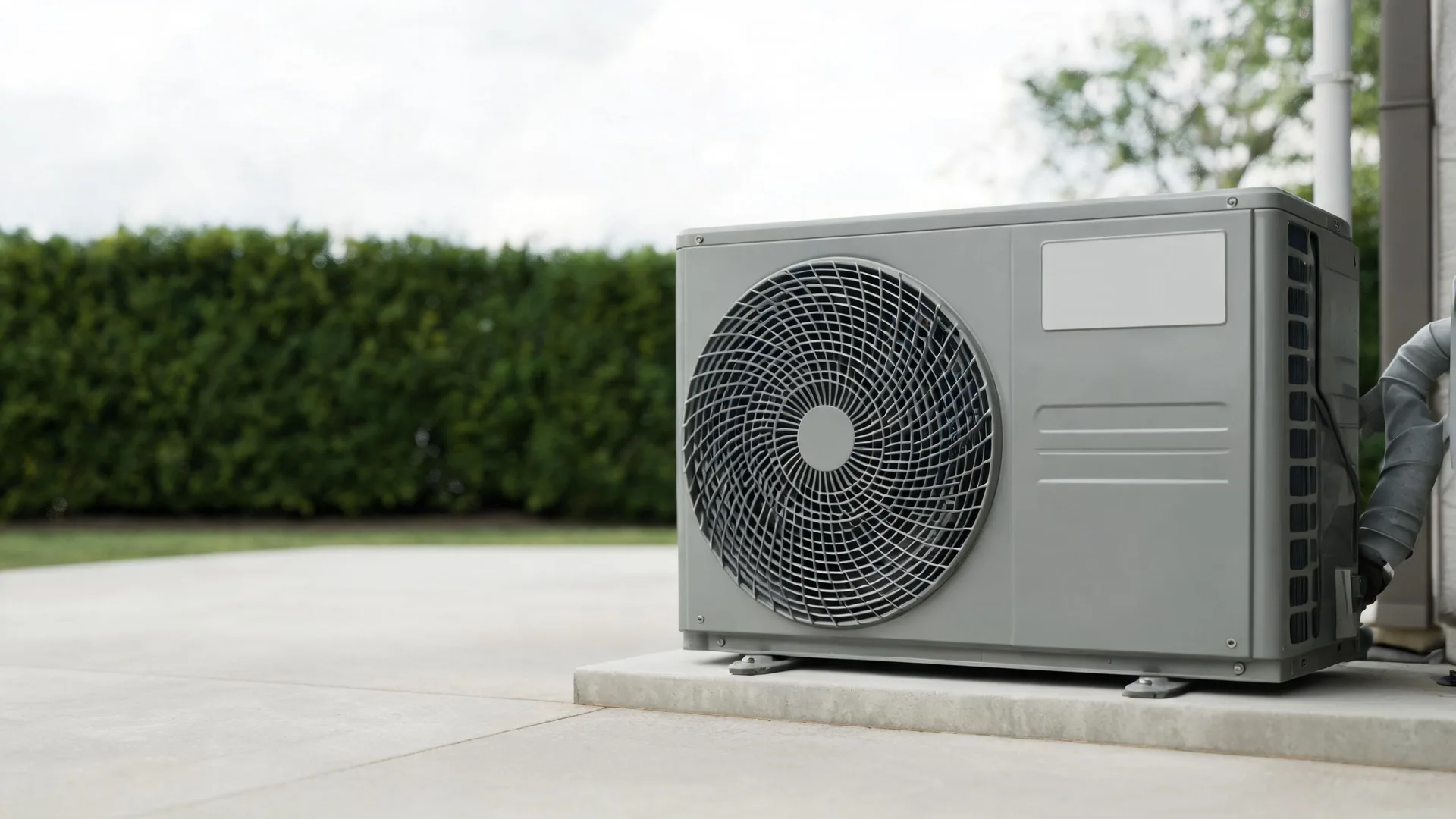
A gray residential air conditioning condenser unit mounted on a concrete pad outdoors, surrounded by green grass under a partly cloudy blue sky.

Hours add up. Listen for what changes.

An AC running steadily through hot months is doing what it's built to do. What matters is how it sounds and feels while it runs. A unit that cycles on and off every few minutes instead of running a long steady stretch is short cycling. That wears the compressor down faster than normal use would. Warm air coming out of the vents while the outdoor unit is running usually points to low refrigerant, a failing compressor, or a blocked coil. Weak airflow at the vents even when the system sounds fine usually means the blower motor is struggling or the filter is choked. A system that runs long hours without ever quite reaching the thermostat setting is losing a fight it used to win. That's worth a look before it stops running altogether.

What you can check yourself

Look at the filter first and change it if it's gray or clogged. Check that the outdoor unit has clear space around it, nothing blocking the sides or sitting on top. Check the thermostat has fresh batteries if it uses them, and make sure it's set to cool, not just on. Check the breaker if the system won't start at all, since a tripped breaker is something you can safely reset once and see what happens.

What to leave alone

Don't open the outdoor unit's cabinet or touch anything inside it. Don't pour water or anything else on a frozen coil to melt it faster. If the breaker trips a second time after you reset it, stop and leave it off, since that usually means something is actually shorting out. Those are jobs for someone who can test the electrical and refrigerant sides safely.

Overhead view of a gray outdoor AC condenser unit on a concrete pad beside a mulched garden bed and a house with vinyl siding.

A new air conditioner would cut about $40 a year off cooling for a typical Hardin County home.

  • A new one at the federal minimum, 14.3 SEER2$250 a year
  • An older air conditioner$290 a year

Estimates for a typical Hardin County home, compared with an older unit built to the previous federal minimum, from EIA household energy data, Kentucky fuel prices and NOAA climate normals. Your home will differ.

Repair makes sense when a part like a capacitor or contactor has failed.

Replacement makes sense when the compressor has failed or the system uses R-22 refrigerant, which is no longer made.

A diagnostic visit starts outside at the condenser unit, listening to it run and checking what the compressor and fan are actually doing. Gauges go on the refrigerant lines to check pressure, since that points straight to a leak or a failing compressor if something's off. Inside, the evaporator coil gets checked for ice or restricted airflow, and the electrical connections get tested rather than just looked at, since a connection can look fine and still be loose or corroded underneath. The capacitor gets tested under load, not just swapped on a guess, because a capacitor that reads fine sitting still can still fail once it's asked to start the compressor. By the end of it the failed part should be known for certain, not suspected, and that's what the repair gets built around.