A illuminated two-story red brick house on a quiet residential street at dusk, flanked by mature trees under a deep blue evening sky.

AC Repair in Central City, KY

Tell us about the job

Takes about a minute. No obligation.

RepairCentral ACMuhlenberg County, KY
Step 1 of 2

What ZIP code is the job in?

Warm air from the vents means it's not cooling, not just struggling

When the air coming out feels room temperature or close to it, the system isn't low on effort, something has stopped working. That could be a compressor that won't engage, a refrigerant leak, or a thermostat not signaling the system correctly. It's not a sign to wait and watch.


Short cycling wears out the parts that are left

If the air conditioner shuts off and restarts every few minutes instead of running a full cycle, each start puts a hard load on the compressor and the capacitor. A system doing this is pushing those parts toward failure faster, and a repair now is usually smaller than the one that comes after they give out.

5 months
May through September, your air conditioner is on duty
88°F
the average summer afternoon it cools against
18 hail events
in ten years, and hail bends the fins on outdoor coils
72 wind events
in ten years, and wind drives debris into outdoor units
Isometric cutaway illustration of a single-story house showing interior rooms with ductwork and an air handler, connected by refrigerant lines to an outdoor condenser unit on the left.
Your air conditioner works hardest from June through August.

NOAA nClimDiv, 1991–2020 normals

Half the homes in Muhlenberg County were built in 1978 or later, and almost one in five is a mobile home.

A newer house or a mobile home doesn't point to a different problem, the same handful of parts still cause most AC failures.

Five months of 88 degree afternoons is normal wear, not a special case

Cooling runs May through September
Summer afternoons average 88°F
72 damaging wind events from 2015 to 2024
April is when to catch a weak system before summer load hits itHomes here start running AC in May, about a month from now.

Muhlenberg County has logged 112 severe weather events between 2015 and 2024, and most of those were damaging wind. Wind that strong can dent the fins on an outdoor unit or bend a fan blade without stopping it that day. A coil like that can run for weeks losing efficiency before it quits outright. Hail does the same kind of quiet damage. If a storm came through and the unit sat in its path, it's worth having someone look even if the air coming out still feels cold. Tornadoes and winter storms both show up in the county's record too, and either one can cut power long enough that the system needs a reset before it runs right again.

Get the usual fix

Nothing about this area is especially hard on it. It's most likely the usual problem with the usual fix.

Find a contractor
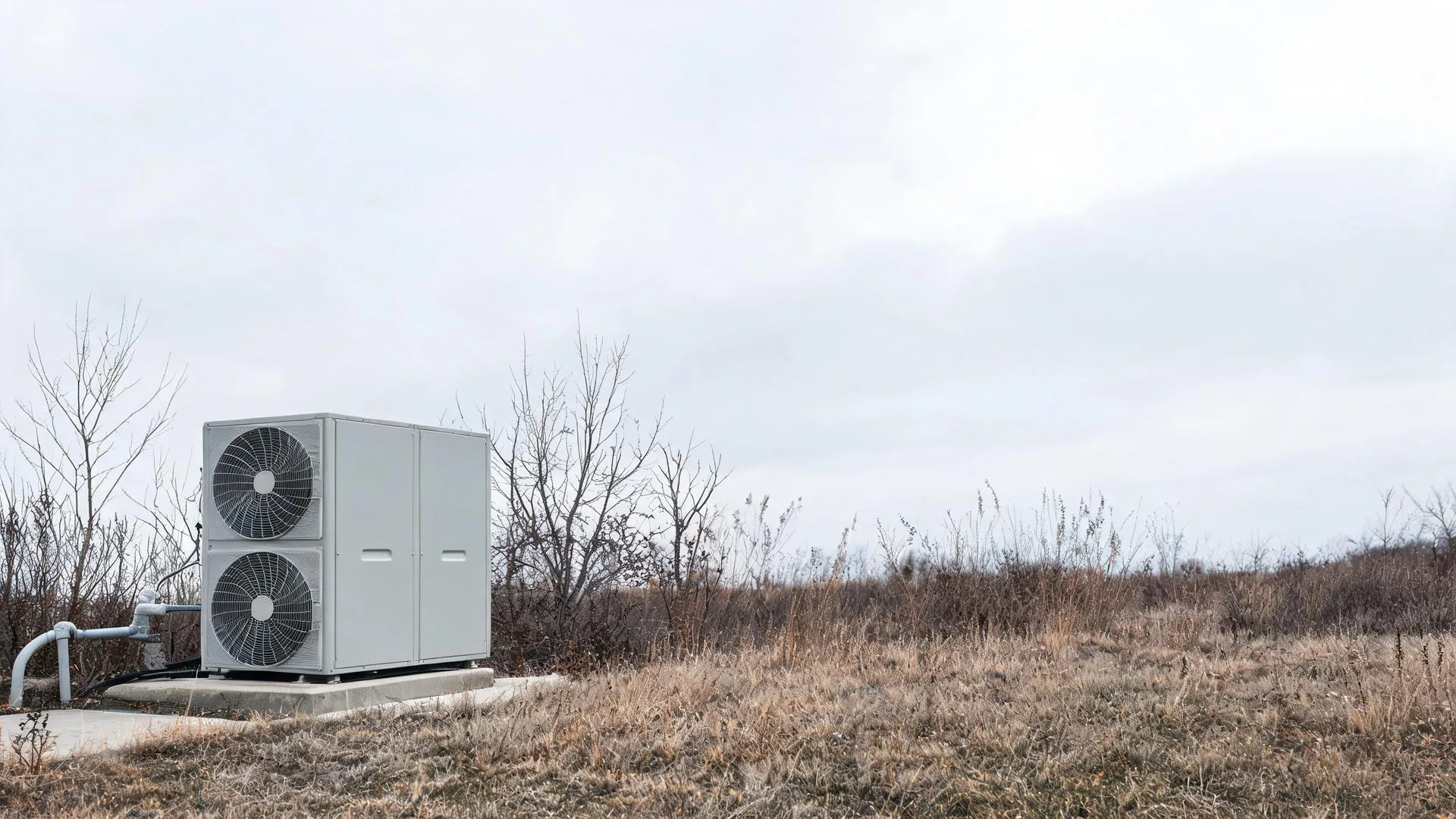
A gray metal air conditioning condenser unit mounted on a concrete pad in a flat grassy field under a partly cloudy sky.

Most failures are the same few parts wearing out

A capacitor is the part that fails most often. It gives the compressor and fan motor the jolt they need to start, and that jolt wears it down a little every time until one day it can't deliver enough. A contactor goes the same way, the switch that handles the power load pitting and burning at the contact points after enough cycles. Dirty coils cause more failures than people expect, not because dirt breaks anything directly but because a coil caked with dust and grime can't shed heat the way it's supposed to, so the compressor runs hotter and harder than it was built for. Low refrigerant almost always means a leak somewhere in the line, not normal use, since the system is sealed and doesn't consume refrigerant the way an engine burns oil. None of these show up overnight. They build for a while before the system finally quits.

Check the filter first

A filter packed with dust blocks airflow across the coil, and that alone can make a system blow warm or freeze the coil solid. Pull it out and hold it up to a light. If no light comes through, that's likely the whole problem.

Check the breaker and the thermostat

Confirm the outdoor unit has power at the breaker and the thermostat is set to cool with a target below room temperature. A tripped breaker or a thermostat set wrong can look exactly like a failed system, and both are worth ruling out before anything else.

Aerial view of a residential air conditioning condenser unit mounted on a concrete pad next to a house with vinyl siding and a sliding glass door.

A new air conditioner would cut about $50 a year off cooling for a typical Muhlenberg County home.

  • A new one at the federal minimum, 14.3 SEER2$300 a year
  • An older air conditioner$350 a year

Estimates for a typical Muhlenberg County home, compared with an older unit built to the previous federal minimum, from EIA household energy data, Kentucky fuel prices and NOAA climate normals. Your home will differ.

Repair makes sense when a part like a capacitor or contactor has failed.

Replacement makes sense when the compressor has failed or the system uses R-22 refrigerant, which is no longer made.

A diagnostic visit starts outside at the condenser, checking that the fan spins freely and the coil isn't caked with dirt. From there it's gauges on the refrigerant lines to read the pressure, because that reading says more about what's wrong than anything visible from the outside. Inside, the tech checks the coil at the air handler or furnace for ice, which points to airflow trouble or refrigerant trouble depending on where it's built up. The capacitor gets checked under load, since a weak one can still pass a basic look, and the contactor gets checked for pitting at the contact points. The thermostat gets confirmed last, making sure it's actually calling for cooling and the system is responding the way it should. A trained tech knows which parts cause most failures and checks those first, so the visit moves faster than people expect.