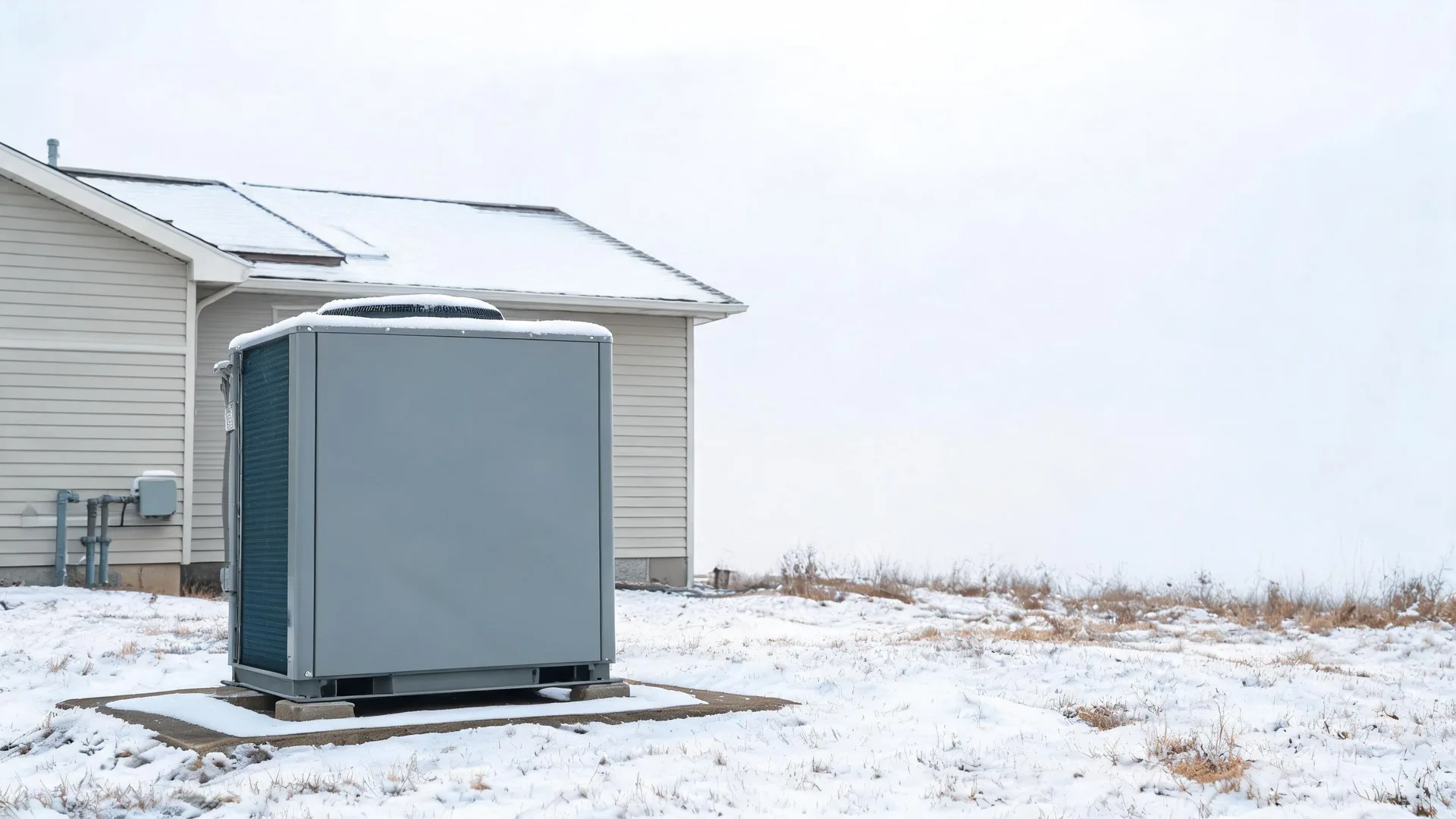
An outdoor air conditioning condenser unit mounted on a concrete pad next to a blue-sided residential house at sunset.

AC Repair in Brandenburg, KY

Tell us about the job

Takes about a minute. No obligation.

RepairCentral ACMeade County, KY
Step 1 of 2

What ZIP code is the job in?

The tech checks before touching anything

A diagnostic starts with the thermostat call, the breaker, and the condensate line before a panel ever comes off. A tech will check refrigerant pressures, look at the capacitor and contactor, and see whether the compressor and fan are drawing the right amps. Airflow across the coil gets checked too, since a dirty filter or a blocked return can look like a bigger problem than it is.


The diagnosis tells you what you're deciding

Once the tech finds the failed part, you'll hear what it is, what replacing it involves, and whether the rest of the system is sound enough to be worth the repair. An aging compressor or a coil that's corroding through changes that math. That's the real decision on the table, not just the one broken part.

5 months
May through September, your air conditioner is on duty
86°F
the average summer afternoon it cools against
11 hail events
in ten years, and hail bends the fins on outdoor coils
47 wind events
in ten years, and wind drives debris into outdoor units
Isometric 3D cutaway render of a house with dark siding showing interior rooms, ductwork and an air handler, connected by lines to an outdoor condenser unit on a white background.
Your air conditioner works hardest from June through August.

NOAA nClimDiv, 1991–2020 normals

A breaker that's tripped or a thermostat set wrong looks exactly like a dead system.

Check both before you pay someone to find the same thing.

Half the homes here were built in 1990 or later

Half the homes here were built by 1990
Cooling runs May through September
Summer afternoons average 86°F
Brandenburg weather isn't what's wearing out your ACWeather hits Meade County same as anywhere else. Your AC trouble is almost always something simpler.

A newer build doesn't rule out an older system. Plenty of homes here changed hands since 1990, and whatever was installed when they were built could still be running now. That's worth knowing before the tech gives you the verdict on a failed capacitor or a low charge. A system with years left ahead of it is worth putting the part into. One that's near the end of its run changes that math. Check the install date if you have it, or ask the tech to find it on the unit, since that's what actually tells you how to weigh the repair.

Repair it

If your system came with a newer house, it likely has plenty of life left. Repair is usually the right call.

Find a contractor
A gray residential air conditioning condenser unit mounted on a concrete pad outdoors, surrounded by green grass under a partly cloudy blue sky.

What the system is telling you before it quits

Warm air blowing instead of cold is usually the first thing you notice. Short cycling is another. The system kicks on, runs a couple minutes, shuts off, then starts again instead of running a full cycle. Or it does the opposite and runs nonstop without ever hitting the temperature on the thermostat. Listen for anything new too. A hard clunk at startup. A squeal from the outdoor fan. A hiss that wasn't there before. Water pooling near the indoor unit points to a clogged condensate line or a drain pan that's rusted through. A coil that ices over usually means airflow is restricted or the refrigerant charge is low, and neither one fixes itself by waiting. The longer a failing capacitor or a struggling compressor keeps running under that strain, the more likely it takes another part down with it.

A weak capacitor burns out the compressor it's starting

A capacitor that's failing still kicks the compressor over, just with a harder jolt each time. That extra draw heats the compressor windings more than they're built for. Keep running it that way and you can turn a capacitor swap into a compressor replacement.

Low refrigerant makes the compressor work through liquid it shouldn't see

When charge is low, refrigerant can come back to the compressor still partly liquid instead of fully vapor. A compressor is built to pump gas, not liquid, and running it that way wears the valves and can crack them outright. The leak causing the low charge doesn't stop on its own either, so the problem only gets worse the longer it runs.

An outdoor air conditioning condenser unit positioned on a concrete pad next to a blue-sided house, surrounded by green shrubs and flowering hydrangeas at sunset.

A new air conditioner would cut about $40 a year off cooling for a typical Meade County home.

  • A new one at the federal minimum, 14.3 SEER2$250 a year
  • An older air conditioner$290 a year

Estimates for a typical Meade County home, compared with an older unit built to the previous federal minimum, from EIA household energy data, Kentucky fuel prices and NOAA climate normals. Your home will differ.

Repair makes sense when a part like a capacitor or contactor has failed.

Replacement makes sense when the compressor has failed or the system uses R-22 refrigerant, which is no longer made.

A single repair almost never sinks a system on its own. What matters is whether this is the first part to fail or the third one in a couple of years. A system that's needed a capacitor and now a contactor is telling you something different than one that's run clean for a decade and just had one part give out. Age plays into it too, but so does what the compressor had to work through before the bad part got replaced. If a refrigerant leak ran the compressor low on charge for months before anyone caught it, that compressor may already be worn even though the leak itself was a simple fix. A tech who's honest with you will say when a repair is solid and when you'd be putting a new part on a system that's already failing elsewhere.