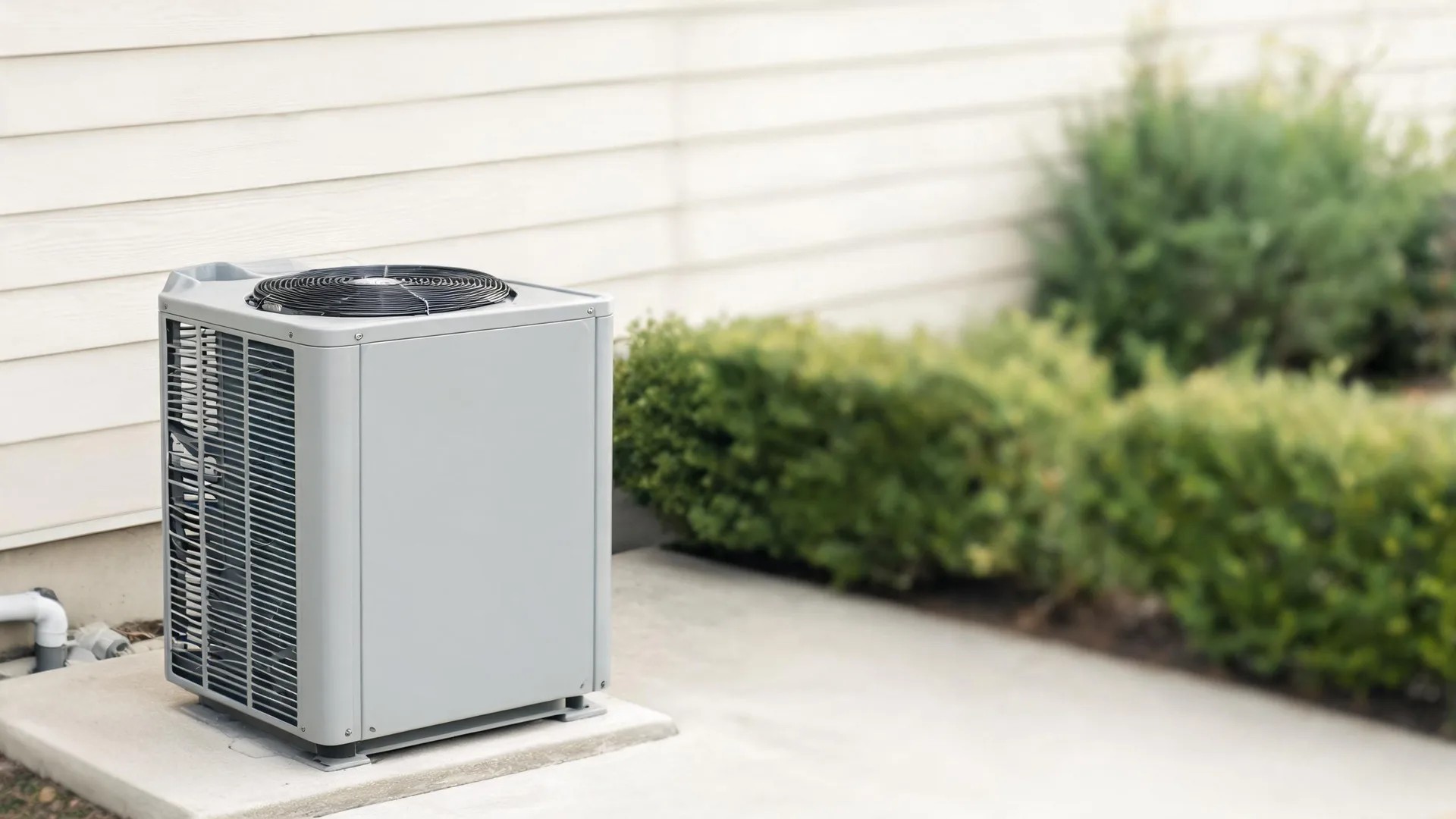
Aerial view of a square outdoor air conditioning condenser unit on a concrete pad beside a house wall with a sliding glass door.

AC Repair in Bardstown, KY

Tell us about the job

Takes about a minute. No obligation.

RepairCentral ACNelson County, KY
Step 1 of 2

What ZIP code is the job in?

A weak compressor keeps trying anyway

If the refrigerant charge is low or the compressor is already struggling, it still fires up every time the thermostat calls for cool air. Each cycle puts more strain on a part that's already working too hard, and that strain is what takes a compressor from failing to failed.

Ice on the coil blocks more than it shows

Once the evaporator coil starts icing over, airflow across it keeps dropping. The system keeps running, the ice keeps building, and what started as a coil problem can end up flooding the compressor with liquid refrigerant it was never meant to handle.

5 months
May through September, your air conditioner is on duty
86°F
the average summer afternoon it cools against
31 hail events
in ten years, and hail bends the fins on outdoor coils
55 wind events
in ten years, and wind drives debris into outdoor units
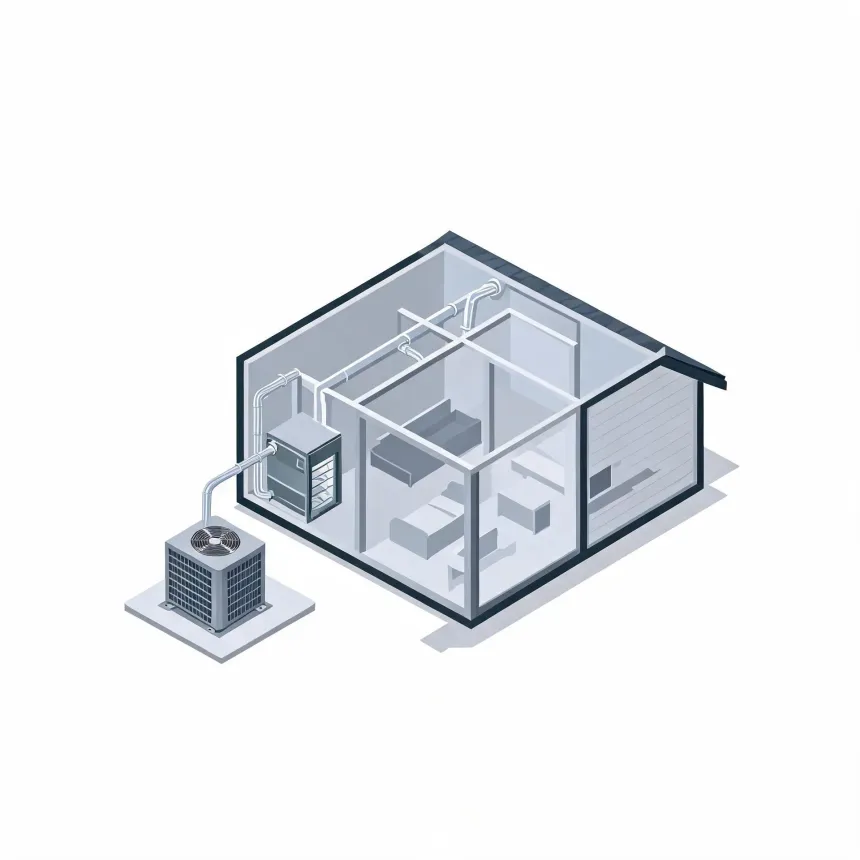
Isometric grayscale illustration of a cutaway house showing interior rooms, ductwork, an indoor air handler, and an outdoor condenser unit on a pad connected by lines.
Your air conditioner works hardest from June through August.

NOAA nClimDiv, 1991–2020 normals

Cooling starts in May here, after sitting idle since September.

Get a weak compressor looked at in April, before the first warm call puts a full load on it.

Five months of real heat, nothing this system can't handle if it's running right

Cooling runs May through September
Summer afternoons average 86°F
31 hail events from 2015 to 2024
A newer home means a newer AC, likely with plenty of life leftHalf the homes in Nelson County were built in 1992 or later.

A capacitor or a contactor is a straightforward call, worth replacing without much thought no matter how old the system is. A compressor is different. When a compressor is struggling, it's usually because the system around it has been under strain for a while, and that strain doesn't stop once the compressor is swapped out. A repair that fixes today's problem can leave next summer's problem sitting there waiting. A contractor who's honest with you will tell you when a repair is still the right call and when it's just delaying the same decision.

Likely still within its working life, so repair is the call

If your AC came with the house, there's a good chance it still has years of working life in it. That makes repair the call worth making now, not a replacement.

Find a contractor
A gray cylindrical air conditioning condenser unit mounted on a concrete pad next to a light-colored vinyl-sided house exterior.

What actually wears out, and what just keeps working

An air conditioner wears out from cycling, not from the calendar. Every start puts a jolt through the compressor and pulls current through the capacitor and contactor. Those are usually the first parts to give out. A capacitor loses its charge over time and gets weaker with every cycle until it can't kick the compressor into motion. A contactor's contacts pit and burn from repeated arcing, and eventually they stick or stop making contact at all. Both are wear parts. They're expected to fail at some point, and neither failing says anything bad about the rest of the system. The compressor is a different story. It's built to last the life of the system. If it's struggling, something else usually drove it there. A refrigerant leak can leave it running low on charge. A dirty coil can make it work harder to move the same heat. A failing capacitor can put a run of hard starts on it before anyone notices. A system that gets steady airflow across its coils and isn't run low on charge puts less wear on its compressor over time than one that's been neglected, no matter how many seasons either one has run.

Warm air, or air that won't stop blowing

If the air coming out feels warm or barely cool, the system has either lost refrigerant or lost the ability to move heat out of the house. If it won't shut off at all, the thermostat has given up trying to satisfy itself, which usually means the compressor isn't doing enough per cycle to get there.

Sounds and smells say more than the thermostat does

A hard clank or screech at startup points to the compressor or the fan motor, not something to wait out. A musty smell from the vents usually means moisture sitting somewhere it shouldn't, often on a coil that isn't draining right. Either one is worth a call before it turns into standing water or a seized motor.

Overhead view of a gray residential air conditioning condenser unit mounted on a concrete pad beside a house with asphalt shingle roofing.

A new air conditioner would cut about $40 a year off cooling for a typical Nelson County home.

  • A new one at the federal minimum, 14.3 SEER2$260 a year
  • An older air conditioner$300 a year

Estimates for a typical Nelson County home, compared with an older unit built to the previous federal minimum, from EIA household energy data, Kentucky fuel prices and NOAA climate normals. Your home will differ.

Repair makes sense when a part like a capacitor or contactor has failed.

Replacement makes sense when the compressor has failed or the system uses R-22 refrigerant, which is no longer made.

A diagnostic starts with the thermostat and works back from there. A tech will check what the system is actually doing. Is the compressor running. Is air moving. Is it cold at the vent or just barely cooler than the room. Gauges go on next to read the refrigerant pressures. Low pressure points to a leak. High pressure can mean a dirty condenser coil or a fan that's not pulling air through it. Electrical parts get tested under load, since a capacitor or contactor can look fine sitting still and still be the reason the compressor won't start clean. If the coil is iced over, it has to thaw before any of those readings mean anything, so that can set the whole visit back. By the time the gauges come off, there should be an answer, not a guess.