







A two-story black-clad house with a covered porch behind a trimmed hedge, photographed from ground level across a blurred lawn, with large green trees and a neighboring gray house nearby under an overcast sky.

AC Maintenance in Versailles, KY

Tell us about the job

Takes about a minute. No obligation.

Tune-up, service, or cleaningCentral ACWoodford County, KY
Step 1 of 2

What ZIP code is the job in?

A few things usually show up before a real breakdown. The air comes out warmer than it used to, even though the system still turns on and runs. You notice a hum or a rattle that wasn't there last year, especially when the unit first kicks on. The outdoor fan or compressor cycles on and off more than it should, instead of running a steady stretch. Water pools near the indoor unit, which usually means the drain line is clogged rather than something wrong with cooling itself. Any of these on their own is worth a look before it turns into a system that won't start at all.

5 months
May through September, your air conditioner is on duty
85°F
the average summer afternoon it cools against
1 hail events
in ten years, and hail bends the fins on outdoor coils
58 wind events
in ten years, and wind drives debris into outdoor units
Isometric cutaway illustration of a small house showing interior rooms, ductwork, an indoor air handler, and an outdoor condenser unit connected by lines, on a plain white background.
Your air conditioner works hardest from June through August.

NOAA nClimDiv, 1991–2020 normals

Homes in Woodford County run their AC from May through September.

Get it checked in April, before the first hot month puts it to work.

Half the homes in Woodford County are younger than that, and a newer AC still needs a yearly check to stay that way

Half the homes here were built by 1984
Cooling runs May through September
Summer afternoons average 85°F
One checkup a yearWoodford County summers run May through September, with afternoons near 85.

A yearly check on a newer system is a quick job. The technician confirms the refrigerant charge is correct, the electrical connections are tight, and the condenser coil is clean, then moves on. There's no corrosion to work around, no worn-out part from years of hard use. That's exactly why it's worth doing before the AC runs for the season instead of waiting for a problem. Catching a loose connection or a low charge early keeps a system that still has most of its life ahead from losing any of it to something that was simple to fix.

Book it before the season

It starts running hard in the first month of the season here. Book the check the month before.

Find a contractor
A man in a cap, dark jacket and brown work pants climbs porch steps toward a dark green front door, carrying a waxed canvas tool bag, with a potted shrub to the right.
An outdoor air conditioning condenser unit mounted on a concrete pad beside a house, with electrical conduit running to a wall-mounted disconnect box.

What a season of running without a check does to the system

A condenser coil collects dust and pollen a little at a time. As it builds up, the compressor has to work harder to move the same heat out of the house, and airflow across the coil keeps dropping. A dirty filter causes a different version of the same problem, starving the indoor coil of airflow until it runs cold enough to ice over. Once that coil ices up, the system can run without cooling the house at all. None of this shows up after one missed week. It builds across a full season of running with nobody looking at the coil or the filter in between.

The refrigerant charge

A system can be low on refrigerant and still blow cold air at the vent. The only way to know the charge is right is to check the pressures with gauges. Run it low for a season and the compressor works harder than it needs to, and that wear doesn't reverse once the charge gets corrected.

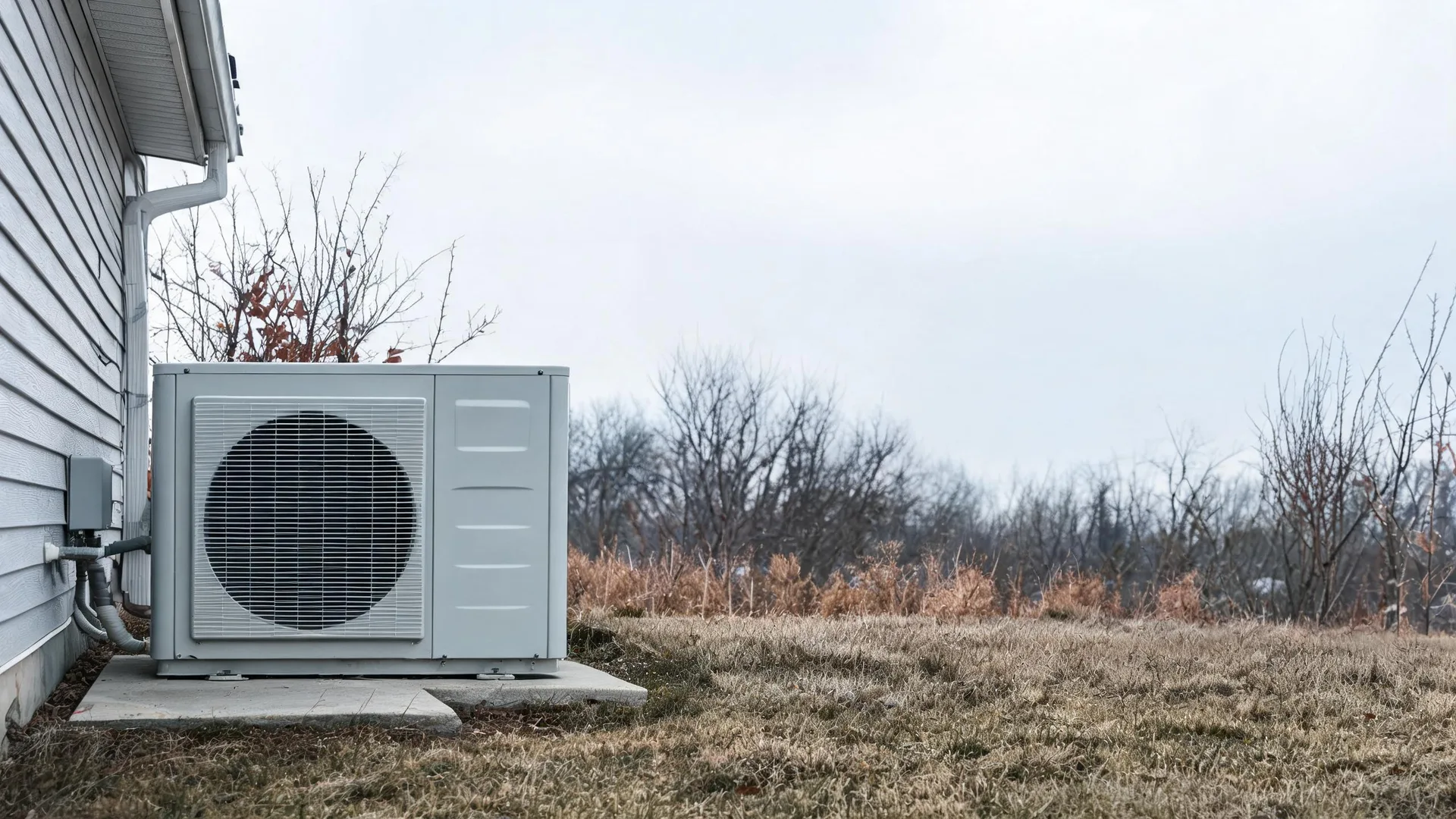
What the coil and fins hide

A bent fin or a coil going green with corrosion sits behind the cabinet where nobody looks until the system stops cooling well. A technician pulls the panel and checks the coil itself, not just whether air comes out cold, because a system can still run with the coil already losing ground.

Overhead view of a gray outdoor AC condenser unit on a concrete pad beside a mulched garden bed and a house with vinyl siding.

Book your AC tune-up in April, before homes here start needing cooling in May.

  1. Jan
  2. Feb
  3. Mar
  4. Apr
  5. May
  6. Jun
  7. Jul
  8. Aug
  9. Sep
  10. Oct
  11. Nov
  12. Dec

A tune-up checks the refrigerant charge, cleans the coils, tests the capacitor and tightens the electrical connections.

A tune-up starts outside at the condenser. The technician checks the capacitor and contactor, since a weak capacitor is one of the most common reasons a compressor struggles to start. They measure the refrigerant pressures rather than trust what the air feels like at the vent, because charge and temperature don't always match. Inside, the evaporator coil gets inspected for dirt or ice, and the blower gets checked for the amp draw it should be pulling. The drain line gets flushed so condensation has somewhere to go instead of backing up into the pan. Last, the thermostat calibration and the wiring at the disconnect get a look, since a loose connection there causes problems that look electrical but aren't.