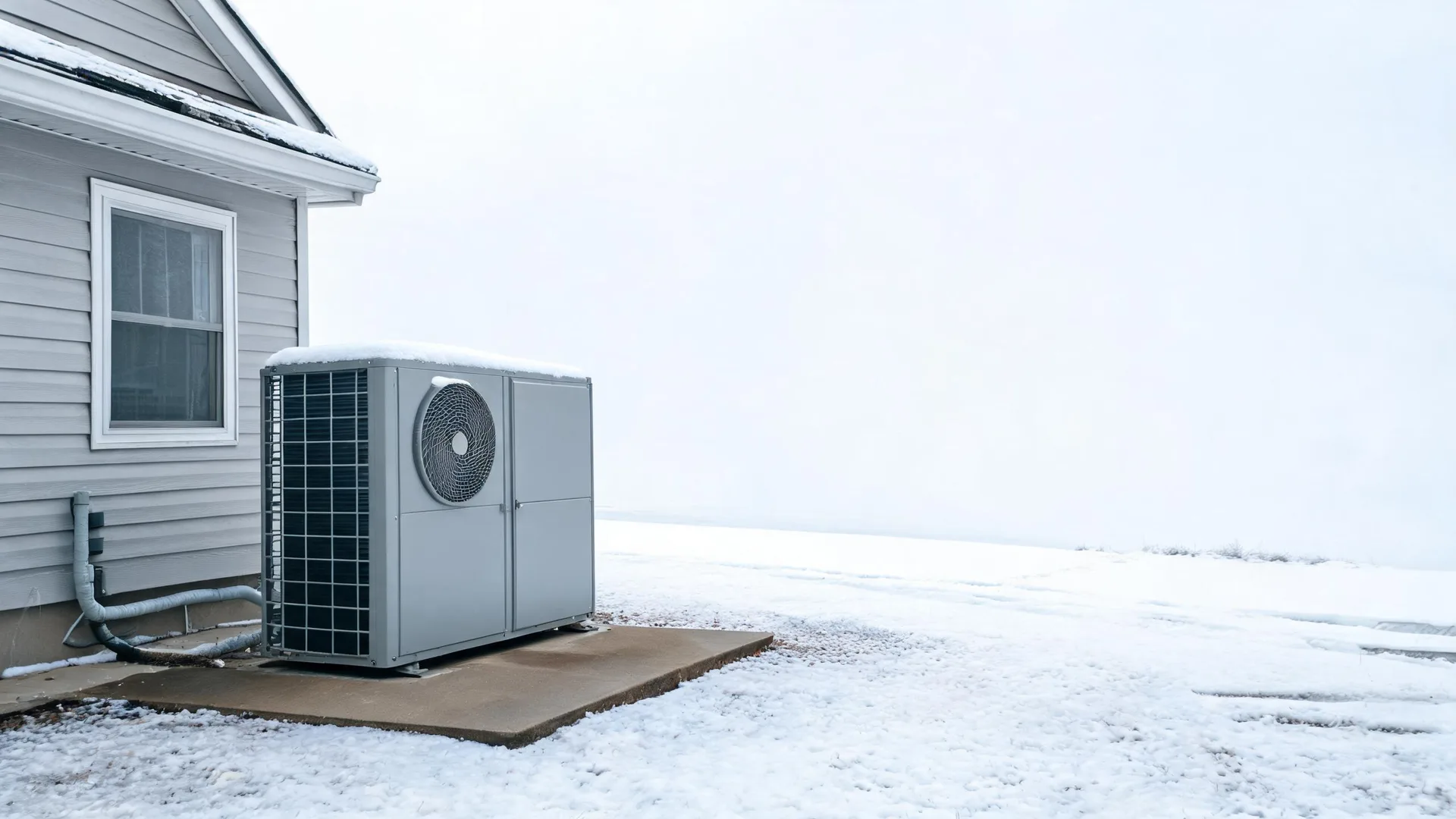
A system low on refrigerant still blows cold air at the vent, so nothing feels wrong. Underneath, the compressor is working harder and the coil can start to frost. A gauge set on the service ports shows the charge is off long before the air coming out tells you anything.
A failing capacitor rarely fails all at once
The capacitor gives the compressor and fan motor the kick they need to start. A weak one lets the system start slower each time, and that strain shortens the life of the motor it's feeding. Checked with a meter against its rating, a tech can see it's drifting before it leaves you with a unit that hums and won't start at all.
5 months
May through September, your air conditioner is on duty
86°F
the average summer afternoon it cools against
10 hail events
in ten years, and hail bends the fins on outdoor coils
58 wind events
in ten years, and wind drives debris into outdoor units
Your air conditioner works hardest from June through August.
Jan
Feb
Mar
Apr
May
Jun
Jul
Aug
Sep
Oct
Nov
Dec
NOAA nClimDiv, 1991–2020 normals
Bullitt County runs its AC about five months a year, May through September.
One visit before May checks the system before the summer heat puts any real load on it.
Half these systems are young enough that a yearly check is what keeps them that way
Half the homes here were built by 1993Cooling runs May through SeptemberSummer afternoons average 86°F
Weather here is not the reason to keep up with thisBullitt County logged 84 severe weather events between 2015 and 2024, but a yearly AC check has nothing to do with that count.
A system built in 1993 or later still has a lot of working life ahead of it. A yearly check is what lets it get there without a surprise breakdown. A tech can catch a capacitor that's drifting or a charge that's a little low while the fix is still simple, before either one turns into a compressor replacement. If your system came with the house, it's worth finding out when it was installed, since that tells you how many of those years are still ahead.
The filter, the coils and the drain do the quiet work
The filter is the cheapest part of this system and the one most likely to get ignored. Air moves through it every time the system runs, and once it loads up with dust, the coil behind it is starving for air. That coil needs steady airflow to pull heat out of the house. Starve it long enough and it gets cold enough to frost, then ice over, and a system coated in ice isn't cooling anything. The outdoor coil has the opposite job. It has to shed heat into the air around it, and it can't do that packed with grass clippings or dirt. A tech cleans both coils as part of a yearly check, because airflow across a clean coil is what the system depends on. Then there's the drain. The system pulls moisture out of the air, and that water runs off through a line narrow enough to clog with algae over time. A clogged drain backs up, and backed up water can shut the system down or end up somewhere it shouldn't. None of this looks dramatic from the thermostat. The air still comes on. It just works harder and runs longer than a system where the filter gets changed and the coils and drain get looked at every year.
A quick visit checks that it runs
A tune-up that just confirms the system turns on and blows cold air is checking the one thing that was already obvious from the thermostat. It tells you the system worked today. It does not tell you the capacitor is drifting or the charge is a little low. Both of those can sit behind cold air at the vent for a long time before anything feels wrong.
A thorough one checks what it will do next
Gauges on the service ports show the charge. A meter on the capacitor shows it against its rating instead of a guess. The coils get looked at, and so does the drain line. Each of those catches a system on its way to a problem instead of one already in it, which is what a yearly check is supposed to find.
Book your AC tune-up in April, before homes here start needing cooling in May.
Jan
Feb
Mar
Apr
May
Jun
Jul
Aug
Sep
Oct
Nov
Dec
A tune-up checks the refrigerant charge, cleans the coils, tests the capacitor and tightens the electrical connections.
A proper tune-up starts outside, with the condenser unit off and the panel open. The tech checks the contactor, since that's the part that's pitted and burned after enough cycles of starting and stopping the compressor. The run capacitor gets tested against its rating, not just eyeballed. Fan motor bearings get checked for play, and the blades get looked at for cracks from debris. Inside, the blower wheel gets pulled if it's caked with dust, since a dirty wheel moves less air no matter how clean the filter is. The whole system gets a static pressure test across the coil and filter, which shows whether something downstream is choking the airflow before it ever becomes a comfort complaint. Electrical connections get tightened, since a loose lug heats up and burns before it ever trips anything.