






A low-angle view across a mown lawn and trimmed hedge toward a dark two-story house with a covered porch, framed by large leafy trees under an overcast sky.

AC Maintenance in Mount Sterling, KY

Tell us about the job

Takes about a minute. No obligation.

Tune-up, service, or cleaningCentral ACMontgomery County, KY
Step 1 of 2

What ZIP code is the job in?

Montgomery County saw 112 severe weather events between 2015 and 2024, most of it damaging wind. Your outdoor unit sits outside through all of it, exposed to whatever blows through. Wind drives branches and grit into the coil and fan, and hail has hit this county too. None of that means your unit is damaged right now. But a coil packed with debris can't shed heat the way it should, and that makes the system work harder for less cooling. Worth having someone look at it before summer puts a real load on it.

4 months
June through September, your air conditioner is on duty
85°F
the average summer afternoon it cools against
3 hail events
in ten years, and hail bends the fins on outdoor coils
91 wind events
in ten years, and wind drives debris into outdoor units
Isometric line illustration of a cutaway house showing interior rooms, ceiling ductwork, an indoor air handler unit, and an outdoor condenser connected by lines along the exterior wall.
Your air conditioner works hardest from June through August.

NOAA nClimDiv, 1991–2020 normals

Cooling runs four months here, June through September, with afternoon highs averaging 85.

A short season still means a full summer of load on a unit that sat outside through whatever wind and storms came before it.

June puts the load on. May is when it still can get checked.

Cooling runs June through September
Summer afternoons average 85°F
91 damaging wind events from 2015 to 2024

A tune-up gets a gauge on the refrigerant charge, something no amount of looking at the unit will tell you. Too little charge and the system cools poorly while the compressor strains to make up for it. The tech also checks the capacitor, the part that gives the compressor and fan motor their starting kick. A weak one still lets the unit run, right up until the day it doesn't. Electrical connections get checked too, since a loose one builds heat at the connection point and can trip the system or burn the wire over time. None of this shows up from the outside. The unit can look fine and sound fine while one of these is already failing underneath.

Get the outdoor unit checked for debris before summer load hits

Wind and hail have hit this county for years before this summer's heat ever gets here. A tech can check the coil and fan for debris now, while there's still time before the season's full load lands on the system.

Find a contractor
A man in a dark long-sleeve shirt and tan work pants, seen from behind, carries a canvas tool bag up porch steps toward a dark green front door beside a potted shrub.
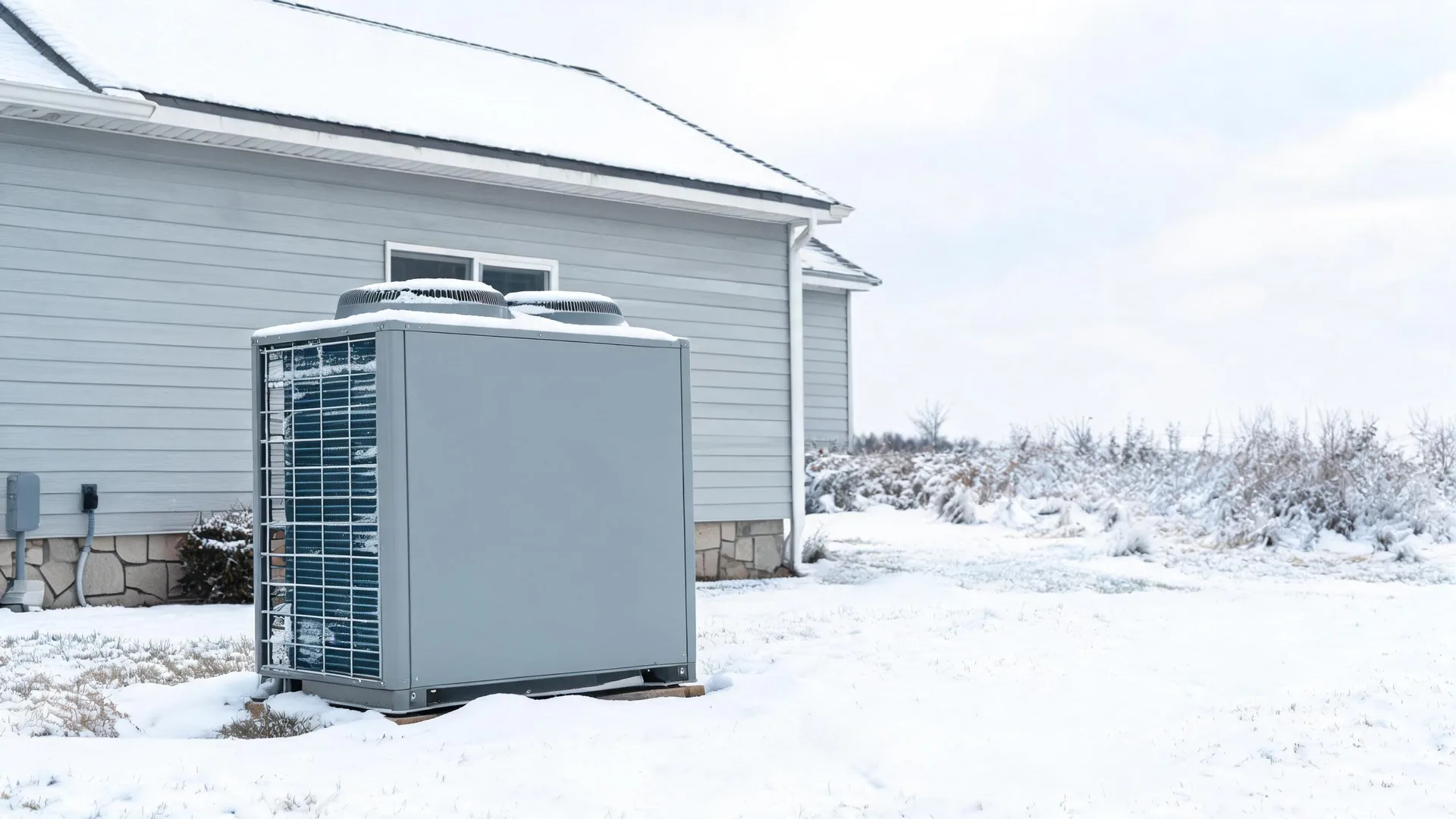
An outdoor air conditioning condenser unit mounted on a concrete pad beside a house, with electrical conduit running to a wall-mounted disconnect box.

A newer system still needs the yearly look

Half the homes in Montgomery County were built in 1987 or later. If yours is one of them, the system behind it may still be well within its working life, especially if it's been replaced even once since the house was built. A newer unit still benefits from a yearly look. The refrigerant charge drifts, the capacitor weakens, the coil collects what the wind blows at it, all regardless of how new the unit is. Catching that early is what keeps a system that still has years left actually making it there.

A dirty coil just works harder

Skip the yearly check and nothing fails right away. The coil keeps collecting dust and grit, airflow across it keeps dropping, and the system keeps running anyway, just worse. It pulls more current to do less cooling, and that strain doesn't go away on its own.

The compressor pays for what got missed

A capacitor that's been weakening, a connection that's been building heat quietly, none of that shows up as a problem until the compressor is the part that gives out. It's the one part in the system that can't be repaired, only replaced. Catching the small stuff early is what keeps it from getting there.

Overhead view of an outdoor AC condenser unit on a concrete pad next to a house with a dark shingle roof.

Book your AC tune-up in May, before homes here start needing cooling in June.

  1. Jan
  2. Feb
  3. Mar
  4. Apr
  5. May
  6. Jun
  7. Jul
  8. Aug
  9. Sep
  10. Oct
  11. Nov
  12. Dec

A tune-up checks the refrigerant charge, cleans the coils, tests the capacitor and tightens the electrical connections.

A tune-up also covers what happens inside the air handler, not just the outdoor unit. The tech checks the blower motor and the belt or wheel it turns, since a blower running slow moves less air across the coil no matter how clean that coil is. The evaporator coil gets looked at too, the one inside, because it collects moisture and dust even though it never sees the weather. A drain line gets checked for a clog, since a blocked one backs up condensation into the house instead of outside where it belongs. The thermostat gets tested against the actual temperature in the room, since a thermostat reading wrong makes the whole system chase the wrong number all season.