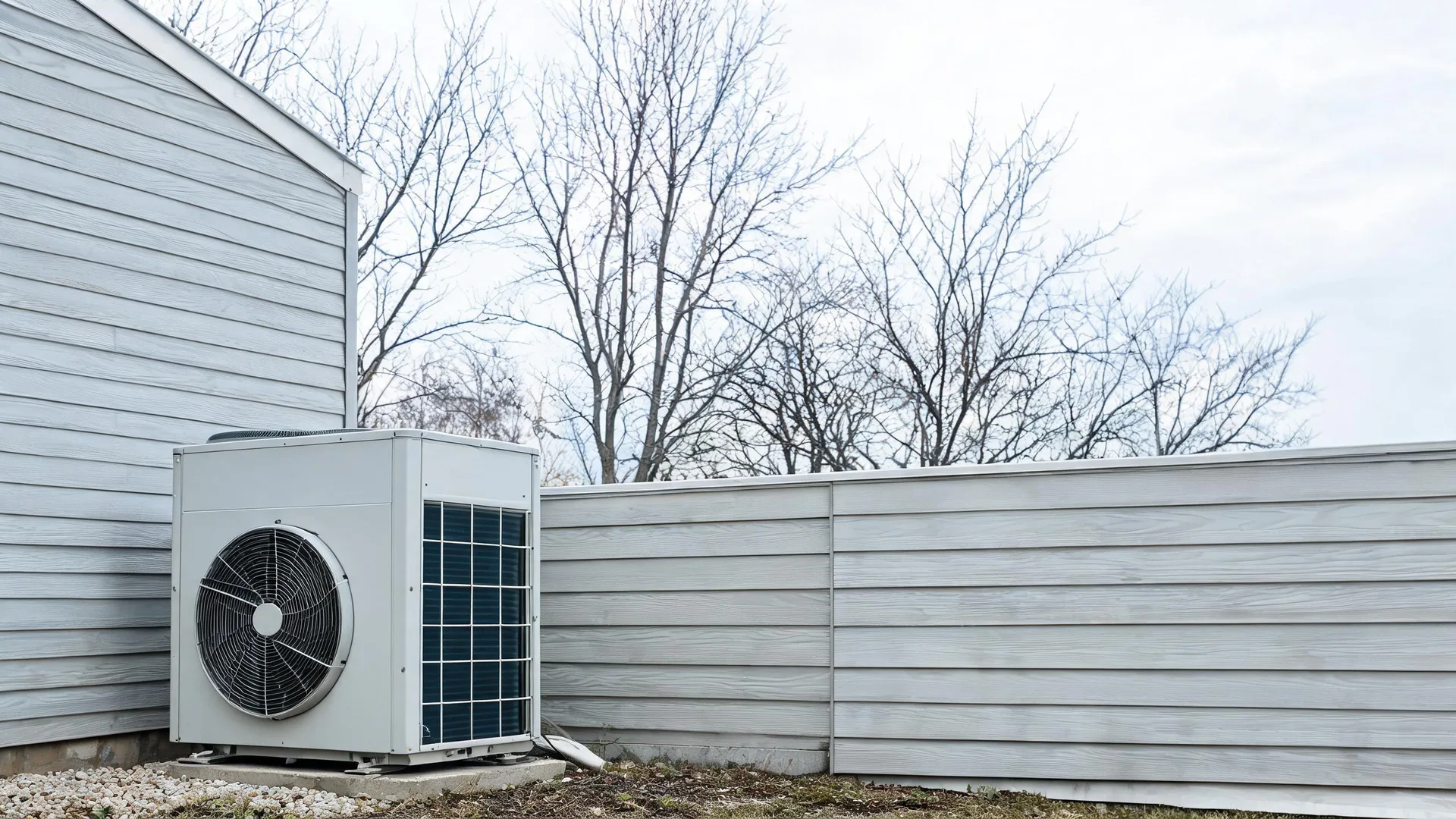
AC runs about four months a year here, June through September, with afternoon highs averaging 83°F through the summer. That's real work for a system, but it's not extreme work. A system checked once a year, before June, can handle it without surprises. The parts worth checking are the ones that sit unused the rest of the year, like the capacitor and the contactor. A tech catches a weak one in spring. Nobody wants to catch it in July when the house is already hot.
4 months
June through September, your air conditioner is on duty
83°F
the average summer afternoon it cools against
6 hail events
in ten years, and hail bends the fins on outdoor coils
69 wind events
in ten years, and wind drives debris into outdoor units
Your air conditioner works hardest from June through August.
Jan
Feb
Mar
Apr
May
Jun
Jul
Aug
Sep
Oct
Nov
Dec
NOAA nClimDiv, 1991–2020 normals
Warm air from the vents while the thermostat is set low usually points to a weak capacitor, not a bad thermostat.
A tech who finds that in spring swaps the part on the bench. Found later, it's pulled from a system that's already quit.
June is when it starts working. May is when it gets checked.
Cooling runs June through SeptemberSummer afternoons average 83°F69 damaging wind events from 2015 to 2024
Weather here is hard on everythingBell County had 69 damaging wind events between 2015 and 2024.
Half the homes in Bell County were built in 1979 or earlier, half in 1979 or later. None of that changes what an AC system needs. A furnace or coil doesn't know how old the house around it is. What matters is whether it gets looked at once a year. Mobile homes make up close to a quarter of the housing here, and a system in one gets the same check as a system anywhere else. A tech checks the refrigerant charge, the electrical connections, the airflow. Once, before summer. That's the job done.
Between visits, the filter and the airflow are on you
Keep the area around the outdoor unit clear. Grass clippings, leaves and mulch pile up against the cabinet and block the airflow the coil needs to dump heat. A couple feet of open space on every side is enough. Inside, check the air filter and swap it when it looks gray or clogged. A dirty filter starves the system of airflow and makes it run longer to reach the same temperature. Keep an eye on the drain line too. If you ever see water pooling near the indoor unit, that line is clogged and needs attention before it backs up further. None of this replaces a yearly check, but it keeps the system breathing right in between.
The coil gets dirty slower than you'd think
A coil that never gets cleaned collects a fine layer of dust and grime that works like a blanket. Heat can't transfer through it the way it should, so the system runs longer and still falls short of the set temperature. By the time it's noticeable at the thermostat, the coil usually needs more than a rinse.
A refrigerant leak doesn't announce itself
Refrigerant doesn't get used up. If the charge is low, it's leaking somewhere, slowly, and the system keeps running on less than it needs. Skip the yearly check and that leak goes unnoticed, and the compressor keeps working against a charge it was never meant to run on.
Book your AC tune-up in May, before homes here start needing cooling in June.
Jan
Feb
Mar
Apr
May
Jun
Jul
Aug
Sep
Oct
Nov
Dec
A tune-up checks the refrigerant charge, cleans the coils, tests the capacitor and tightens the electrical connections.
A tune-up starts outside, at the condenser. The tech checks refrigerant charge against what the system calls for, because too little or too much makes the compressor work harder than it should. The contactor and capacitor get tested under load, not just looked at, since a capacitor can read fine sitting still and still fail once it has to start the compressor. Electrical connections get tightened. A loose one generates heat on its own and burns the connection further over time. Inside, the coil gets inspected for dirt and the drain line gets checked so it can actually carry condensation away. Last, the system runs a full cycle so the tech can watch the pressures and the temperature drop across the coil, because that's the only way to know the fix held.