






A tall trimmed hedge runs along a mown lawn in front of a row of dark-sided townhouses with brown shingled roofs, framed by leafy tree branches under an overcast sky.

AC Maintenance in Harlan, KY

Tell us about the job

Takes about a minute. No obligation.

Tune-up, service, or cleaningCentral ACHarlan County, KY
Step 1 of 2

What ZIP code is the job in?

AC here starts running in June and goes through August. Get it looked at in May, before that first stretch of heat. A technician can check the refrigerant charge and the capacitor while there's still time to order a part if something's worn. Three months is a short window for a system to carry the whole cooling load, so it helps to know going in that nothing's weak.

3 months
June through August, your air conditioner is on duty
81°F
the average summer afternoon it cools against
7 hail events
in ten years, and hail bends the fins on outdoor coils
59 wind events
in ten years, and wind drives debris into outdoor units
Isometric line illustration of a cutaway house showing interior rooms with ductwork, an indoor air handler, and an outdoor condenser unit connected by lines, on a white background.
Your air conditioner works hardest from June through August.

NOAA nClimDiv, 1991–2020 normals

Three months of cooling a year is a light load for this equipment.

Light load still wears a capacitor or a contactor over time, and a yearly check catches it before August.

Half the homes here were built in 1976 or earlier, old enough that a yearly check matters

Half the homes here were built by 1976
Cooling runs June through August
Summer afternoons average 81°F
Easy duty, still worth a checkAfternoon highs average 81°F through June, July and August, a load this equipment carries without much strain.

A technician checks things the system won't complain about until it fails outright. The capacitor can be weak and still start the compressor most mornings, right up until a hot afternoon when it can't. The contactor can be pitted and still close the circuit, just with more arcing each time, until the points burn enough that it won't. The refrigerant charge can be low enough to cut cooling and raise the load on the compressor without tripping anything or throwing a code. None of that shows up as a sound or a smell. A gauge set and a multimeter find it. That's the real difference a tune-up makes. It catches what's already failing quietly and gets it replaced while there's still time, instead of waiting for it to quit on the hottest day of the summer.

A system that old is worth a yearly look

Half the homes here were built in 1976 or earlier. A system that's been in the house that long has had years to wear a part down without anyone noticing. A yearly check is how that gets caught early, while there's still time to replace what's weak instead of finding out when it quits.

Find a contractor
A man in a cap, dark long-sleeve shirt and tan pants walks up concrete steps toward a green front door, carrying a canvas tool tote, with a potted shrub beside the entry.
An outdoor air conditioning condenser unit mounted on a concrete pad beside a house, with electrical conduit running to a wall-mounted disconnect box.

A tune-up can mean a glance, or it can mean a real check

A quick visit gets a filter swap, a glance at the coil, maybe a pressure reading with the gauge put away fast. A thorough one checks the capacitor's microfarad rating against what's stamped on it, not just whether the compressor starts. It checks the contactor points under a light for pitting, not just whether the circuit closes. It pulls a superheat and subcooling reading to confirm the charge is right, not just present. It checks amp draw on the compressor and fan motor against their rated draw, because a motor can run and still pull more than it should. The run capacitor gets tested under load, since a weak one can still kick the compressor on and still fail later in the day. None of this takes long to do right. It just has to actually get done.

The filter decides what the coil has to deal with

A dirty filter chokes airflow across the indoor coil. Starve the coil of air and it runs colder than it should, to the point ice can form on the lines. That ice blocks even more air, and the system ends up cooling worse while working harder. A filter changed on schedule is the easiest way to keep that coil doing what it's built to do.

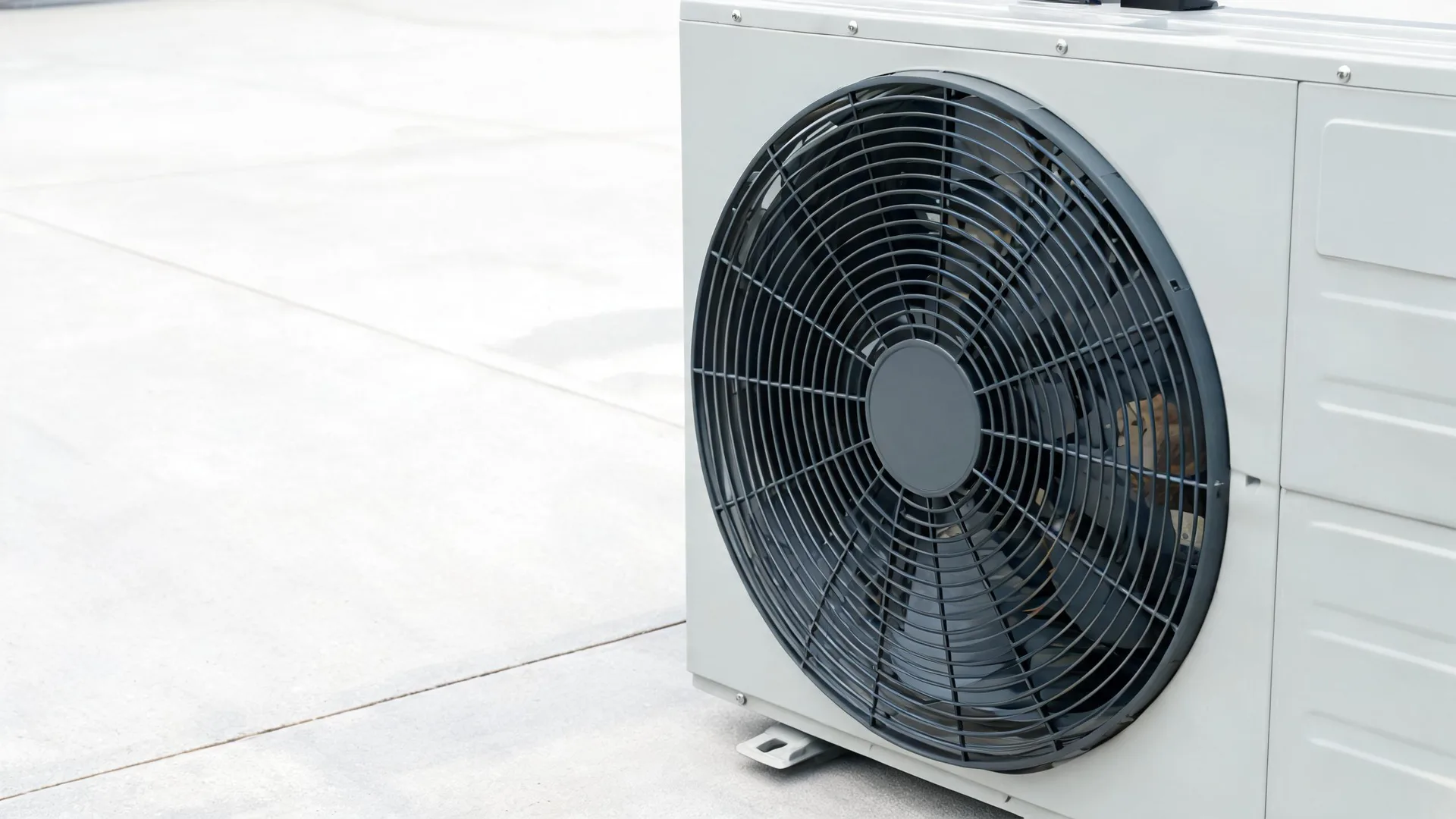
The drain is the part most people forget exists

The coil pulls moisture out of the air all season, and that water has to leave through the condensate drain. Algae and dirt build up in that line over time, and when it clogs, the water backs up into the pan under the coil and overflows. A shop vac on the drain line clears what's already built up before it becomes a leak into the house.

An outdoor air conditioning condenser unit positioned beside a blue-sided house at sunset.

Book your AC tune-up in May, before homes here start needing cooling in June.

  1. Jan
  2. Feb
  3. Mar
  4. Apr
  5. May
  6. Jun
  7. Jul
  8. Aug
  9. Sep
  10. Oct
  11. Nov
  12. Dec

A tune-up checks the refrigerant charge, cleans the coils, tests the capacitor and tightens the electrical connections.

A full tune-up covers the whole circuit, not just the parts inside the cabinet. Outside, the condenser coil gets checked for dirt and bent fins, because a coil caked in debris can't reject heat the way it's supposed to, and the compressor pays for it. The fan motor gets checked for play in the bearings and for the blade spinning true, since a wobbling blade moves less air across that coil. Inside, the blower wheel gets looked at for dust buildup, because a dirty wheel moves less air no matter how strong the motor is. The thermostat gets checked against a second thermometer, since a thermostat reading wrong makes the whole system chase the wrong number all day. Refrigerant lines get checked for rubbed insulation or a spot where the line set rests against metal, because that's where a slow leak usually starts. None of these parts fail the same way or on the same schedule, which is why a real tune-up checks each one on its own terms instead of treating the system as one thing.