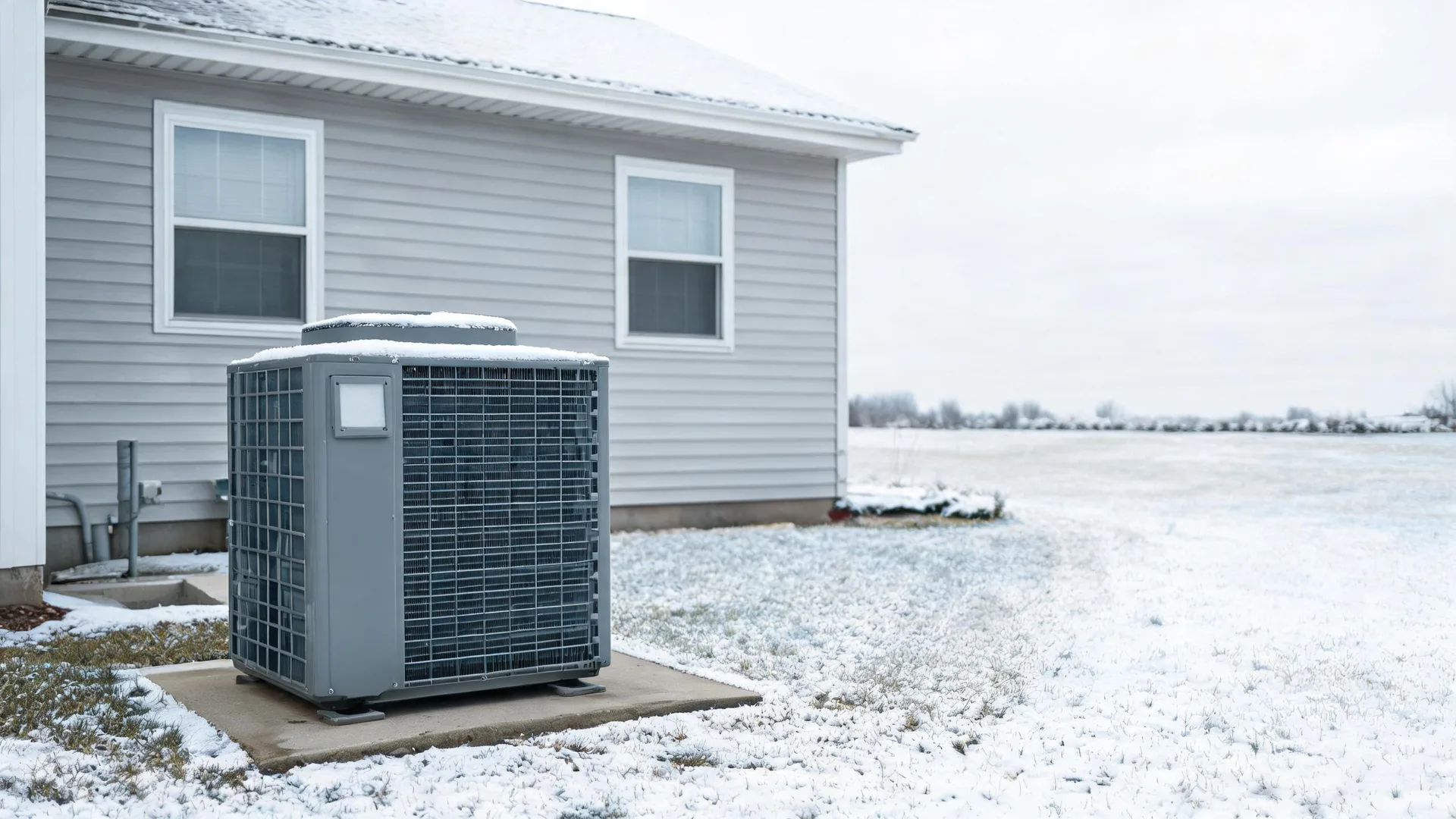
The filter is the cheapest part to deal with and the one that causes the most trouble when it's ignored. Once it loads up with dust, airflow across the indoor coil drops, and that coil can get cold enough to ice over. A frozen coil blocks airflow even more, so the system struggles to cool while running longer to do it. Outside, the condenser coil needs clear airflow too, and dirt or grass clippings packed against the fins make the whole system work harder to shed heat. The condensate drain matters just as much, since that line carries away the water the coil pulls out of the air. Let it clog and the pan backs up, sometimes dripping right through the ceiling below.
4 months
June through September, your air conditioner is on duty
85°F
the average summer afternoon it cools against
15 hail events
in ten years, and hail bends the fins on outdoor coils
28 wind events
in ten years, and wind drives debris into outdoor units
Your air conditioner works hardest from June through August.
Jan
Feb
Mar
Apr
May
Jun
Jul
Aug
Sep
Oct
Nov
Dec
NOAA nClimDiv, 1991–2020 normals
A system that short cycles, turning off a few minutes after it starts, is already telling you something is wrong.
Catching that now means a technician checks it, not a dead compressor on the hottest day of the year.
Four months of real heat is still one tune-up a year
Cooling runs June through SeptemberSummer afternoons average 85°FPower costs 12.79 cents a kWh statewide
One visit a year covers it here. Nothing about Carter County puts extra strain on an AC system compared to anywhere else, so there's no case for more than that. Half the homes in the county were built in 1984 or later, half before, and the age of the house doesn't change what the system needs. What matters is whether someone has actually looked at the unit recently. Mobile homes make up about a quarter of the housing here, and those often run smaller systems with their own duct runs and clearances, so a technician should know that going in. Get it checked before the heat sets in, and that covers it for the year.
A real check means hands on the unit, not a glance at the thermostat
A quick visit gets you a glance at the readings and a new filter if you ask. A thorough one means the gauges actually come out, so refrigerant charge gets checked against what the system calls for, not guessed at. The technician should pull the capacitor and test it under load, since a capacitor can read fine sitting still and still fail the moment the compressor tries to start. The contactor gets checked for pitting, because a pitted contactor is what leaves a system not starting at all. Coils get an actual look, not just a glance from across the room, since a coil can look clean on the fins and still have buildup further in. The drain line gets flushed, not just eyeballed. A thorough check also means amp draw gets measured at the compressor and fan motor, because a motor pulling more current than it should is wearing out before anything stops working. None of this takes long to do right. It just has to actually get done.
The capacitor that looks fine until it isn't
A weak capacitor still spins the fan when you test it sitting still. The failure only shows up under load, the moment the compressor tries to start. That's the unit that won't come on at all some morning, with no warning beforehand.
Refrigerant charge drifts without a leak
A system can lose a little refrigerant over the years through fittings and flare joints without ever having a leak worth chasing. Running low means the compressor works harder and the house takes longer to cool, long before anyone notices anything's wrong.
Book your AC tune-up in May, before homes here start needing cooling in June.
Jan
Feb
Mar
Apr
May
Jun
Jul
Aug
Sep
Oct
Nov
Dec
A tune-up checks the refrigerant charge, cleans the coils, tests the capacitor and tightens the electrical connections.
A tune-up also means someone checks the electrical connections at the disconnect box and inside the unit, since a loose connection builds heat every time the system runs. The blower wheel gets looked at too. Dust cakes onto the blades over time, and a dirty wheel moves less air even when the motor itself is fine. The evaporator coil's refrigerant lines get checked for proper insulation, because bare line where it should be wrapped means the system is losing efficiency before the air even reaches the ducts. Outside, the technician should confirm the unit sits level, since a condenser that's settled or tilted puts strain on the compressor mounts over time. Thermostat calibration is worth a check as well, since a thermostat reading a few degrees off tells the system to run longer than it needs to.