A two-story dark-painted house with a covered front porch, white-trimmed windows and a trimmed hedge, framed by large deciduous trees, photographed from ground level across a lawn with blurred grass in the foreground.

AC Maintenance in Frankfort, KY

Tell us about the job

Takes about a minute. No obligation.

Tune-up, service, or cleaningCentral ACFranklin County, KY
Step 1 of 2

What ZIP code is the job in?

A dirty coil makes the compressor work harder

When the outdoor coil is caked with dirt or the filter is clogged, the system can't shed heat the way it was built to. The compressor runs longer and hotter to cool the same house. It still works, so nothing looks wrong, but that extra strain is what wears out a compressor or a fan motor years before it should fail.

Weak parts fail without warning

A refrigerant leak or a weak capacitor doesn't announce itself ahead of time. The system just runs a little longer each cycle until one hot afternoon it doesn't start at all. A yearly check catches a capacitor losing its charge or a coil low on refrigerant while it's still one part, not a system that needs replacing.

5 months
May through September, your air conditioner is on duty
86°F
the average summer afternoon it cools against
11 hail events
in ten years, and hail bends the fins on outdoor coils
51 wind events
in ten years, and wind drives debris into outdoor units
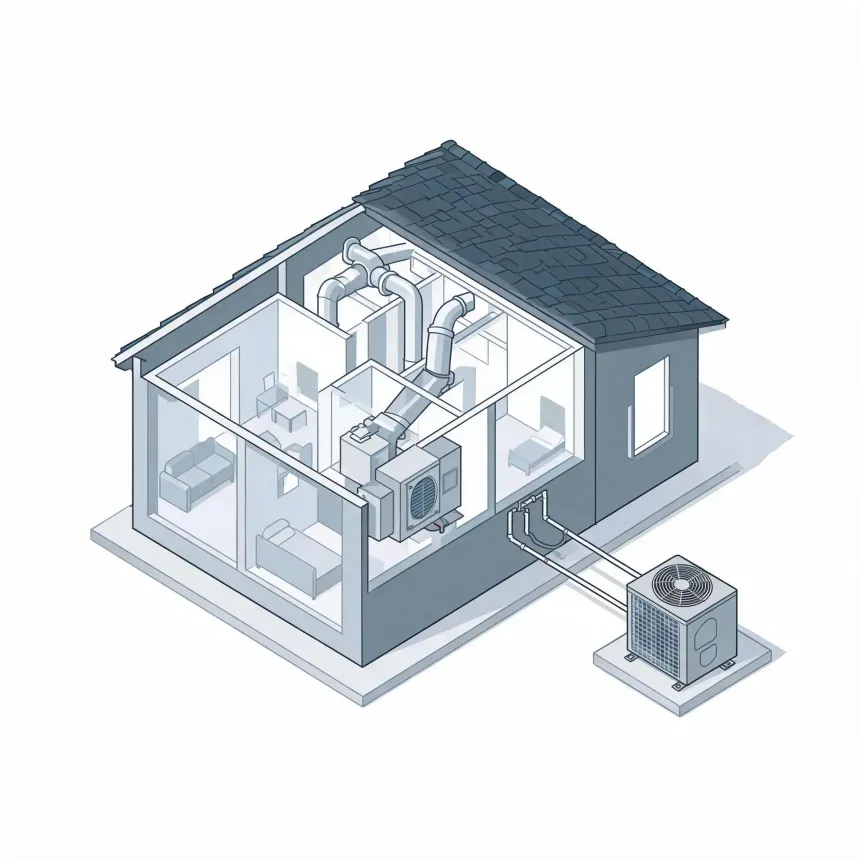
Isometric cutaway illustration of a small house showing interior rooms with furniture, an indoor air handler with ducts in the attic space, and refrigerant lines running to an outdoor condenser unit on a pad.
Your air conditioner works hardest from June through August.

NOAA nClimDiv, 1991–2020 normals

Cooling runs May through September in Frankfort.

Have the system checked in April, before it has to work.

A county this ordinary still needs one visit a year

Half the homes here were built by 1977
Cooling runs May through September
Summer afternoons average 86°F

Cooling runs about five months here, May through September, with afternoon highs averaging 86 in June, July and August. That's real work for the system, but it's not extreme, and nothing about Frankfort pushes a unit harder than it was built to handle. One visit before that stretch starts covers it. There's no second slow season that calls for a fall check, no run of extreme heat that argues for checking more than once. Get it looked at in spring, and the rest of the year takes care of itself.

Book it before the season

It starts running hard in the first month of the season here. Book the check the month before.

Find a contractor
A man in a cap, navy T-shirt and brown work pants, seen from behind, climbs porch steps toward a dark green paneled front door while carrying a canvas tool bag.
A gray metal air conditioning condenser unit mounted on a concrete pad in a flat grassy field under a partly cloudy sky.

The parts that clog and drip are doing the real work

The filter is the cheapest part of the system to look after and the one most likely to get ignored. Air has to pass through it every cycle the system runs. As it loads up with dust, the system has to pull harder to move the same air across the coil. The indoor coil behind it stays wet with condensation most of the time it runs, so dust that gets past the filter sticks there instead of blowing through, and a coated coil can't pull heat out of the air the way a clean one does. The drain underneath is just as easy to forget. That coil is dripping water the whole time it runs, and the line carries it out to where it belongs. Algae and dust build up in that line the same way they would in any drain that stays wet for months at a stretch. When it clogs, the water backs up into the drain pan, and from there it finds the nearest way out, usually down through the ceiling below. None of these fail loud. A dirty filter just makes the system run longer. A dirty coil just makes it run hotter. A clogged drain sits quiet until the pan overflows. A yearly check is what catches all of it while it's still routine.

Warm air from the vents means something's already wrong

If the air coming out isn't noticeably cooler than the room, the system is running without doing its job. That can mean refrigerant has leaked out or the compressor itself is struggling. Either way, waiting rarely fixes it. It just means the system keeps running while cooling less.

Short cycling wears the system out faster than steady running

A system that shuts off a few minutes after starting, then kicks back on soon after, isn't completing a full cycle. That pattern points to a thermostat problem, a dirty sensor, or a compressor starting to fail. Each short cycle puts more wear on the parts that start the system up than a full, normal run would.

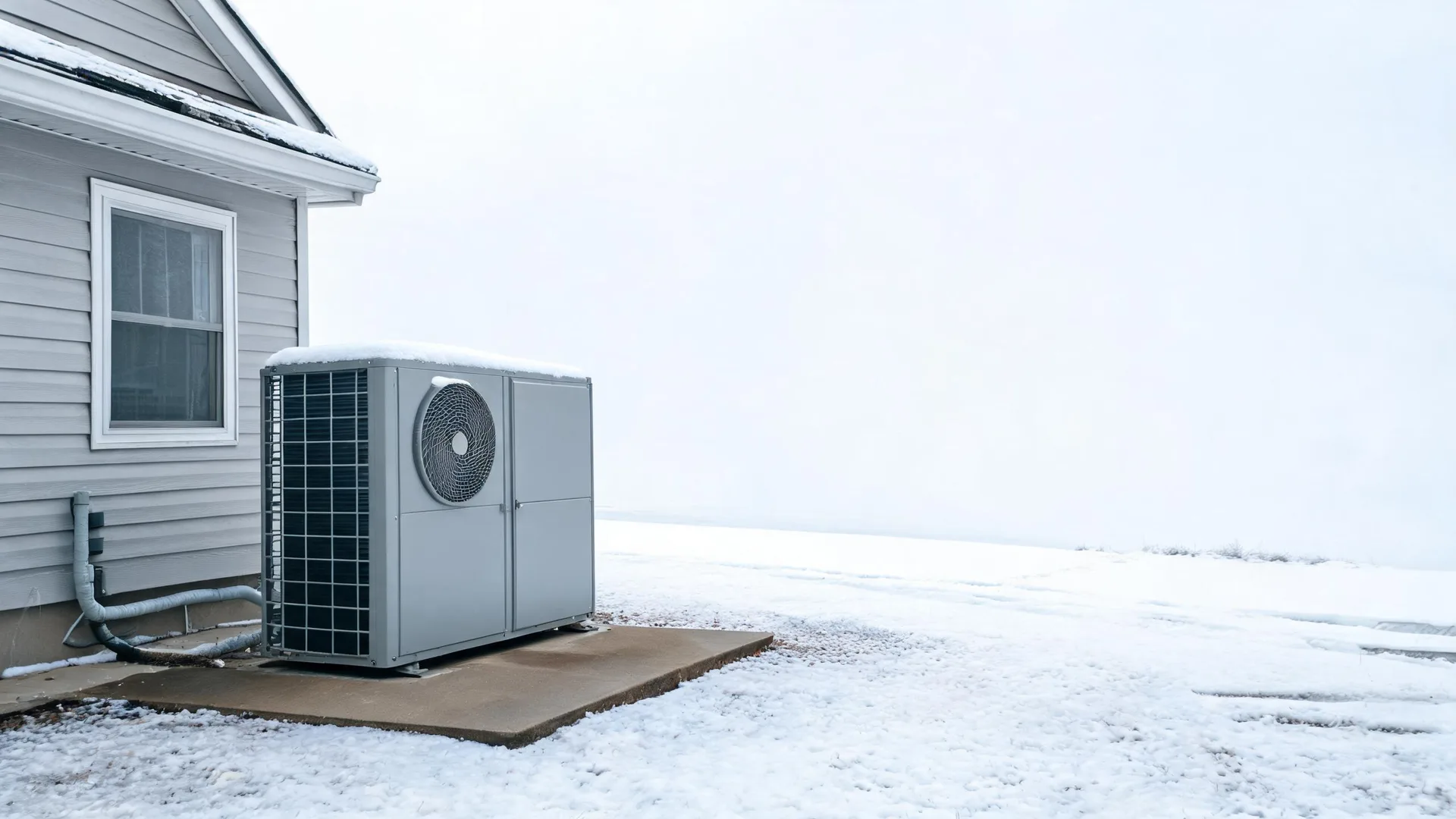
Aerial view of a gray outdoor air conditioning condenser unit mounted on a concrete pad next to a house with vinyl siding.

Book your AC tune-up in April, before homes here start needing cooling in May.

  1. Jan
  2. Feb
  3. Mar
  4. Apr
  5. May
  6. Jun
  7. Jul
  8. Aug
  9. Sep
  10. Oct
  11. Nov
  12. Dec

A tune-up checks the refrigerant charge, cleans the coils, tests the capacitor and tightens the electrical connections.

A tune-up starts outside, with the coil and the fan. The tech cleans the coil fins so the system can actually shed the heat it's pulling out of the house, and checks the fan motor and blades while it's open. Refrigerant gets checked against what the system was built to run, not topped off by habit, since too much is as hard on the compressor as too little. Electrical connections get tightened, because a loose one builds heat right at the connection. The capacitor gets tested under load, not just looked at, since a capacitor can read fine sitting still and still fail the moment the compressor tries to start. Inside, the coil gets checked for dirt and the drain line gets cleared so it can carry water out instead of backing up. Last, the system gets run through a full cycle and the temperature drop across it gets measured, so there's a real number showing the system is moving heat the way it should, not just a filter swapped and a panel closed back up.