






A lit brick residential street at dusk showing a row of two-story homes with covered porches and mature trees.

AC Maintenance in Florence, KY

Tell us about the job

Takes about a minute. No obligation.

Tune-up, service, or cleaningCentral ACBoone County, KY
Step 1 of 2

What ZIP code is the job in?

Boone County has logged 121 severe weather events between 2015 and 2024, and most of those were damaging wind. Your outdoor unit sits outside through all of it, taking whatever blows through the yard. Hail has hit the county too, which means dented fins and a bent coil are a real possibility, not a hypothetical. Kentucky households that lose power do not get it back quickly either. Close to a quarter went at least a full day without it last year. A unit that already has a weak capacitor or a coil packed with debris is less likely to come back cleanly once the power does.

4 months
June through September, your air conditioner is on duty
85°F
the average summer afternoon it cools against
18 hail events
in ten years, and hail bends the fins on outdoor coils
86 wind events
in ten years, and wind drives debris into outdoor units
Isometric line illustration of a cutaway house showing interior rooms with furniture, ductwork leading to an indoor air handler, and an outdoor condenser unit connected by a line set.
Your air conditioner works hardest from June through August.

NOAA nClimDiv, 1991–2020 normals

Half the homes in Boone County were built in 1996 or later.

A system that age still has years ahead of it, and a yearly check is what keeps it getting there.

Four months of real work a year is still a once-a-year job

Cooling runs June through September
Summer afternoons average 85°F
86 damaging wind events from 2015 to 2024

If your system came with the house, keeping it checked every year is what makes that age work in your favor. A system built along with the house has had one owner and probably one history, which makes it easier for a tech to tell what's normal for it and what isn't. That's worth more over time than it sounds like at first. Skip a few years and nobody can say anymore whether a sound or a slow drop in cooling is new or just how it's always run. A yearly check keeps that record going instead of letting it go blank.

Check it before storm season

Storm season beats up outdoor units here. Have it checked for damage and debris before you need it.

Find a contractor
A man in a cap, gray long-sleeve shirt and tan work pants carries a canvas tool bag up concrete steps toward a dark green paneled front door, with a potted shrub to the right.
A gray cylindrical air conditioning condenser unit mounted on a concrete pad next to a light-colored vinyl-sided house exterior.

Nothing fails overnight, it just wears down unseen

Skip a year and the system doesn't fail outright. It keeps running, just worse than it did before. Dust builds on the coil and the system loses its grip on heat, so it runs longer to move the same amount of air. A dirty filter chokes that airflow down further, and the evaporator coil can ice over, which blocks it almost completely and starves the compressor of the warm refrigerant gas it needs to run safely. A slow refrigerant leak works the same way, a little at a time, and a system can sit there losing capacity for a long stretch before anyone notices anything but a house that doesn't cool like it used to. None of this trips a breaker or throws a warning. It just wears the compressor down faster than it should, right up until the day it quits.

The sounds that mean something changed

A rattle on startup, a hum that doesn't turn into a run, a click that repeats instead of catching. Any of these means a part is struggling to do its job, and a system that struggles to start is a system worth having looked at.

What a check catches before you feel it

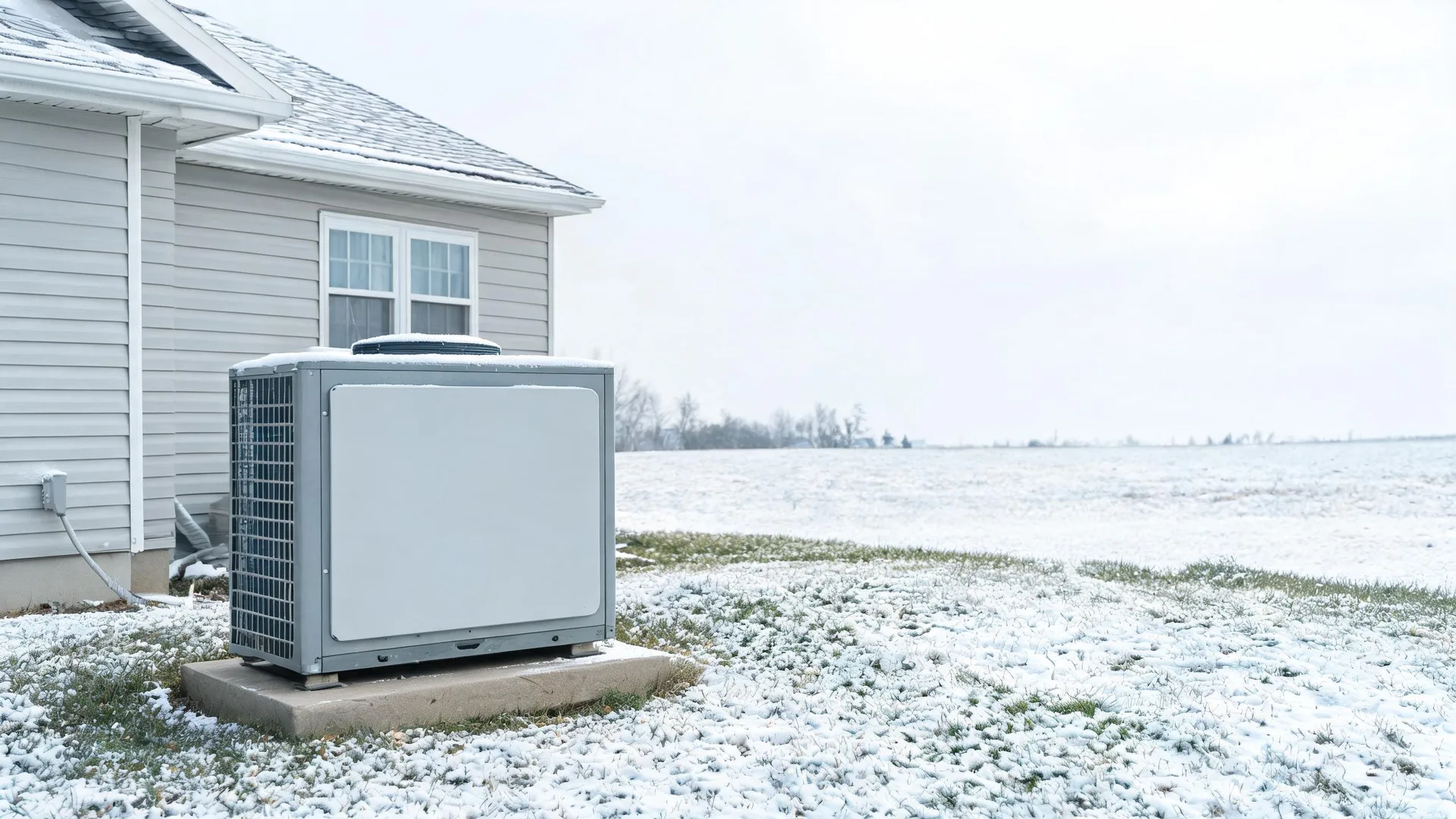
A tech checks refrigerant pressure, tests the capacitor under load, and pulls the panel to look at wiring and connections a homeowner never sees. None of that shows up as warm air yet. That's the point of catching it now instead of waiting for the house to tell you.

An outdoor air conditioning condenser unit installed beside the exterior wall of a blue vinyl-sided house at sunset.

Book your AC tune-up in May, before homes here start needing cooling in June.

  1. Jan
  2. Feb
  3. Mar
  4. Apr
  5. May
  6. Jun
  7. Jul
  8. Aug
  9. Sep
  10. Oct
  11. Nov
  12. Dec

A tune-up checks the refrigerant charge, cleans the coils, tests the capacitor and tightens the electrical connections.

A tune-up starts outside at the condenser. The coil gets washed clean, because caked-on dirt and grass clippings are what make the system lose its grip on heat in the first place. The fins get checked for anything bent flat enough to block airflow. Inside, the tech pulls the capacitor and tests it under load instead of just eyeballing it, since a capacitor can look fine and still be too weak to start the compressor reliably. Refrigerant pressure gets checked against what the system is supposed to run at, not topped off out of habit. The condensate drain gets cleared too, because a clogged one backs up and can shut the system down on its own well before the refrigerant or the compressor ever becomes the problem.