



An outdoor air conditioning condenser unit mounted on a concrete pad next to a blue-sided residential house at sunset.

AC Maintenance in Elizabethtown, KY

Tell us about the job

Takes about a minute. No obligation.

Tune-up, service, or cleaningCentral ACHardin County, KY
Step 1 of 2

What ZIP code is the job in?

Hardin County saw 129 severe weather events between 2015 and 2024, and most of them involved wind or hail. A condenser sits outside through all of it, taking debris against the fins and hail against the cabinet. Tornadoes and winter storms have hit here too, so wind damage isn't the only risk to check for. Almost a quarter of Kentucky households lost power for a day or more in 2024, and a unit already stressed from storm damage has a harder time starting back up once the power does.

5 months
May through September, your air conditioner is on duty
86°F
the average summer afternoon it cools against
32 hail events
in ten years, and hail bends the fins on outdoor coils
74 wind events
in ten years, and wind drives debris into outdoor units
Isometric cutaway illustration of a small home interior with furniture and ducting, showing an indoor air handler connected by lines to an outdoor condenser unit on a pad.
Your air conditioner works hardest from June through August.

NOAA nClimDiv, 1991–2020 normals

Five months of cooling a year doesn't ask for more than one tune-up.

One visit before summer catches a loose wire or a weak capacitor before a storm does.

Get it checked before MayCooling runs May through September here. April is the month to catch problems first.

A maintenance visit before storm season is the time to check the condenser itself. A tech can look at the fins for bent spots, clear out anything caught in the cabinet, and make sure the unit is bolted down the way it should be. That matters more here, with 74 wind events and 32 hail events on record for this county, than it would somewhere calmer. If a storm already bent the fins or knocked something loose, a tune-up is also when that gets caught, before the unit has to restart on its own after the power drops.

Newer systems still need a yearly check

Half the homes in Hardin County were built in 1988 or later, so a lot of the systems in them still have good years left. A yearly check is what keeps a newer unit running that way, storm season after storm season.

Find a contractor
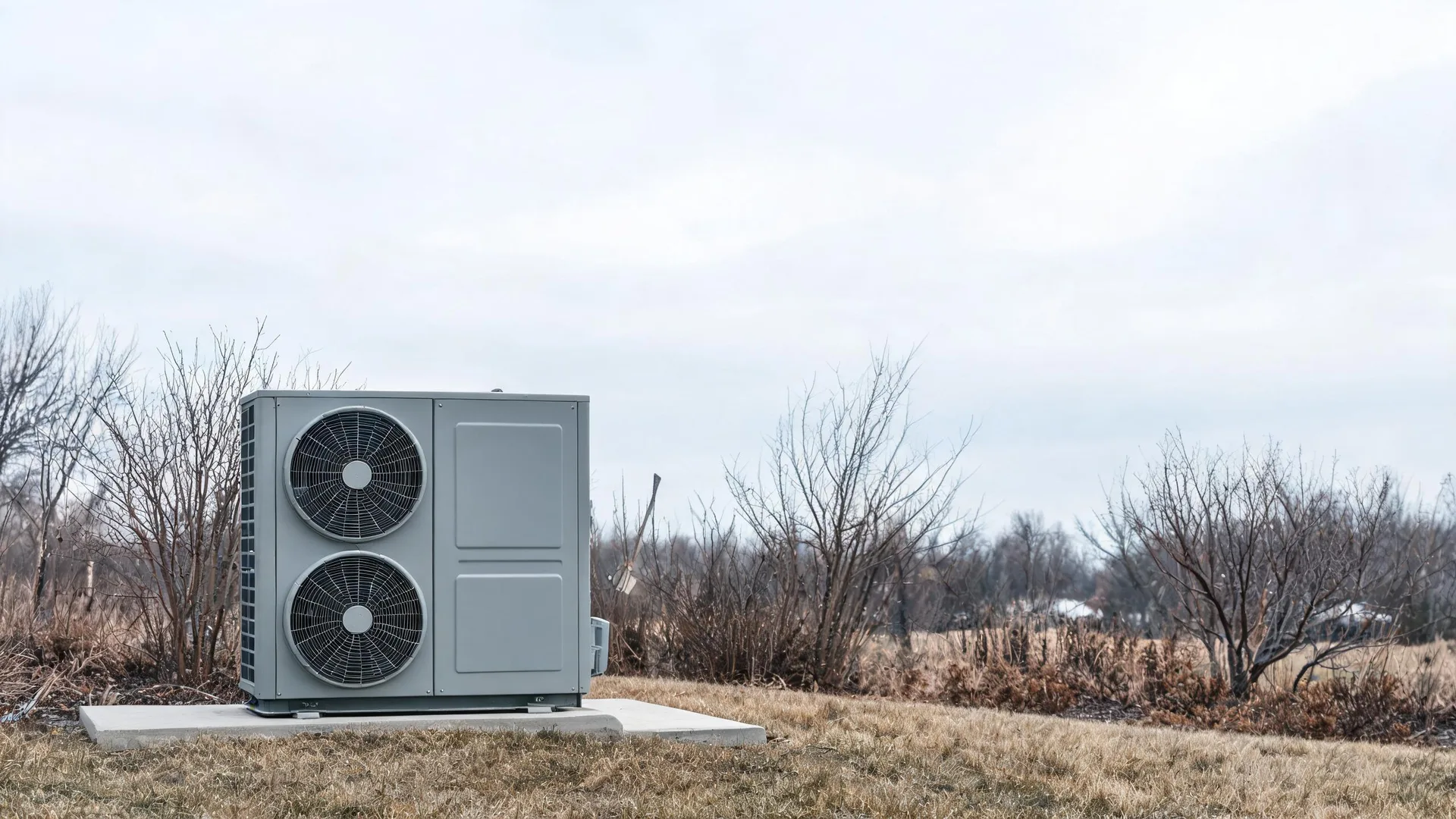
A gray metal air conditioning condenser unit mounted on a concrete pad in a flat grassy field under a partly cloudy sky.

What a real tune-up covers

A tech who rushes a tune-up checks the refrigerant pressure and calls it done. That tells you something, but not much. A thorough visit checks the capacitor's output against what it's rated for, not just whether the compressor kicks on. It means pulling the blower wheel to look for dirt buildup on the blades, not just glancing at the filter. It means washing the condenser coil, not just hosing off what's visible through the fins. The contactor gets checked for pitting, since that's what causes a unit to stop starting reliably months later. Drain lines get flushed, not just looked at, because a clog there backs up and shuts the system down on its own. A quick visit looks for what's already broken. A thorough one looks for what's about to be.

What's visible isn't what fails first

A homeowner can see a dirty filter or hear a rattle. What they can't see is refrigerant charge running low, a capacitor putting out less than it should while the compressor still starts, or a blower wheel caked with dirt that's choking airflow from the inside. None of that shows up until the system can't keep up or quits outright, usually on the hottest day it's asked to work hardest.

Small readings catch big failures early

A capacitor that's weakening still starts the compressor, until the day it doesn't. A contactor with some pitting still closes the circuit, until the pitting gets bad enough that it won't. These parts fail by degrees, and a tune-up is built to catch them in the middle of that slide, not at the end of it, when the only sign left is a system that won't turn on.

An outdoor air conditioning condenser unit positioned on a concrete pad next to a blue-sided house, surrounded by green shrubs and flowering hydrangeas at sunset.

Book your AC tune-up in April, before homes here start needing cooling in May.

  1. Jan
  2. Feb
  3. Mar
  4. Apr
  5. May
  6. Jun
  7. Jul
  8. Aug
  9. Sep
  10. Oct
  11. Nov
  12. Dec

A tune-up checks the refrigerant charge, cleans the coils, tests the capacitor and tightens the electrical connections.

A tune-up covers more ground than most people expect. The refrigerant level gets checked against what the system calls for, since a low charge makes the compressor work harder for less cooling. The evaporator coil gets looked at along with the condenser, because a dirty coil on either end cuts the system's ability to pull heat out of the air. Electrical connections get tightened, not just glanced at, since a loose connection heats up and burns a wire over time. The thermostat gets checked against what the system actually does, because a reading that's off tells the system to run longer than it needs to, or shut off before it should. Belts don't come into it on most systems built in recent decades, since the motors run direct drive now, but the bearings in that motor still wear and still get checked. Each of these is small on its own. Skipped together, they're what turns a system that should last into one that fails early.