A system can run low on refrigerant and still blow cold air at the vent closest to the unit while the rest of the house falls behind. The only way to know the charge is right is to check the pressures and the temperature of the air coming off the coil, not to feel the airflow with a hand.
A weak capacitor won't announce itself
The capacitor that starts the compressor and the fan motor can be failing for weeks before either one stops turning. It still spins up every time you ask it to, right up until the morning it doesn't. Checking its reading during a tune-up catches it while it's still a part swap instead of a no-cool call.
5 months
May through September, your air conditioner is on duty
88°F
the average summer afternoon it cools against
18 hail events
in ten years, and hail bends the fins on outdoor coils
72 wind events
in ten years, and wind drives debris into outdoor units
Your air conditioner works hardest from June through August.
Jan
Feb
Mar
Apr
May
Jun
Jul
Aug
Sep
Oct
Nov
Dec
NOAA nClimDiv, 1991–2020 normals
Half the homes in Muhlenberg County were built in 1978 or earlier.
The AC system in a house that age may have been replaced once already or may still be original, so a yearly check is the only way to know which parts are holding up.
Cooling starts in May here. Have it checked in April.
Cooling runs May through SeptemberSummer afternoons average 88°F72 damaging wind events from 2015 to 2024
One check covers the seasonCooling runs May through September here, and one tune-up covers all of it.
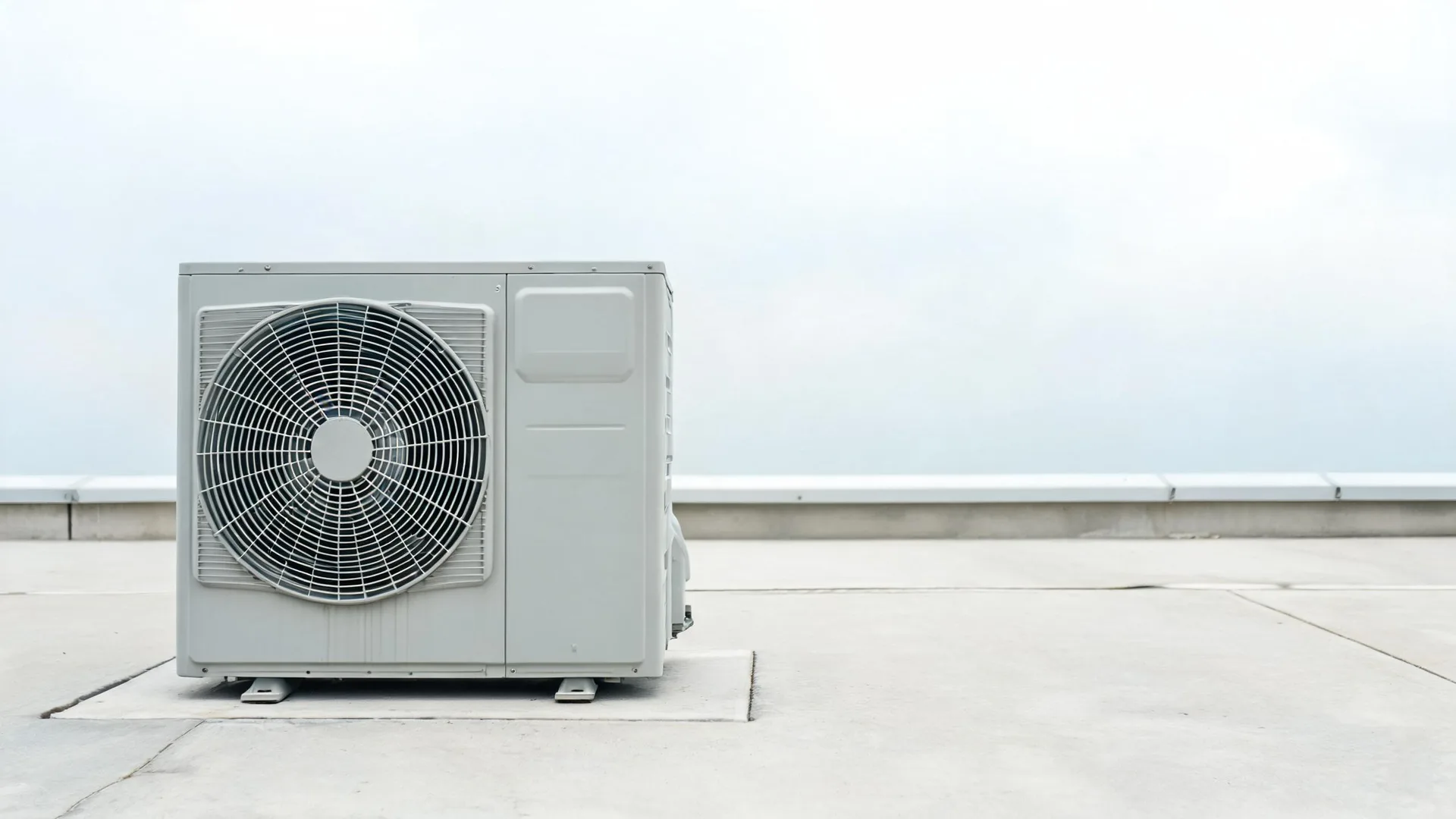
Muhlenberg County has logged 112 severe weather events between 2015 and 2024, and most of those were damaging wind. That's the outdoor unit's problem more than the furnace's. The condenser sits outside year round, and wind that strips branches off a tree can just as easily drive debris into the fins or rock the unit on its pad. Hail has hit the county in that same stretch too, and a bent fin or a cracked fan blade doesn't always show up until the system is working hard to keep the house cool. A check before summer is when a contractor can catch that kind of damage and clear out what's piled up against the cabinet, while it's still a quick fix.
Skip the check and the wear doesn't stop, it just goes unwatched
An air conditioner that never gets opened up keeps running right up until it doesn't. Dust builds up on the coil a little at a time, and as it does, the system has to work harder to pull heat out of the house. Nobody notices this happening day to day. The house still cools down the same, right up until the day it doesn't. Meanwhile the condenser fan motor and the compressor are logging hours they can't get back, and a dirty coil or a low charge makes both of them run hotter than they were built to. A yearly check is what catches the coil before it's caked, the charge before it drifts too low, and the capacitor before it gives out. Skip enough years and the parts don't fail gently. They fail on the hottest day, because that's when the system is working hardest and has the least room left to compensate.
A gauge set tells you something a glance can't
A quick visit might get a filter swap and a look at the thermostat. A thorough one hooks up gauges to check refrigerant pressure, checks the temperature split between the air going into the system and the air coming out of it, and measures the amps the compressor is drawing. Those numbers are what show a system starting to strain before it quits.
The cabinet comes off or it doesn't
The coil and the blower wheel sit behind the panels, not in front of them. A tune-up that skips opening the cabinet can't see dust packed between the coil fins or caked on the blower wheel, and both make the system work harder without ever throwing a code. Pulling the panel is what separates cleaning the system from just looking at it.
Book your AC tune-up in April, before homes here start needing cooling in May.
Jan
Feb
Mar
Apr
May
Jun
Jul
Aug
Sep
Oct
Nov
Dec
A tune-up checks the refrigerant charge, cleans the coils, tests the capacitor and tightens the electrical connections.
A tune-up on an air conditioner is a set list, not a glance. The contractor checks refrigerant pressure against what the system calls for. Too little and the compressor runs hot. Too much and it runs just as hard the other way. The condensate drain gets checked too, because a clogged one backs up and spills water instead of carrying it outside. The motors connect direct on most systems built now, so what wears instead are bearings and capacitors, and those get tested under load, not just eyeballed. The electrical connections get checked for anything loose or starting to corrode, since a connection that heats up at the terminal can take out the part it's feeding. None of this shows up by looking at the unit running. It shows up in the numbers the contractor takes while it's apart.