






A illuminated two-story red brick house on a quiet residential street at dusk, flanked by mature trees under a deep blue evening sky.

AC Maintenance in Campbellsville, KY

Tell us about the job

Takes about a minute. No obligation.

Tune-up, service, or cleaningCentral ACTaylor County, KY
Step 1 of 2

What ZIP code is the job in?

Taylor County saw 106 severe weather events between 2015 and 2024, more wind, hail and tornadoes than most places see. Your outdoor AC unit sits through all of it with no cover. Wind drives debris into the coil and fan. Hail dents the cabinet and can bend the fins enough to block airflow. A maintenance visit before the weather picks up is when a contractor can catch bent fins, loose panels or debris sitting where it can cause trouble, before the unit has to run on the first hot day.

5 months
May through September, your air conditioner is on duty
86°F
the average summer afternoon it cools against
16 hail events
in ten years, and hail bends the fins on outdoor coils
69 wind events
in ten years, and wind drives debris into outdoor units
Isometric line illustration of a cutaway house showing interior rooms, ceiling ductwork connected to an indoor air handler, and an outdoor condenser unit linked by refrigerant lines.
Your air conditioner works hardest from June through August.

NOAA nClimDiv, 1991–2020 normals

Half the homes in Taylor County were built in 1978 or earlier.

A unit's age doesn't follow the house, so a yearly check is how a contractor finds out what shape yours is really in.

Five months of cooling is all your AC has to get through here

Cooling runs May through September
Summer afternoons average 86°F
69 damaging wind events from 2015 to 2024

Cooling starts in May here and runs through September. April is when to get the unit checked, before it has to work. A contractor looking at it cold, before the first real demand hits, can see things that hide once the system is running hard every day. That's the month with room on the schedule too, before everyone else's AC trouble starts calling contractors out.

Get the outdoor unit checked before storm season gets to it

Wind, hail and the odd tornado pass through Taylor County most years. A maintenance visit now is when a contractor can still get to bent fins, a dented cabinet or debris sitting in the coil, before the unit has to run and before the next storm adds to it.

Find a contractor
A man in a cap, dark long-sleeve shirt and tan pants walks up concrete steps toward a green front door, carrying a canvas tool tote, with a potted shrub beside the entry.
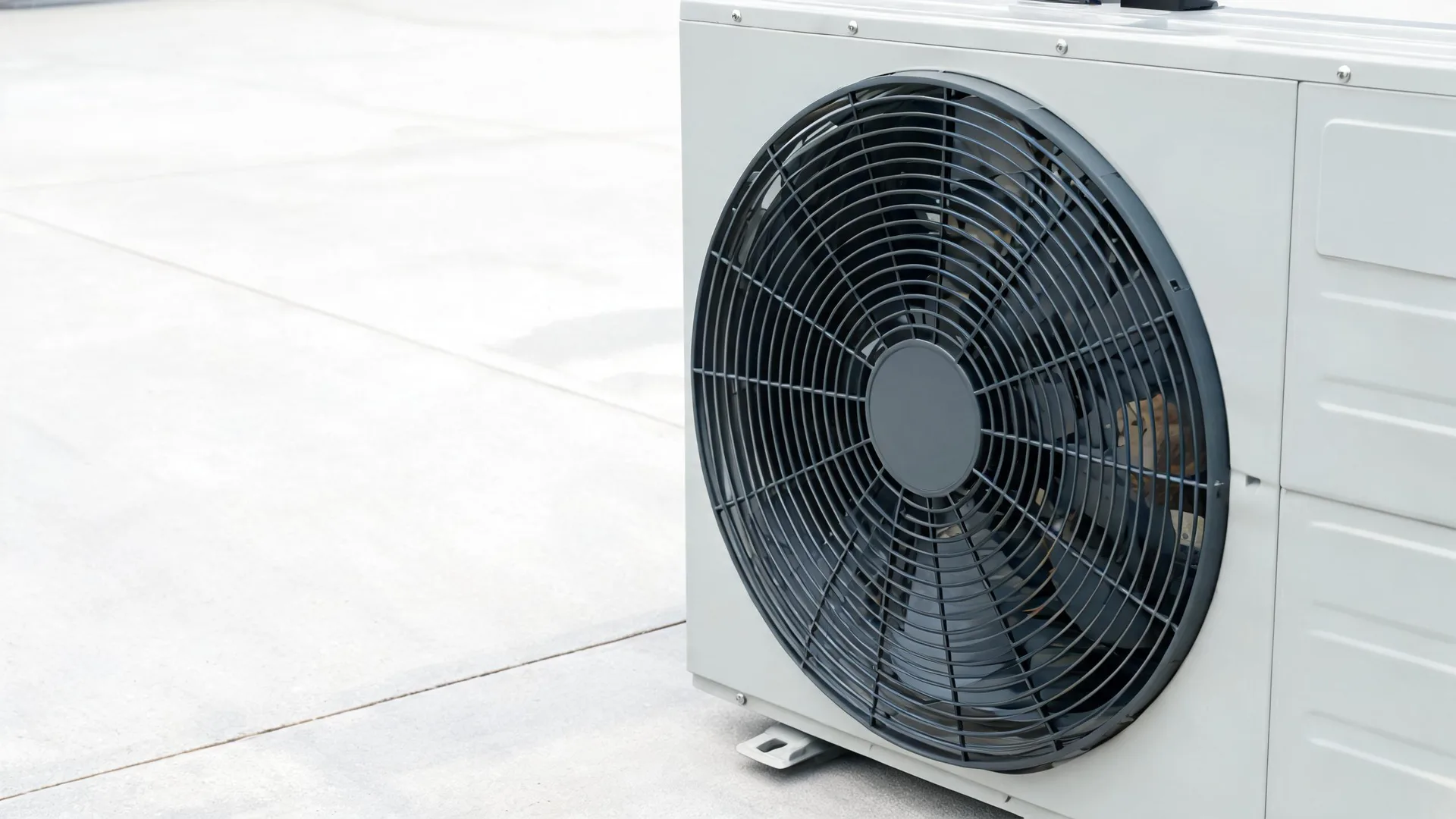
An outdoor air conditioning condenser unit mounted on a concrete pad beside a house, with electrical conduit running to a wall-mounted disconnect box.

What's wrong doesn't always make noise

A gauge set on the refrigerant lines shows a charge running low before the house ever feels warm air. The system still cools on a mild day with less refrigerant than it needs, so nothing seems wrong. A contractor can also check the capacitor under load, not just whether it reads close to its rating, since a capacitor can test fine sitting still and still fail to kick the compressor on. The condensate drain gets checked while it's still running clear, before algae or dirt actually clogs it and sends water somewhere it shouldn't go. None of this shows up by looking at the outdoor unit or listening to it run.

A warm room is the last sign, not the first

An AC losing its edge usually gives smaller signals before it quits. It runs longer than it used to to hit the same temperature. The air coming out of the vents is cool but not cold. It cycles on and off more than it should. Any one of these is worth a look before the system is the only thing standing between the house and a hot day.

A unit under strain doesn't always ask for help

A weak capacitor, a dirty coil or a low refrigerant charge will not stop a system outright. The compressor just works harder to do the same job, and that strain adds up over a season of running. A check can catch that strain while the system is still cooling the house, which is the point of doing it before summer asks anything of it.

Overhead view of an outdoor AC condenser unit on a concrete pad next to a house with a dark shingle roof.

Book your AC tune-up in April, before homes here start needing cooling in May.

  1. Jan
  2. Feb
  3. Mar
  4. Apr
  5. May
  6. Jun
  7. Jul
  8. Aug
  9. Sep
  10. Oct
  11. Nov
  12. Dec

A tune-up checks the refrigerant charge, cleans the coils, tests the capacitor and tightens the electrical connections.

A tune-up starts with the coil, not the thermostat. A contractor pulls the panels and looks at the outdoor coil and the one inside, because a coil caked with dust or coated in grime can't shed heat the way it should, and the system ends up working harder to do the same job. The blower wheel gets checked too, since a wheel loaded with dust moves less air even running at full speed. Refrigerant gets checked against what the system calls for, not just whether it's cooling on the day someone's there. Electrical connections get tightened, because a loose connection heats up under load and that heat wears on whatever it's touching. The condensate drain gets cleared so it keeps carrying water out instead of letting it back up. None of this is guesswork. It's checking the parts that do the work against what they're supposed to be doing, while there's still time to fix what's found.