





An outdoor air conditioning condenser unit mounted on a concrete pad next to a blue-sided residential house at sunset.

AC Maintenance in Bardstown, KY

Tell us about the job

Takes about a minute. No obligation.

Tune-up, service, or cleaningCentral ACNelson County, KY
Step 1 of 2

What ZIP code is the job in?

The filter is the cheapest part of the system and the one that does the most damage when it is ignored. A clogged filter starves the system of airflow, and the indoor coil needs that airflow moving across it to work right. Starve it long enough and the coil gets cold enough to ice over, and once ice builds up, cooling stops until it melts off. The outdoor coil has its own job, shedding the heat pulled from inside the house, and it can only do that if air moves freely through its fins. Dirt packed into those fins holds heat in instead of letting it go. The drain matters just as much, because the moisture pulled out of the air has to go somewhere, and if that line clogs with algae or sludge, the water backs up and finds the nearest place to leak.

5 months
May through September, your air conditioner is on duty
86°F
the average summer afternoon it cools against
31 hail events
in ten years, and hail bends the fins on outdoor coils
55 wind events
in ten years, and wind drives debris into outdoor units
Isometric grayscale illustration of a cutaway house with the roof lifted, showing interior rooms, ductwork, an indoor air handler, and an outdoor condenser unit beside the building.
Your air conditioner works hardest from June through August.

NOAA nClimDiv, 1991–2020 normals

Homes in Nelson County start running their AC in May.

April is the month to get it checked, before it has to run.

Five months of cooling is one season, and one visit covers it

Cooling runs May through September
Summer afternoons average 86°F
31 hail events from 2015 to 2024

Half the homes in Nelson County were built in 1992 or later. A system installed with one of those houses could still be well inside its working life. That's worth something, but only if the yearly check happens. A compressor or condenser fan can run fine for years and still lose a little capacity each season, and a check is what catches that early, while it is a simple fix instead of a breakdown once the heat sets in. Skip the checks and a newer system ages the same as an old one would.

Storm season is hard on an outdoor unit. Have it checked before it has to work.

Nelson County has logged 104 severe weather events between 2015 and 2024, hail and wind among them. An outdoor AC unit sits through all of it, taking debris and hail straight onto its coil and fan. A check before the season gets going catches bent fins, a cracked line or a fan that is not spinning free, before the system has to carry the house through a power cut as well as the heat.

Find a contractor
An outdoor residential air conditioning condenser unit mounted on a concrete pad, surrounded by gravel with a blue sky in the background.

Start the yearly habit while the fix is still simple

If your system went in with the house, put it on a yearly schedule now, while it's still simple. One visit a year is enough to catch a compressor or fan losing capacity before it becomes a breakdown. Skipping that check is how a newer system ends up aging like an old one.

A gauge set tells you more than a glance

A quick visit means a filter swap and a look at the outside unit. A thorough one means gauges hooked up to check the refrigerant charge against what the system calls for, and amp readings taken on the compressor and fan motor to see if either is drawing more than it should. Those numbers are what catch a capacitor going weak or a charge running low, long before the system stops cooling.

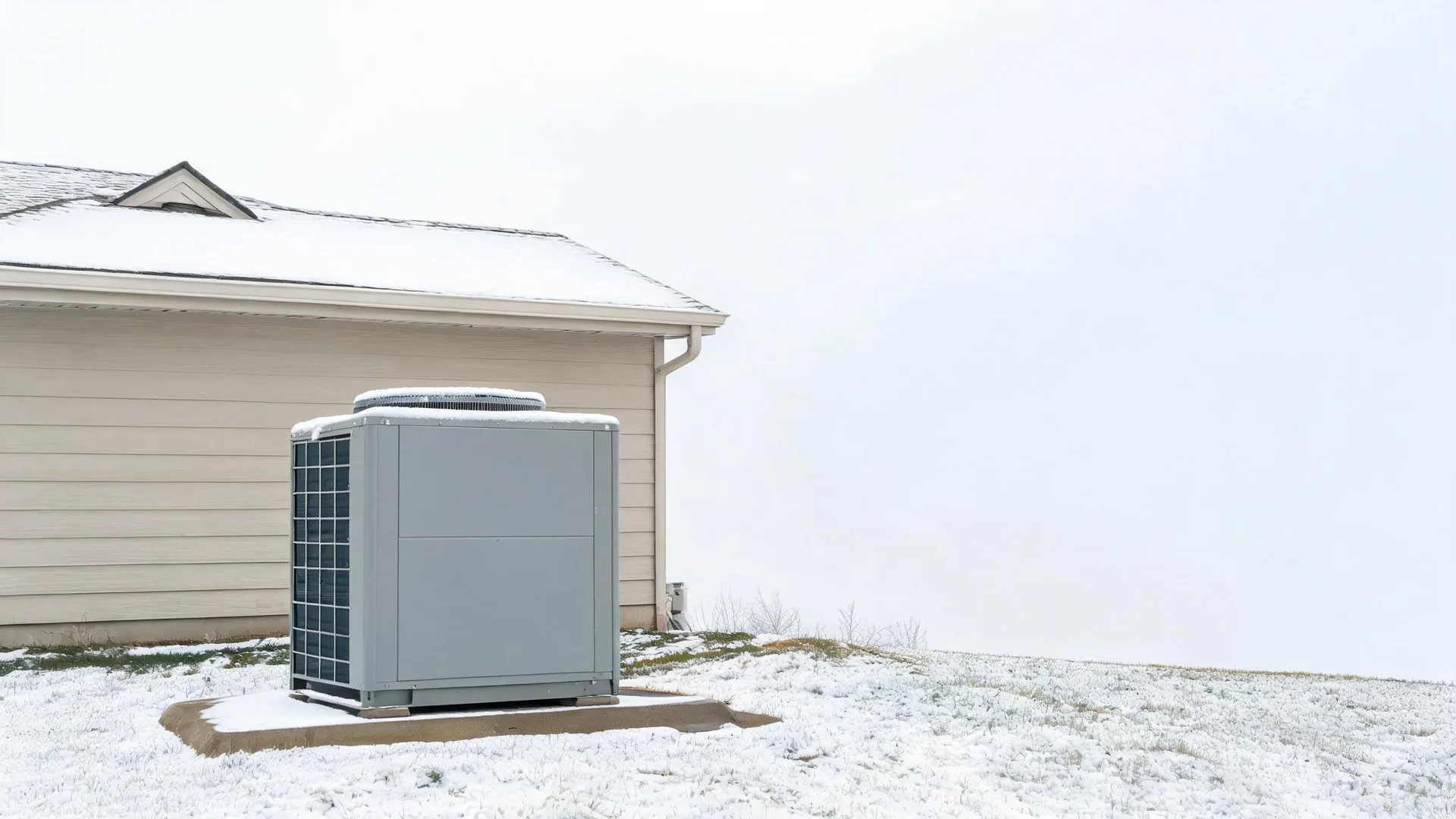
The coil and drain get opened up, not glanced at

Pulling the panel to look at the indoor coil, flushing the drain line, and checking that the contactor isn't pitted takes real time. A tech moving through fast will skip straight to the thermostat and call it done. The parts that cause mid-summer breakdowns are the ones you can't see without taking something apart.

An outdoor central air conditioning unit mounted on a concrete pad beside a blue-sided house at sunset.

Book your AC tune-up in April, before homes here start needing cooling in May.

  1. Jan
  2. Feb
  3. Mar
  4. Apr
  5. May
  6. Jun
  7. Jul
  8. Aug
  9. Sep
  10. Oct
  11. Nov
  12. Dec

A tune-up checks the refrigerant charge, cleans the coils, tests the capacitor and tightens the electrical connections.

A tune-up starts with the refrigerant charge, checked with gauges against what the system is rated for. Too little and the compressor runs harder to move the same heat, which wears it down faster. The electrical side gets checked too. That means capacitor strength, contactor condition, and amp draw on the compressor and both fan motors. A capacitor that is starting to go can still start the system most mornings, right up until the day it cannot. The condensate drain gets flushed so algae doesn't build a clog that backs water up into the house. Bearings on the motors get checked for wear, and the blower wheel gets looked at for dirt buildup that throws it off balance. None of this shows from outside the cabinet. That is the difference between a tune-up and a filter change.