





A quiet residential street at dusk lined with illuminated two-story brick houses and mature trees.

AC Maintenance in Barbourville, KY

Tell us about the job

Takes about a minute. No obligation.

Tune-up, service, or cleaningCentral ACKnox County, KY
Step 1 of 2

What ZIP code is the job in?

June is when cooling starts here in Knox County, and that's when your AC goes from idle to full load in one jump. If a capacitor is weak or the charge is low, that first hot stretch is what finds it. May is the month to get it looked at, before the system is running every day. A tune-up then catches a weak part while it's still sitting still, not after it's already struggled through a few weeks of real heat. Homes here run cooling about four months, June through September, so there isn't much slack once it starts for anything to get caught early.

4 months
June through September, your air conditioner is on duty
85°F
the average summer afternoon it cools against
6 hail events
in ten years, and hail bends the fins on outdoor coils
51 wind events
in ten years, and wind drives debris into outdoor units
Isometric cutaway illustration of a single-story house with a dark shingled roof, showing interior rooms with ductwork and an indoor air handler connected to an outdoor condenser unit beside the building.
Your air conditioner works hardest from June through August.

NOAA nClimDiv, 1991–2020 normals

A dirty filter is the one thing between visits that actually hurts your AC.

Check it monthly and swap it when it looks gray, that's the cheapest thing you can do for the system.

Four months of real heat is still just one season to get ready for

Cooling runs June through September
Summer afternoons average 85°F
51 damaging wind events from 2015 to 2024

Book it before the season

It starts running hard in the first month of the season here. Book the check the month before.

Find a contractor
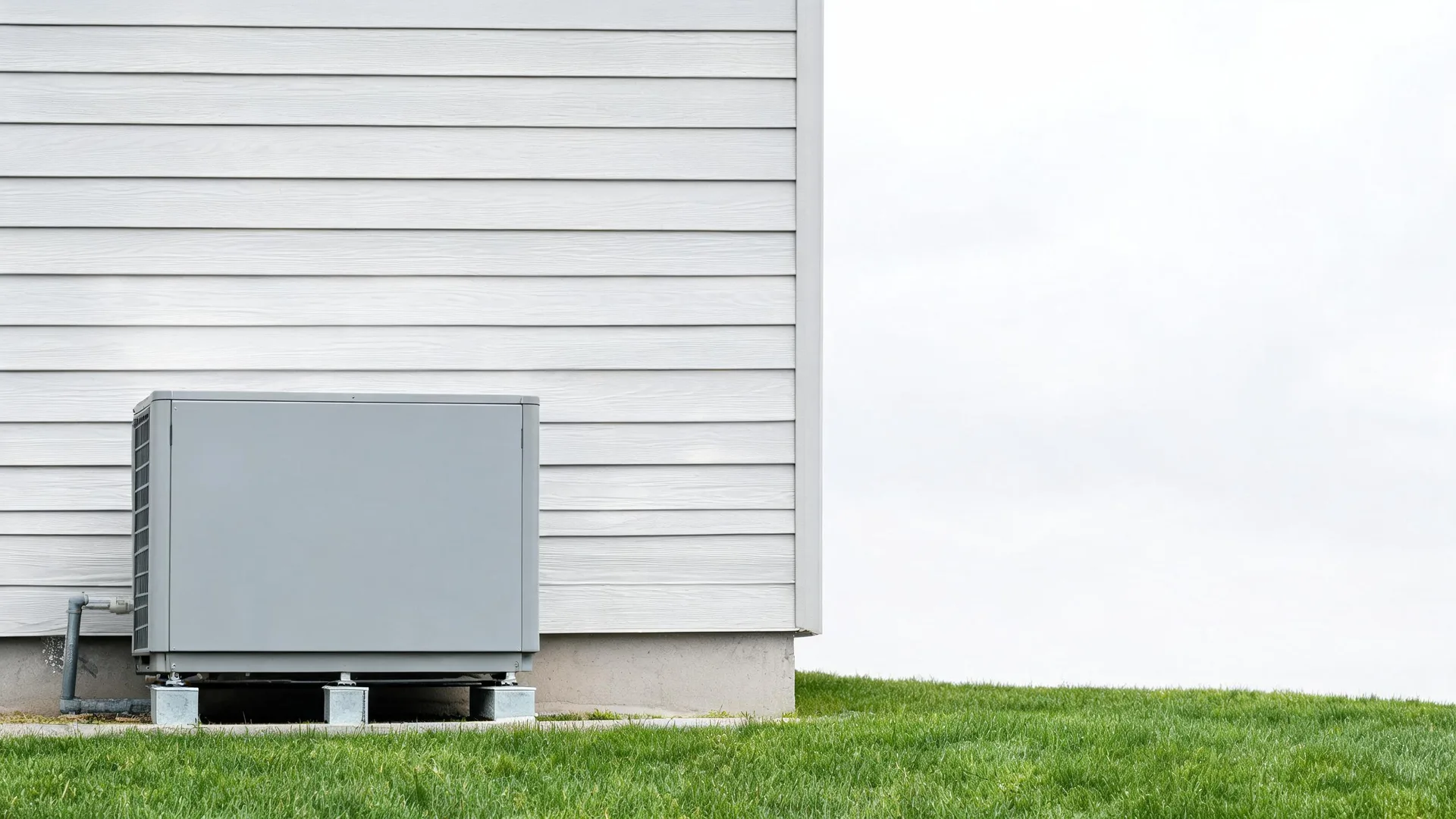
A gray cylindrical air conditioning condenser unit mounted on a concrete pad next to a light-colored vinyl-sided house exterior.

What a skipped year does to the unit

Skip a year of maintenance and nothing fails right away. Dust builds up on the coil, the refrigerant charge drifts a little low, the capacitor loses some of its strength. None of that stops the system cold. It just makes the compressor work harder to do the same job, and a compressor that works harder runs hotter and wears faster than one that's kept in spec. The failures a homeowner notices, a seized compressor, a tripped breaker, a system that runs and runs without ever quite cooling, almost always trace back to something small that went unchecked for a while. A tune-up is what catches the weak capacitor or the low charge while the system is still running fine on the surface.

The system is telling you before it quits

Warm air out of the vents when it's set cold, a room that won't come down to temperature, a smell when it kicks on, a short on and off cycle instead of a steady run. None of these mean the AC is dead. They mean something inside it is already off, a low charge, a weak capacitor, a coil that can't shed heat the way it should.

The sounds matter as much as the symptoms

A hum before the compressor starts, a rattle from the outdoor unit, a hiss that wasn't there before. A healthy system runs quiet. Any new noise is a part telling you it's working harder than it used to, and that's worth a look before it's the reason the system stops.

Overhead view of an outdoor AC condenser unit on a concrete pad next to a house with a dark shingle roof.

Book your AC tune-up in May, before homes here start needing cooling in June.

  1. Jan
  2. Feb
  3. Mar
  4. Apr
  5. May
  6. Jun
  7. Jul
  8. Aug
  9. Sep
  10. Oct
  11. Nov
  12. Dec

A tune-up checks the refrigerant charge, cleans the coils, tests the capacitor and tightens the electrical connections.

A real tune-up starts outside, at the condenser coil. A tech pulls the panel and cleans it, because a coil caked with dust and grass clippings can't shed heat, and a coil that can't shed heat makes the whole system run harder than it should. From there it's the capacitor, tested under load, not just looked at. A capacitor can read fine sitting still and still fail the first time it has to push the compressor through a real cycle. Refrigerant charge gets checked against what the system calls for, because low charge doesn't just mean weak cooling, it means the compressor runs hotter than it's built to. The drain line gets cleared so condensation has somewhere to go instead of backing up. Electrical connections get tightened, since a loose one builds resistance, and resistance builds heat right at the connection. None of this is guesswork. It's measurements against a spec sheet, and parts that pass or don't.