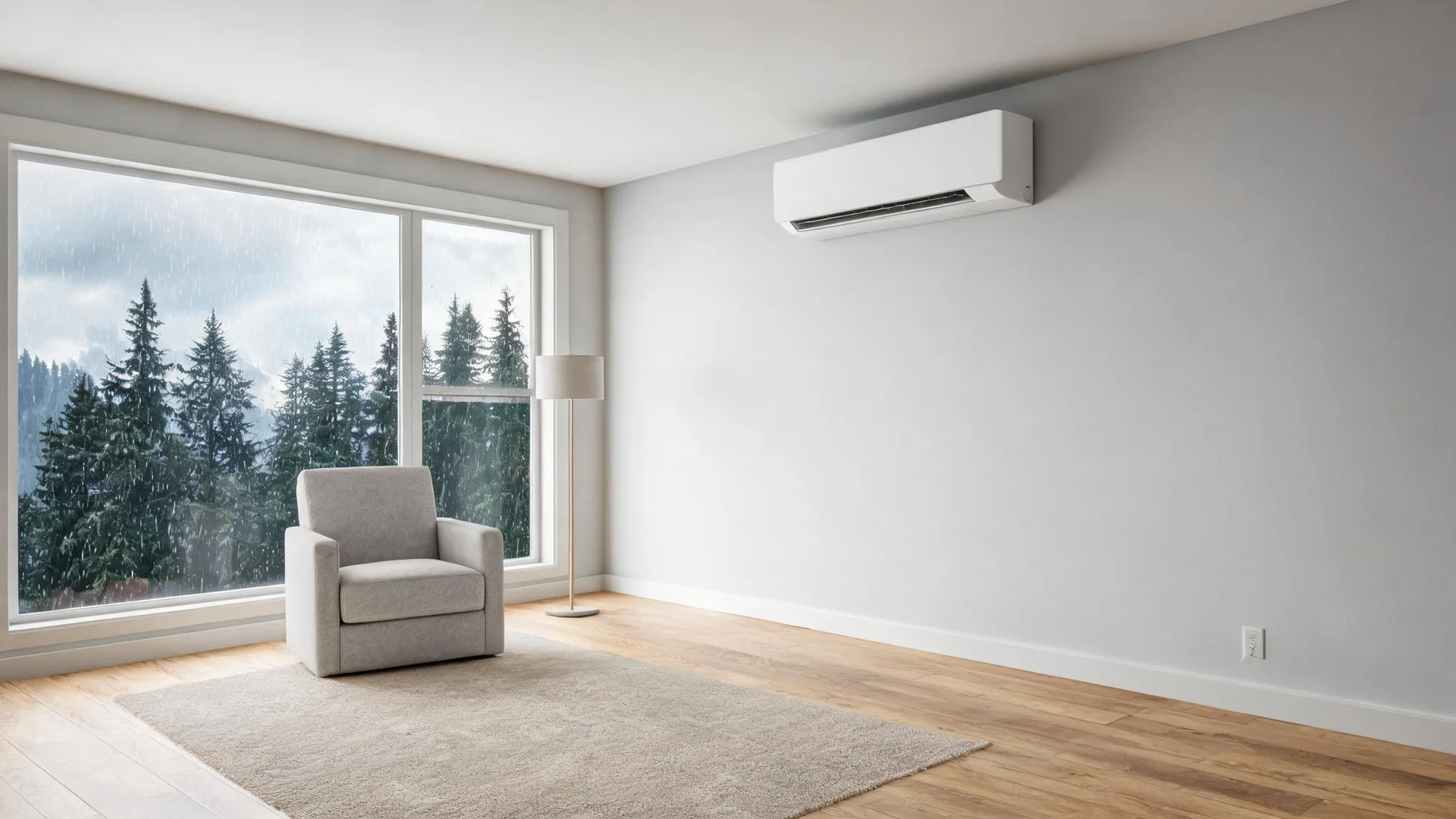
Electric heat leads here
More than half of Woodford County homes, 53.2%, heat with electricity. Gas is second at 40.7%. A mini split fits into an electric home without adding a new fuel line or venting.
Takes about a minute. No obligation.
More than half of Woodford County homes, 53.2%, heat with electricity. Gas is second at 40.7%. A mini split fits into an electric home without adding a new fuel line or venting.
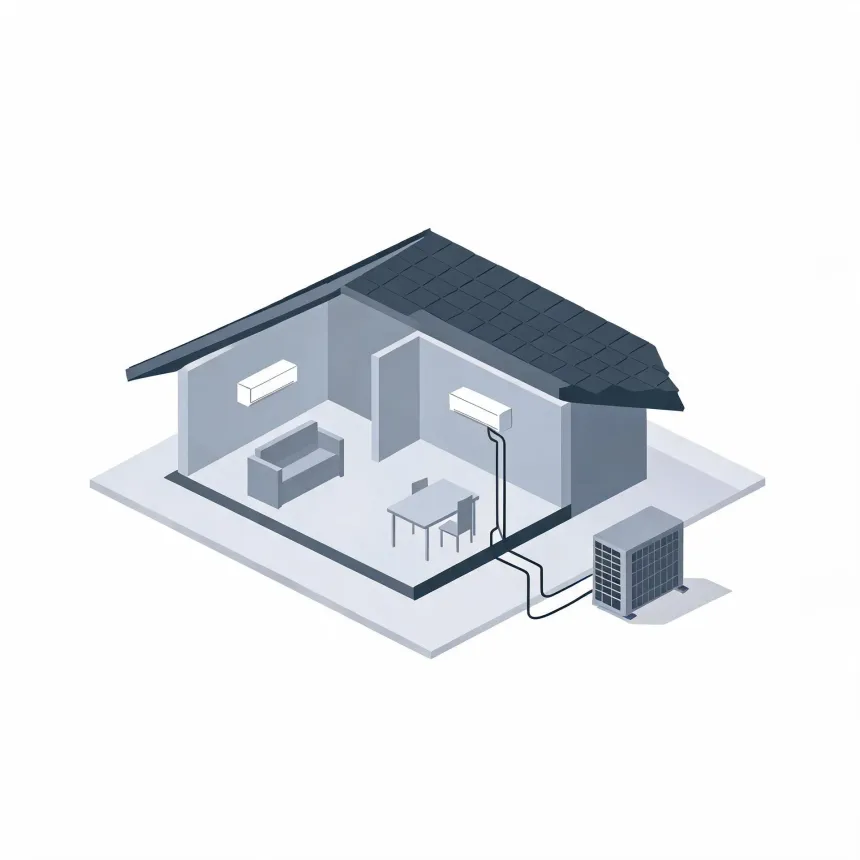
If your home already heats with electricity, a mini split works alongside what you have or can replace it outright. The job is about where to mount the indoor units and where the outdoor unit can sit, not about connecting to gas.
NOAA nClimDiv, 1991–2020 normals
Cooling runs May through September here.
Get the mini split installed in April and the installer picks the day, not the heat.




Weather around here is mostly wind, not hail or ice. Woodford County logged 58 damaging wind events between 2015 and 2024, next to a single hail event and one tornado. A mini split holds up fine against that. The outdoor unit mounts on a pad or bracket built to stay put in wind, same as any outdoor AC equipment. Winter storms came through this stretch too, which matters more for keeping power on than for the unit itself. A standard mini split sized for this home is the right call. Nothing in the weather here pushes you toward a bigger unit or extra equipment.
Woodford County falls in mixed-climate zone 4A, and federal rules set the floor for what a mini split can be. A unit manufactured from 2023 on has to hit at least 14.3 SEER2 for cooling and 7.5 HSPF2 for heating, same as any split-system heat pump. That's the baseline, not a ceiling, so it still pays to compare what's on offer above it.
Find a contractorA mini split that's too big cools the room fast and shuts off before it pulls the damp out of the air. The room feels cool but clammy, and the unit keeps cycling on and off all day instead of running in long, steady stretches. Too small, and it runs flat out on the hottest and coldest days without ever catching up. Getting the size right means someone works out the heat gain and heat loss for the specific room or space, looking at window area, insulation, ceiling height and what's on the other side of each wall. That's a room by room calculation, not a guess based on square footage alone. Mount the indoor unit at the size that calculation points to, not the size that's on sale or the size that was in the last house.
A single outdoor compressor can feed more than one indoor head, but each one it feeds splits its capacity. An installer comparing systems should say plainly how many indoor units they're proposing per outdoor unit and why, not just quote a total capacity number.
On a multi-zone system, the indoor heads share a single outdoor compressor and a single control board. If one head has a problem, find out whether the rest keep running or the whole system has to shut down for the repair.
The SEER2 and HSPF2 numbers on the label are a ratio, not a size. SEER2 says how much cooling you get for the electricity you put in over a season, and HSPF2 does the same for heating. A higher number means less electricity for the same comfort, but only if the unit is sized right for the room it's serving. A unit with a great rating still runs up the bill if it's too big or too small for the space, because it ends up cycling wrong or running flat out to keep up. The rating tells you how the unit performs once it's matched to the job. It doesn't tell you whether it's the right unit for your home, and it can't make up for a bad size match.
Installation cost comes down to how much work the job takes, not just the equipment on the truck. Running a line set from outdoor unit to indoor head means drilling through a wall, and the length and number of bends in that line add labor. A multi-zone system with several indoor heads takes longer to mount, wire and commission than a single zone, even before the equipment price is counted. Where the outdoor unit can sit matters too. A spot that needs extra bracket work or a longer electrical run back to the panel means more time on site. Some systems need a dedicated circuit, and whether the panel already has room for one changes the job. None of this shows up on the unit's price tag, but it shows up in the quote.