



A gray cat sleeps curled up on a dark-made bed in a moody, minimalist bedroom with a wall-mounted air conditioning unit and warm accent lighting.

Mini Split Installation in Nicholasville, KY

Tell us about the job

Takes about a minute. No obligation.

New system or replacementMini-splitJessamine County, KY
Step 1 of 2

What ZIP code is the job in?

Most homes in Jessamine County heat with electricity, 62.6% of them. Gas heat comes next, at 32.6%. A mini split fits well in electric-heat territory like this since it runs on electricity for both heating and cooling, and it doesn't compete with a furnace or need a gas line run to it. For a home already set up electric, adding or replacing with a mini split means working with the wiring that's already there instead of against it.

7 months
October through April, your system heats
5 months
May through September, it cools
27°F
the average winter night it heats against
85°F
the average summer afternoon it cools against
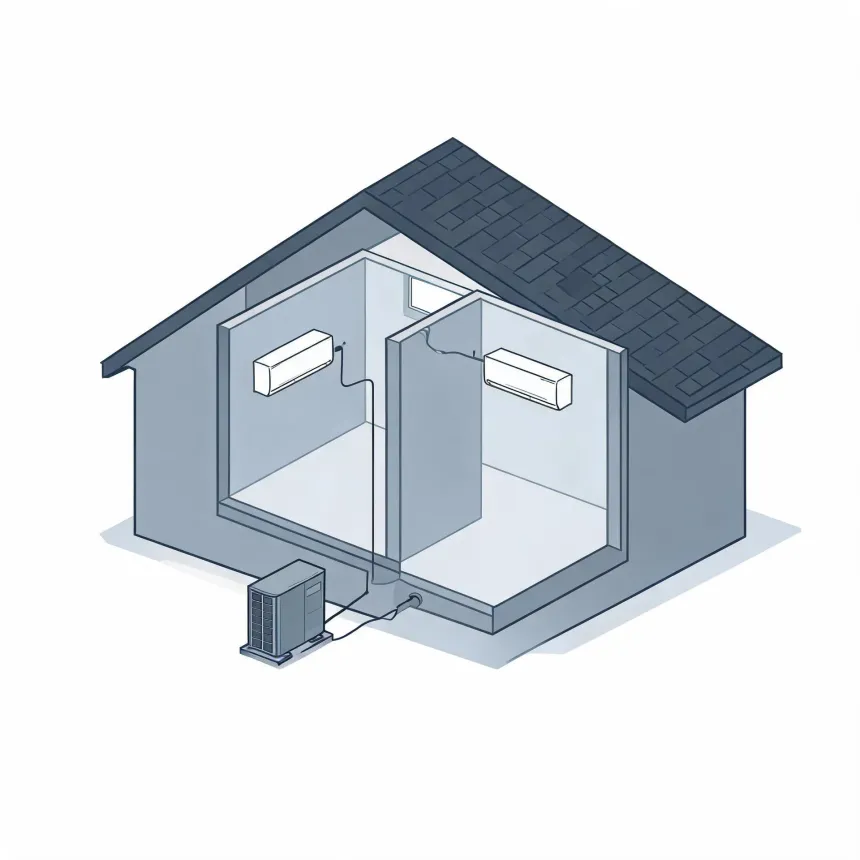
Isometric line illustration of a cutaway house with two rooms, each with a wall-mounted indoor air conditioning unit connected by lines to an outdoor condenser unit on the ground outside.
Your system heats October through April and cools May through September.

NOAA nClimDiv, 1991–2020 normals

Every quote should say how many zones the system covers and what size each indoor unit is.

A unit sized wrong for its room runs too often or shuts off too soon, and either way it wears out faster.

Nicholasville summers don't call for anything bigger than standard

Cooling runs May through September
Summer afternoons average 85°F
Power costs 12.79 cents a kWh statewide

Electricity in Kentucky runs about 12.79 cents per kilowatt-hour, cheaper than most of the country. That changes the math on which mini split to buy. A higher-efficiency unit still costs less to run month to month, but the extra you'd pay for the top-tier model takes longer to earn back here than it would somewhere with pricier power. That doesn't make efficiency pointless, it just means it shouldn't be the only thing you're weighing. A mid-range unit that's sized right and installed well will serve this house better than a high-SEER2 one that's the wrong fit for the room it's heating and cooling.

Get it in before May

Cooling here runs May through September. Putting a mini split in during April means it's running and adjusted before the first hot week hits, instead of getting picked and installed while you're already sweating through it.

Find a contractor
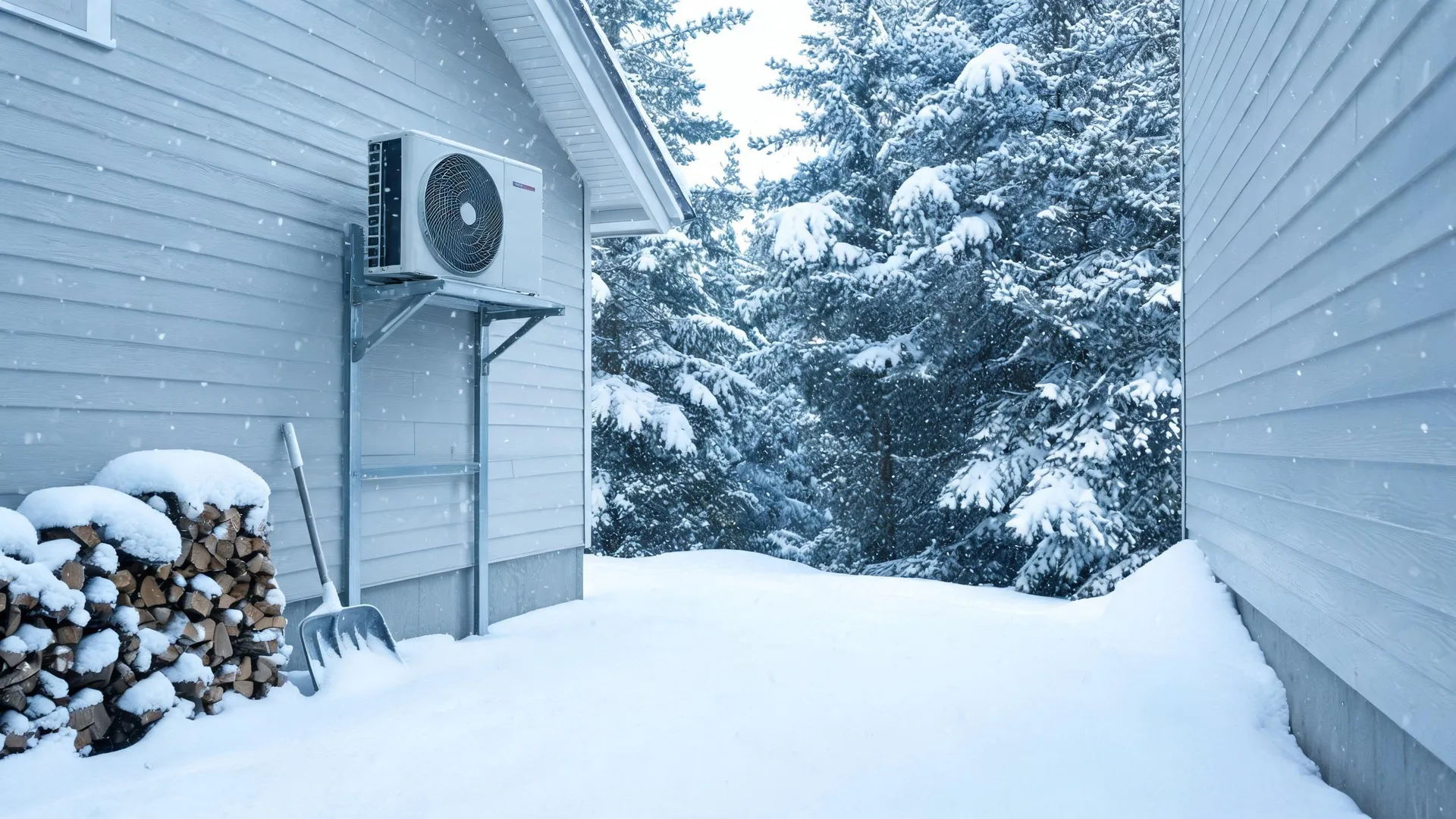
A white outdoor air conditioner condenser unit mounted on metal wall brackets against gray horizontal siding, with a blue sky and white clouds behind it.

Sized to the room, not the house

Sizing a mini split comes down to the room it's serving, not the square footage alone. A contractor doing this right works through a load calculation that looks at the walls, the windows, how much sun that room gets, and how many people use it, then matches an indoor unit to that number. Skip that step and guess instead, and the system fights the room for as long as it runs. Oversized, it cools the air fast and shuts off before it pulls the moisture out, so the room feels cold and clammy at once. Undersized, it never catches up on the hottest or coldest days and runs flat out trying. Either way the compressor is cycling more than it should, starting and stopping instead of settling into a steady run, and that's the kind of wear that shortens its life. A unit that's sized right runs longer stretches at a lower output, which is exactly how these systems are built to work.

How many zones and where the lines run

A mini split with one indoor unit costs less than one covering several rooms, and each added zone needs its own line set run from the outdoor unit through the wall to that room. A straight shot through one exterior wall is a simpler job than snaking line sets through a second floor or across the house to a room on the far end. The outdoor unit has to be sized to carry every zone connected to it, so more zones also means a bigger outdoor unit.
What's already there versus what has to be added

A mini split needs its own electrical circuit, and if the panel has room and capacity for one, that's a simpler job than if the panel needs upgrading first. The same goes for where the outdoor unit sits. A pad already poured or a wall bracket that just needs mounting costs less than pouring a new pad or running conduit somewhere it hasn't gone before.

Replacing a furnace or central AC with a mini split leaves a few things behind to deal with. The old outdoor condenser gets disconnected and hauled off, along with the indoor coil or air handler if there was one. If ductwork was feeding that system and nothing else in the house uses it, it can stay in the walls doing nothing, or get sealed off at the supply and return. A furnace being removed means the gas line feeding it gets capped off by whoever's licensed to do that, not left open. None of this is complicated, but it's worth asking the contractor up front what happens to each piece, since hauling off an old condenser and capping a gas line are different jobs needing different people.

Install day starts outside with the outdoor unit going on its pad or bracket, then the line set gets run through a hole drilled in the wall, usually one neat pass instead of a mess of holes. Inside, the wall bracket goes up first and the indoor unit hangs on it once the lines and drain are connected. The lines get connected, the system gets evacuated with a vacuum pump to pull out any air and moisture, then the refrigerant charge gets checked against what that unit calls for. A pressure test comes before any of that gets buttoned up, since a leak found after the wall is patched is a much bigger job than one found before. Once it's running, the contractor checks the temperature split between the air going in and the air coming out, confirms the drain line is actually draining, and walks through the remote and settings before packing up.