




A tall trimmed hedge runs along a mown lawn in front of a row of dark-sided townhouses with brown shingled roofs, framed by leafy tree branches under an overcast sky.

Mini Split Installation in Mount Washington, KY

Tell us about the job

Takes about a minute. No obligation.

New system or replacementMini-splitBullitt County, KY
Step 1 of 2

What ZIP code is the job in?

Electricity heats close to half the homes in Bullitt County, just under gas at 43.2 percent. That split matters for a mini split, because the ductless system you're adding runs on electricity no matter what. In a home that already heats with electric resistance or an electric furnace, a mini split can take over the job entirely, room by room. In a home on gas, it usually goes in alongside the furnace, covering a room or an addition the ductwork doesn't reach. Check what your current system uses before deciding how the new one fits in.

7 months
October through April, your system heats
5 months
May through September, it cools
28°F
the average winter night it heats against
86°F
the average summer afternoon it cools against
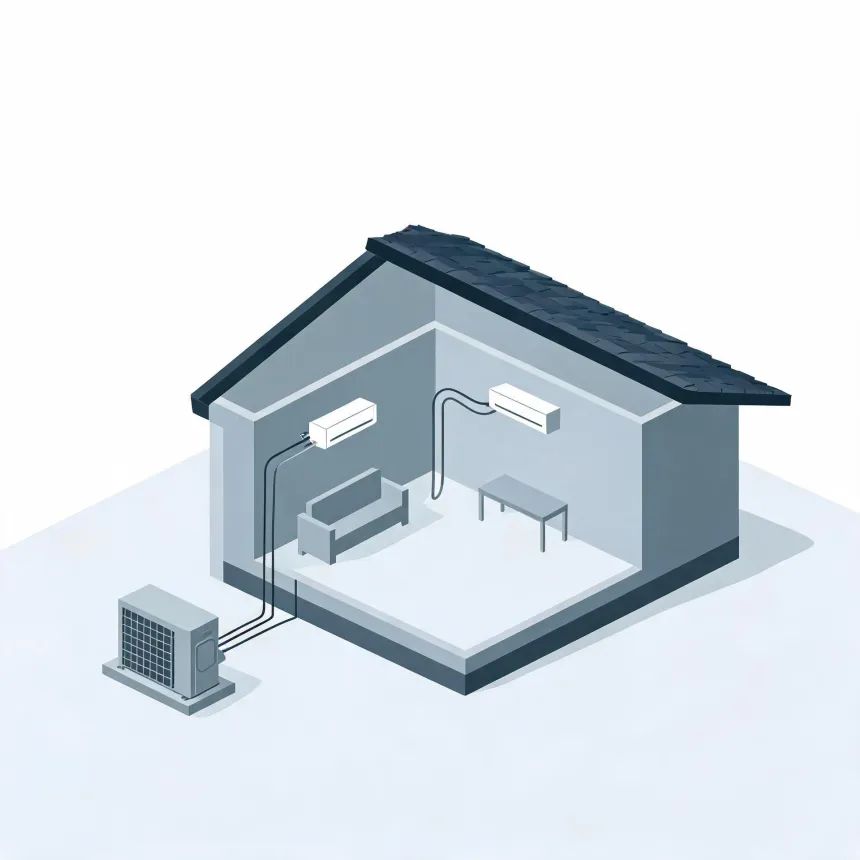
Isometric illustration of a cutaway house showing two wall-mounted indoor air conditioning units connected by line sets to an outdoor condenser unit, with a sofa and table inside the room.
Your system heats October through April and cools May through September.

NOAA nClimDiv, 1991–2020 normals

Cooling runs May through September here.

April is the month to get a mini split installed, before the first warm week puts you in line behind everyone else.

At 12.79 cents a kWh, running cost isn't what decides this

Power costs 12.79 cents a kWh statewide
Cooling runs May through September
Summer afternoons average 86°F

Bullitt County falls in climate zone 4A, which asks for real heating capacity and real cooling capacity, not just one or the other. Any mini split sold here has to meet that. Since January 2023, a ductless heat pump counts as a split system under the federal rule, so it has to hit 14.3 SEER2 for cooling and 7.5 HSPF2 for heating, the same floor as a central heat pump. That rules out older or stripped-down units that only clear one number. It also means the unit a contractor quotes you is already built for a climate that swings both ways, not just the cooling side.

A standard mini split, sized right, is all this climate asks for

A mini split here just needs to meet the zone 4A standard, nothing more. Bullitt County has its share of severe weather, 84 events in the last ten years between wind, hail and a couple of tornadoes, but none of that calls for sizing up or paying for extra capacity. A correctly sized, standard-efficiency unit handles the heat and cold this climate brings. Get the sizing right and the rest of the decision is simple.

Find a contractor
A man in a gray work shirt and tan pants carries a canvas tool bag up wooden porch steps toward a dark green front door, with a potted shrub to the right.
A beige split-system air conditioner outdoor condenser unit mounted on metal wall brackets atop a stucco wall.

The old unit doesn't just get unplugged

The old system doesn't get removed until the new one is ready to run, so cooling or heating doesn't stop for the switch. If it's a furnace or an electric system being replaced, the crew disconnects it, and if it runs on gas, that line gets capped off properly, not just shut at the valve. A system that's been running for years has refrigerant in it too, if it's an air conditioner or heat pump, and that gets recovered rather than vented, since venting refrigerant is against the law regardless of how old or worn the unit is. Ductwork is a separate question from the equipment. If the old system used ducts and the mini split doesn't tie into them, those ducts either stay in place for a part of the home still using them or get sealed off if nothing pulls air through them anymore. None of this is hard, it just has to happen in order, before the new lines go in and before the old unit comes off the wall or out of the closet.

How many zones you're running

Each indoor head needs its own line set run to the outdoor unit, its own spot on the wall or ceiling, and its own path for refrigerant line and condensate drain. One zone is a straightforward job. Add a second or third head off the same outdoor unit and the labor stacks up fast, even though it's one compressor doing the work.
What the walls make the crew do

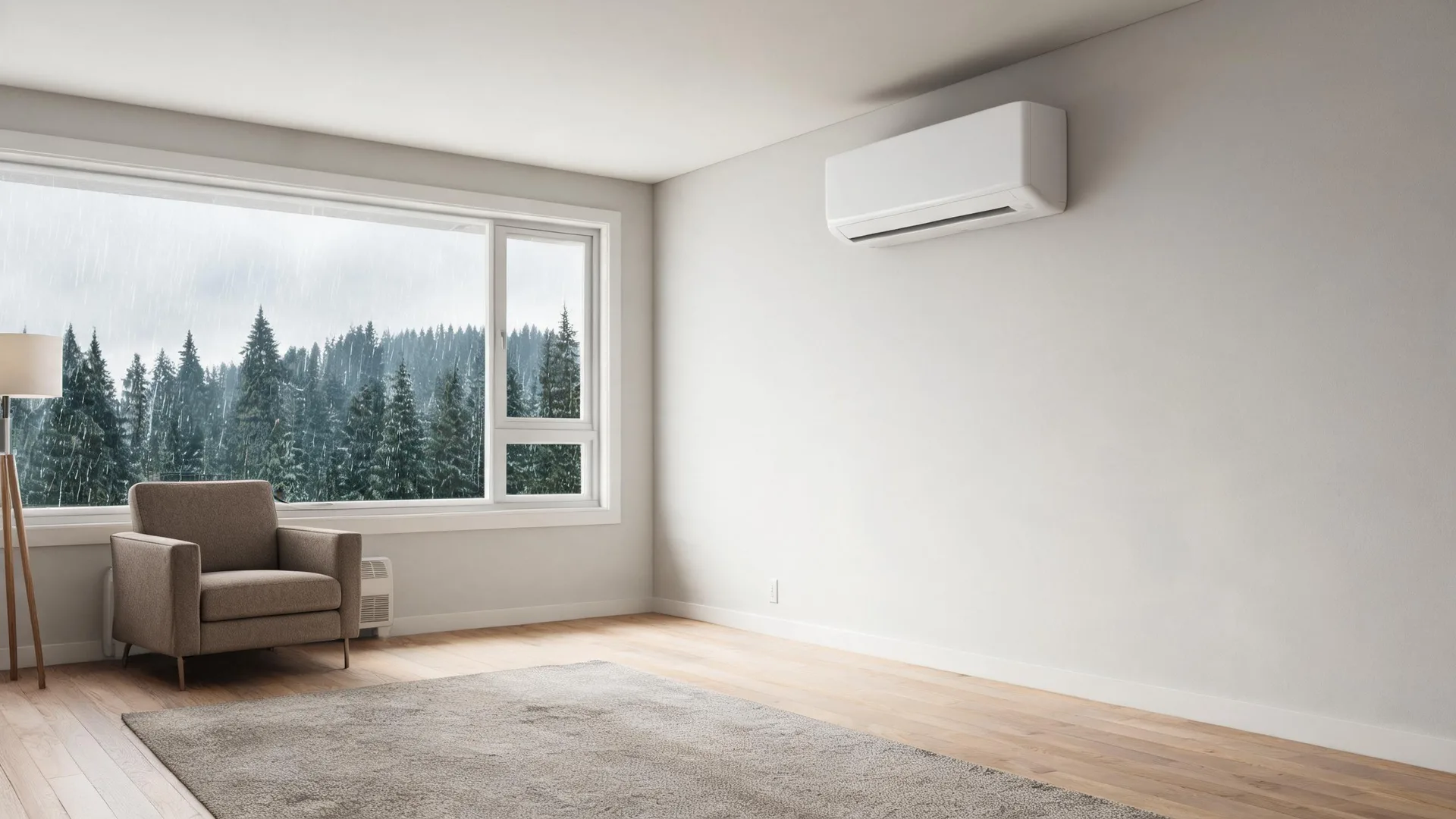
The line set and drain line have to get from the indoor head to the outdoor unit somehow. A short, direct run through an exterior wall is quick work. A run that has to cross an attic, drop through a chase, or snake around framing to avoid tearing into finished space takes longer and takes more material, and that shows up in what the job costs to complete.

Ask what each system does at minimum output, not just full blast. A mini split spends most of its time running low and slow to hold a room at temperature, not blasting at full capacity, so the low end of its range tells you more about comfort than the rated top end does. Ask how the outdoor unit sheds defrost cycles in winter, since a unit that handles frost poorly will blow cold air for a few minutes each cycle while it clears the coil. Ask whether the indoor head is a wall unit, a ceiling cassette, or a floor console, because that decision affects airflow pattern and where cold or warm spots show up in the room. Ask what happens to warranty coverage if someone other than the installing contractor services the unit later. And ask for the specific indoor and outdoor model numbers in writing, not just a brand and a capacity, so you can look up the actual specs yourself instead of taking a sales pitch at its word.

Install day starts outside, with the crew deciding exactly where the outdoor unit sits. It needs clearance on all sides for airflow and a pad or bracket that holds it level, since a unit mounted crooked drains wrong and strains the compressor over time. Inside, the head goes up on a mounting plate, then the crew drills through the wall for the line set, the wiring, and the condensate drain, all bundled through one hole. The lines get connected, the system is evacuated to pull moisture and air out of the refrigerant circuit, and only then does the refrigerant charge get released into the lines. That vacuum step matters more than people expect. Skip it or rush it and moisture left in the lines causes problems months later, long after the crew is gone.