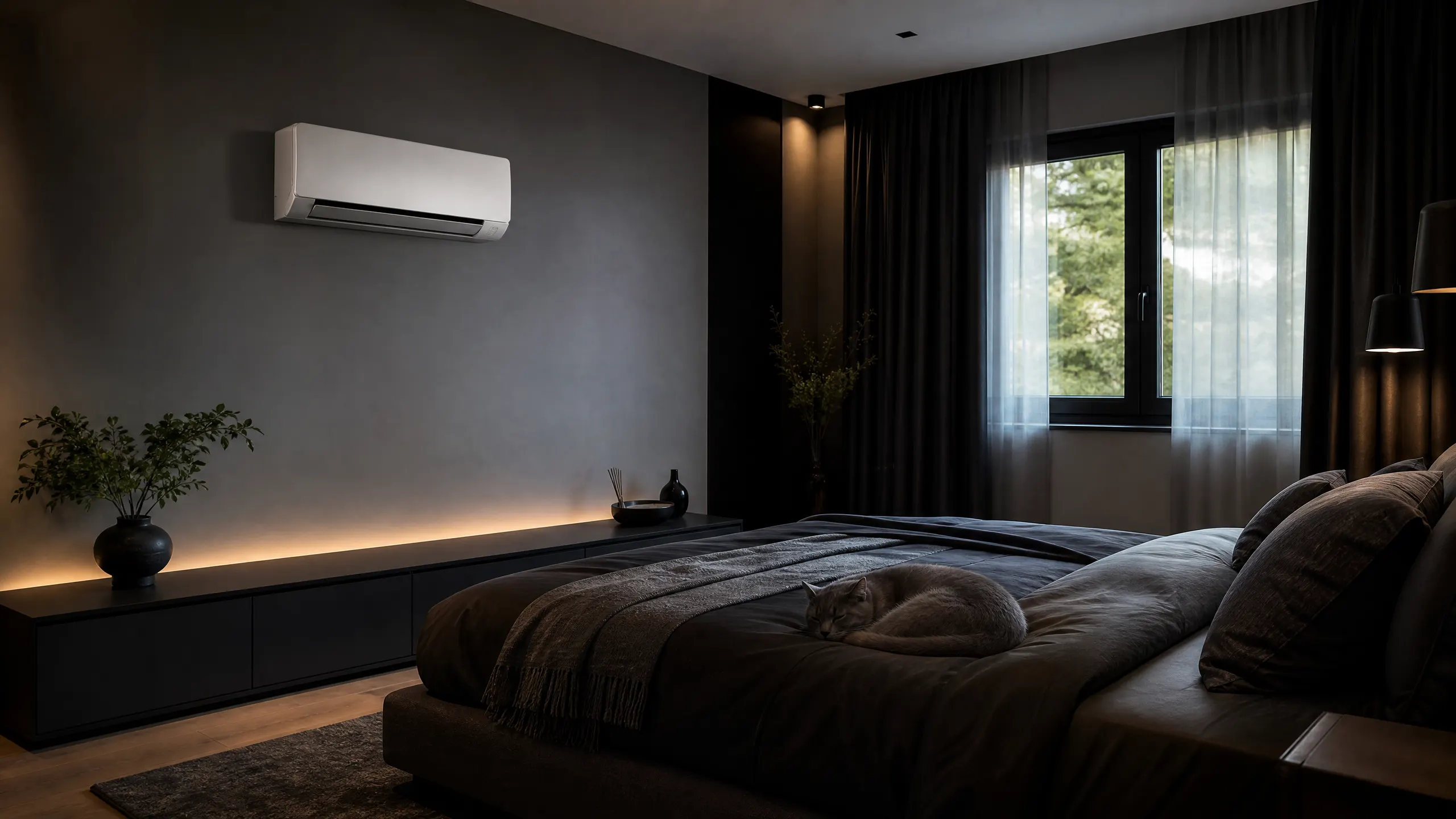




A modern bedroom with dark furnishings, a wall-mounted air conditioning unit, and a cat resting on a large bed.

Mini Split Installation in Mount Sterling, KY

Tell us about the job

Takes about a minute. No obligation.

New system or replacementMini-splitMontgomery County, KY
Step 1 of 2

What ZIP code is the job in?

Most homes in Montgomery County heat with electricity, 66 percent of them. Mini splits fit right into that picture since they run on electricity too, not gas. That matters when the power goes out, because the same storms that knock out your lines would have left a gas furnace's blower and controls dead anyway. A mini split won't run without power either, but you're not fighting a second fuel system to get the house warm again. Utility gas only heats about a quarter of homes here, so if yours is one of the many electric ones already, a mini split is a straightforward swap, not a new way of doing things.

7 months
October through April, your system heats
4 months
June through September, it cools
27°F
the average winter night it heats against
85°F
the average summer afternoon it cools against
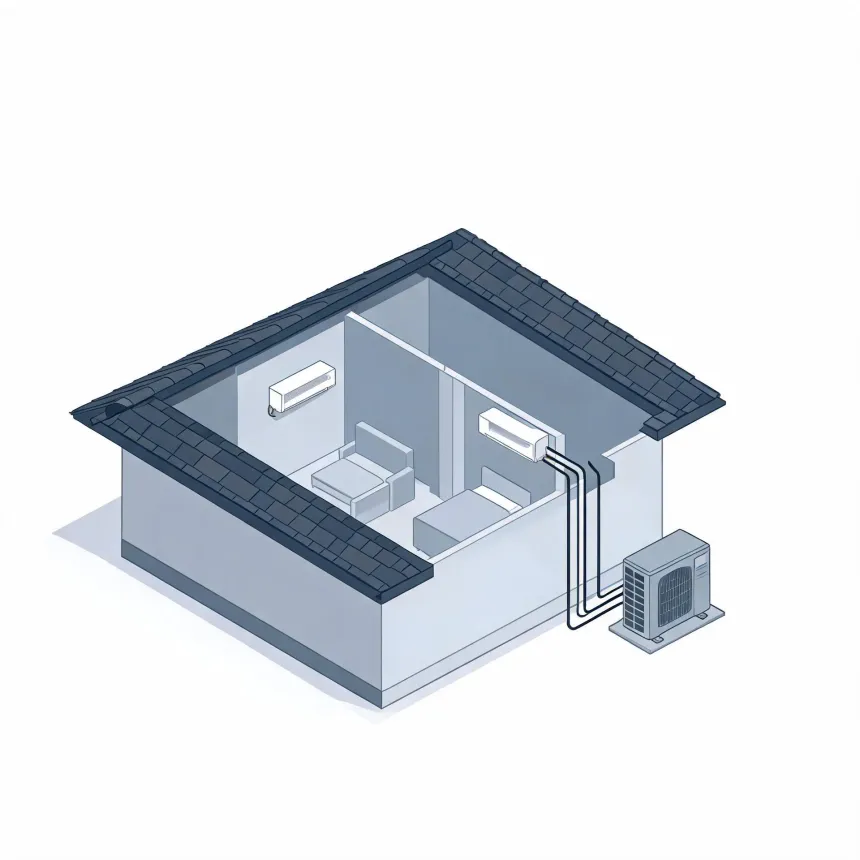
Isometric illustration of a cutaway house with tiled roof showing two wall-mounted indoor mini-split units connected by line sets to an outdoor condenser beside the building.
Your system heats October through April and cools June through September.

NOAA nClimDiv, 1991–2020 normals

Kentucky electricity runs 12.79 cents a kilowatt-hour, below the national average.

A mini split still costs less to run than baseboard heat, just don't expect it to pay for itself on power savings alone.

June is four months out. Get the mini split in before it starts.

Cooling runs June through September
Summer afternoons average 85°F
91 damaging wind events from 2015 to 2024

Montgomery County is in climate zone 4A, which asks real work of both heating and cooling. Any mini split installed new here has to meet the federal minimum for that. Cooling has to hit 14.3 SEER2. Heating has to hit 7.5 HSPF2. That standard applies to the unit itself, not how it gets installed, so a ductless system is held to the same floor as any other split system. It narrows what a contractor can offer you, but it also means whatever goes in is built to carry the house through winter and summer both.

A standard mini split is right for Montgomery County. Get it in before June.

Cooling here runs June through September, with afternoon highs averaging 85. A standard-size, standard-efficiency mini split handles that fine, nothing about this county pushes you toward a bigger or pricier unit. Get it sized and installed before June.

Find a contractor
A white outdoor air conditioner condenser unit mounted on metal wall brackets against gray horizontal siding, with a blue sky and white clouds behind it.

The number on the label is a rating, not a promise

The SEER2 and HSPF2 numbers on the label are a rating, not a size. They tell you how much heat a unit moves for the electricity it draws, one number for cooling and one for heating. A higher number means it gets more out of every bit of power, not that it covers a bigger room. That rating is measured under fixed lab conditions, so it tells you what to expect from the unit itself, not from your walls or windows. A mini split that holds close to its rating through the hottest part of summer or the coldest part of winter keeps earning that rating every time it runs. Size it wrong for the room and it won't hit that number no matter what the label says, because it'll short cycle or run long trying to keep up. The rating is a fair way to compare one unit against another. What you actually get depends on the unit being sized right and installed right for the space it's heating and cooling.

The old unit doesn't need to come out first

If a window unit or electric baseboard is heating the room now, it can keep running while the mini split goes in. The line set and head unit mount independent of whatever's already there. Once the mini split is tested and holding its setpoint, the old equipment comes out or gets left alone, whichever the room calls for.
A furnace or central AC being replaced is a different job

Pulling an old furnace or condenser means capping or reusing the gas line, dealing with the existing ductwork, and patching wherever the old unit sat. None of that is a mini split problem, since it doesn't tie into ducts or a gas line at all, but it's still a step in the job if that's what's coming out. Worth asking the contractor directly what happens to the old equipment once the new one's running.

What drives the price on a mini split job is mostly the parts you can't see in the brochure. How many zones, for one. A single head cooling one room is a different job than several heads tied back to one outdoor unit, and the price climbs with each indoor head you add. Line set length matters too, since the copper running between the outdoor unit and each head has to be run through walls or chased along the outside of the house, and a longer run costs more than a short one. Where the outdoor unit can go and how far it sits from each indoor head changes how much line set and labor the job takes. Electrical work is its own factor, since a mini split needs its own dedicated circuit, and if the panel doesn't have room or the wiring run is long, that adds to the job before the first head ever goes on the wall.

Install day starts outside, with the crew figuring out where the outdoor unit sits and mounting the bracket, since that spot decides how the line set runs from there. Inside, the head goes high on a wall, somewhere it has a clear shot at the room and a straight path back to the outdoor unit. The line set, the drain line, and the electrical all run together through one hole in the wall, so that hole gets cut and sealed as part of the job. Once the lines are run, the system gets evacuated to pull moisture and air out of the copper before refrigerant goes in, because trapped air or moisture in the line is what makes a mini split run poorly or fail early. After that it's charged, powered up, and run through a full heating and cooling cycle before anyone calls it finished. Most of the day is that line set work and the vacuum, not the boxes going on the wall.