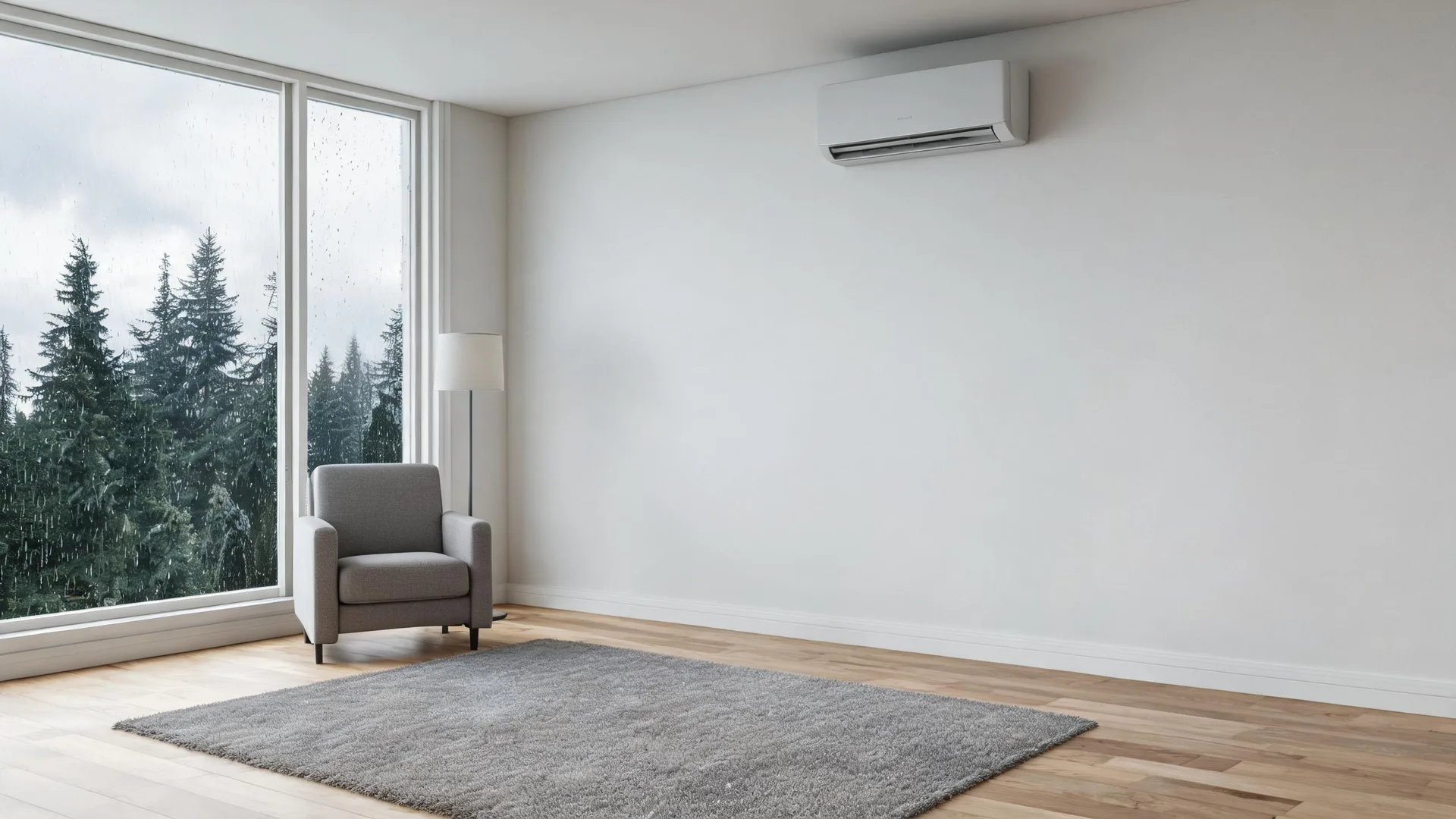
A dark, minimalist bedroom with a king-size bed, wall-mounted air conditioning unit, and large windows, with a cat sleeping on the duvet.

Mini Split Installation in London, KY

Tell us about the job

Takes about a minute. No obligation.

New system or replacementMini-splitLaurel County, KY
Step 1 of 2

What ZIP code is the job in?

The number of zones sets the baseline

Every indoor head needs its own line set run to the outdoor unit, its own mounting spot, and its own place on the wall or ceiling. A single zone system is a simpler job than a multi zone system with several heads splitting off one condenser. More heads means more refrigerant line, more wall penetrations, and more labor before anyone talks about the equipment itself.

Where the line set has to travel changes the labor

A straight shot through an exterior wall to an outdoor unit sitting right outside costs less in time than a run that has to snake through an attic, drop down an interior chase, or cross a long distance to reach where the condenser can sit. Longer runs need more refrigerant, more support brackets, and more care at every joint, since a bad connection anywhere along the line shows up as a slow leak months later.

7 months
October through April, your system heats
4 months
June through September, it cools
28°F
the average winter night it heats against
84°F
the average summer afternoon it cools against
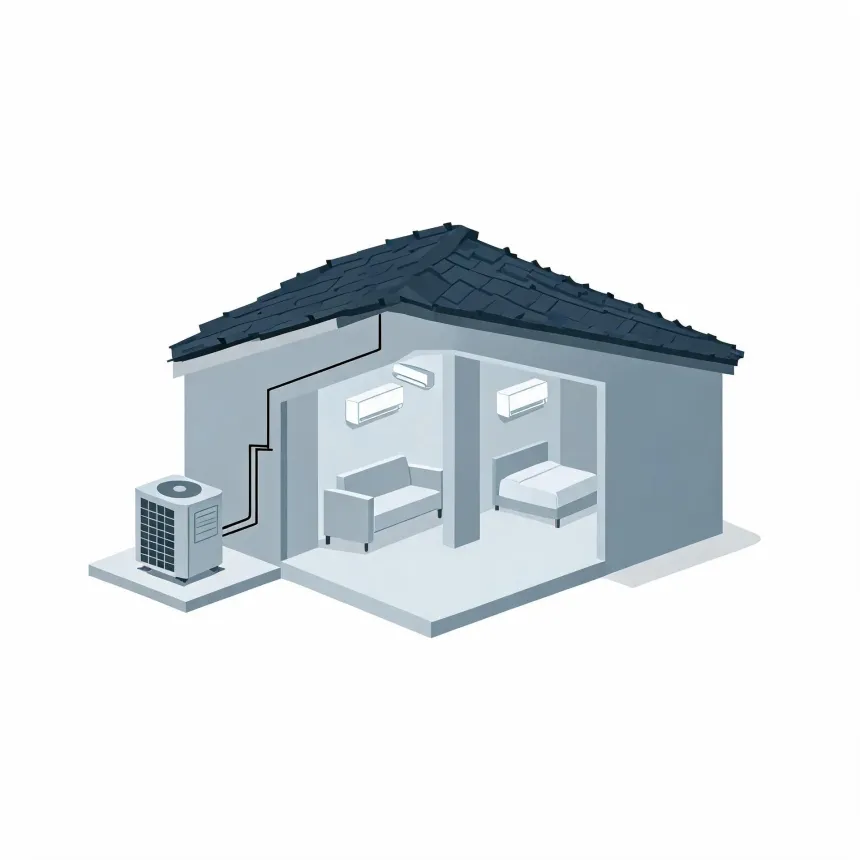
Isometric illustration of a cutaway single-story house with a dark shingled roof, showing three wall-mounted indoor air conditioning units in two rooms connected by lines to an outdoor condenser unit on a pad outside.
Your system heats October through April and cools June through September.

NOAA nClimDiv, 1991–2020 normals

Electricity in Kentucky runs about 12.79 cents per kilowatt-hour, cheaper than most of the country.

A mini split still cuts your bill next to electric baseboard or an old window unit, but the top-tier efficiency model will take longer to earn back its extra cost here than it would somewhere with pricier power.

A normal size and efficiency do the job here

Cooling runs June through September
Summer afternoons average 84°F
115 damaging wind events from 2015 to 2024
Most of Laurel County already heats with electricity82.1% of homes here run on electric heat, with gas and propane well behind at 8.7% and 5.7%

Cooling in Laurel County runs June through September, so May is the month to get a mini split installed. Get it done before the first hot day and it goes in on your schedule, with time for the installer to check the refrigerant charge and test the line set connections without rushing. Wait until the system is already needed and you're picking from whatever install dates are left, not the one that works best for you.

Any new system here has to meet 14.3 SEER2 and 7.5 HSPF2

Laurel County falls under zone 4A, and any mini split installed here has to clear 14.3 SEER2 for cooling and 7.5 HSPF2 for heating, the federal minimum for split-system heat pumps. That rules out older, lower-efficiency equipment before you even start comparing brands. A system that meets the standard may also qualify for a federal tax credit, worth checking into before you settle on a model.

Find a contractor
A white outdoor air conditioner condenser unit mounted on metal wall brackets against gray horizontal siding, with a blue sky and white clouds behind it.

The rating on the label is a lab number, not a bill

That SEER2 and HSPF2 number on the label is measured under set lab conditions, not your actual house. It tells you how the equipment compares to other equipment, not what your bill will be. What matters more day to day is that a mini split holds its efficiency across a wider range of outdoor temperatures than a window unit or electric baseboard ever could, because the compressor can slow down and run at partial output instead of switching fully on and off. A system cycling on and off wears the compressor harder and spends more energy just restarting. One that modulates stays closer to its rated efficiency for most of the hours it runs, heating and cooling, year after year.

The load calculation decides the size, not the room's square footage

A contractor works out sizing by adding up how the space gains heat in summer and loses it in winter. The windows matter, how the walls are built matters, which way the room faces matters, what sits above and below it matters. Rooms that look the same size on paper can need different size equipment once all of that gets accounted for. Going by floor area alone is how the wrong unit ends up on the wall.

Bigger isn't safer, it's worse

An oversized mini split cools the room fast, shuts off, then starts again soon after. That short cycling never runs long enough to pull moisture out of the air, so the room ends up cold and clammy at the same time. An undersized one just runs flat out and never catches up on the hardest days of the year. The right size is the one that runs long steady stretches, not the biggest one that fits on the wall.

Ask what the warranty actually covers before you compare price. Most mini splits carry a parts warranty on the compressor and the components inside both the indoor head and outdoor unit, but that coverage often depends on registering the system within a set window after install, and on having it installed by someone licensed to handle refrigerant. Skip that step and the warranty can shrink to almost nothing. Ask too whether the warranty covers labor or just parts, since a free compressor still costs money to put in. And ask what voids it. A line set that's too long for the system, a charge that's off, or refrigerant mixed with the wrong oil can all void coverage even when the equipment itself was never at fault.

Install day starts with the outdoor unit and indoor heads already sized and the line set path already decided, so most of the real decisions are made before anyone shows up with tools. The outdoor unit gets set on a pad or wall brackets, leveled, with room around it for airflow. Each indoor head gets mounted to a plate on the wall, then the line set, drain line, and electrical wiring run from there to the outdoor unit through a single penetration in the wall. Once everything is connected, the line gets pulled down to a vacuum to clear out air and moisture before refrigerant ever enters it, because either one left in the line turns to acid or ice once the system runs. Only after the vacuum holds does the installer open the valves, charge the system, and test each head for airflow and temperature. A system buttoned up without that vacuum step can run fine for a while and still fail early.