






An orange cat rests on a dark grey bed in a minimalist monochrome bedroom.

Mini Split Installation in Frankfort, KY

Tell us about the job

Takes about a minute. No obligation.

New system or replacementMini-splitFranklin County, KY
Step 1 of 2

What ZIP code is the job in?

More than half the homes in Franklin County heat with electricity, and gas reaches most of the rest. A mini split fits into that picture without a fight. It runs on electricity like the baseboard or central heat it's often replacing, so there's no gas line to run or vent to add. For a home already wired for electric heat, adding or replacing a system this way tends to be the simpler path, since the house is already set up for it.

7 months
October through April, your system heats
5 months
May through September, it cools
27°F
the average winter night it heats against
86°F
the average summer afternoon it cools against
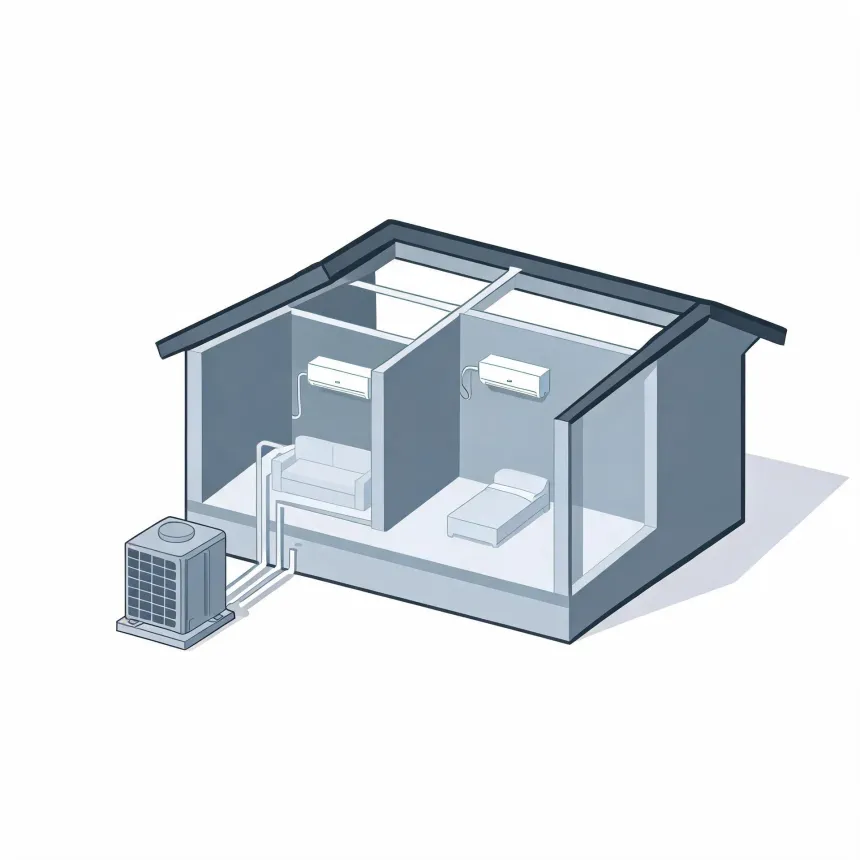
Illustrated cutaway of a two-room house showing two wall-mounted indoor air conditioning units connected by pipes to an outdoor condenser unit on the ground outside.
Your system heats October through April and cools May through September.

NOAA nClimDiv, 1991–2020 normals

Kentucky electricity ran 12.79 cents per kilowatt-hour in 2024, cheap next to most of the country.

A mini split still costs less to run than baseboard heat, but the payback on the top-tier efficiency model stretches out here, so pick yours on comfort and fit first.

Nothing here calls for sizing up

Half the homes here were built by 1977
Cooling runs May through September
Summer afternoons average 86°F
Pick the unit that fits the roomElectricity here runs 12.79 cents per kilowatt-hour, among the lower rates in the country.

Franklin County falls in climate zone 4A, which asks for real heating capacity and real cooling capacity from whatever goes in. A mini-split heat pump counts as a split system under the federal rule, so any unit built from 2023 onward has to hit 14.3 SEER2 for cooling and 7.5 HSPF2 for heating. There's no separate, lower bar for ductless systems. That's the floor, not a ceiling, so plenty of mini splits sold today clear it by a wide margin. A system meeting these minimums can also qualify for the federal energy efficiency tax credit, worth looking into before you settle on a model.

A standard mini split handles Frankfort's summers fine

Cooling here runs May through September, with afternoon highs around 86°F in summer. That's a normal mixed-climate load, not a strain that calls for an oversized or premium unit. A correctly sized mini split handles it, and sizing it right is what keeps it running efficiently for the next one.

Find a contractor
A man in a gray work shirt and tan pants carries a canvas tool bag up wooden porch steps toward a dark green front door, with a potted shrub to the right.
A beige split-system air conditioner outdoor condenser unit mounted on metal wall brackets atop a stucco wall.

Five months of work a year

Cooling here runs May through September. That's the stretch this unit has to carry. Get it installed before May and it's running on day one of the season instead of catching up during the first hot week. A mini split put in during April means no window unit propped in a sill while you wait, and no emergency call competing with everyone else's once the heat sets in.

The old system doesn't have to go first

A mini split install doesn't require tearing out baseboard heaters or a central system before the new unit goes in. The line set and indoor heads can be installed and tested while the old heat is still running, so the house isn't without heat or cooling during the switch. Removal happens once the new system is proven to work.
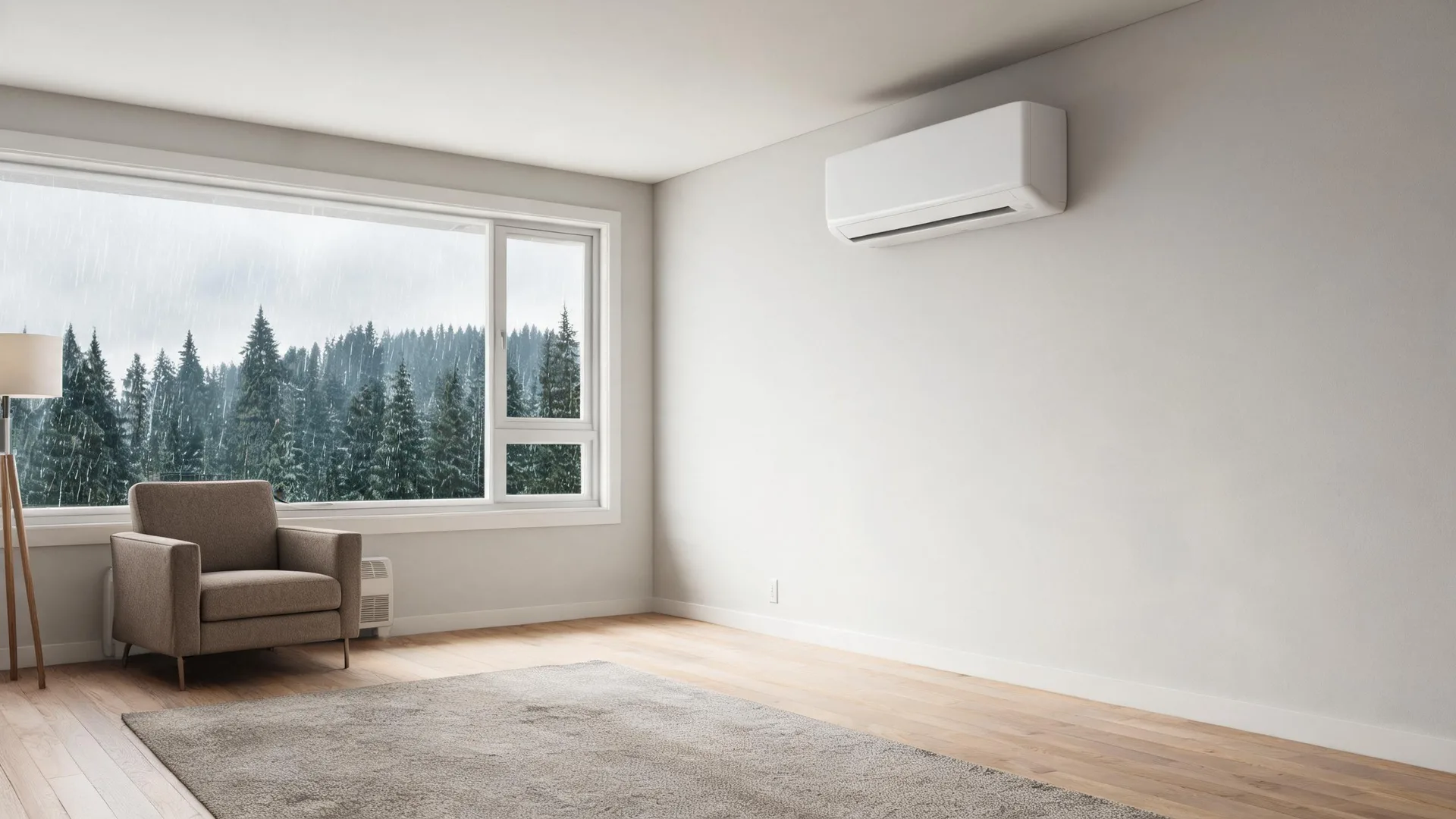
Baseboard heaters come out, they don't get capped off

If a mini split is replacing electric baseboard, the old heaters and their wiring usually need to come out rather than stay in the wall unused. Left in place, they're a dead circuit taking up space and a tripping hazard for anyone who doesn't know they're disconnected. An electrician can pull them and cap the wiring properly once the mini split is carrying the load.

What drives the cost on a mini split job is mostly the line set run and how many heads you're installing. One indoor head tied to one outdoor unit, with a short run through an exterior wall, is the simplest version of this job. Add a second or third zone and you're adding line sets, more wall penetrations, and another indoor head to mount and level. Where the outdoor unit can sit matters too. A condenser that needs a long refrigerant line to reach the far side of the house takes more time and material than one that sits right behind the wall it's feeding. The electrical side counts as well, since a mini split needs its own dedicated circuit, and running new wire back to the panel is a different job depending on how far that panel is and what the panel has room for.

Installation day starts with the line set run, usually before anything gets mounted. The installer drills through the exterior wall at the point they scouted ahead of time, sized for the refrigerant lines, the drain line, and the electrical whip that feeds the indoor head. The indoor unit gets mounted on a bracket, leveled, and connected before it's ever tested. Outside, the condenser sits on a pad or wall bracket, away from anything that blocks airflow around it. Once both ends are connected, the lines get pulled into a vacuum to clear out moisture and air before refrigerant ever enters them. That vacuum test is what catches a bad connection before it becomes a leak nobody notices for a year. Only after the system holds vacuum does it get charged and switched on, so the last part of the day is running it and checking that every head is actually heating or cooling the way it should.