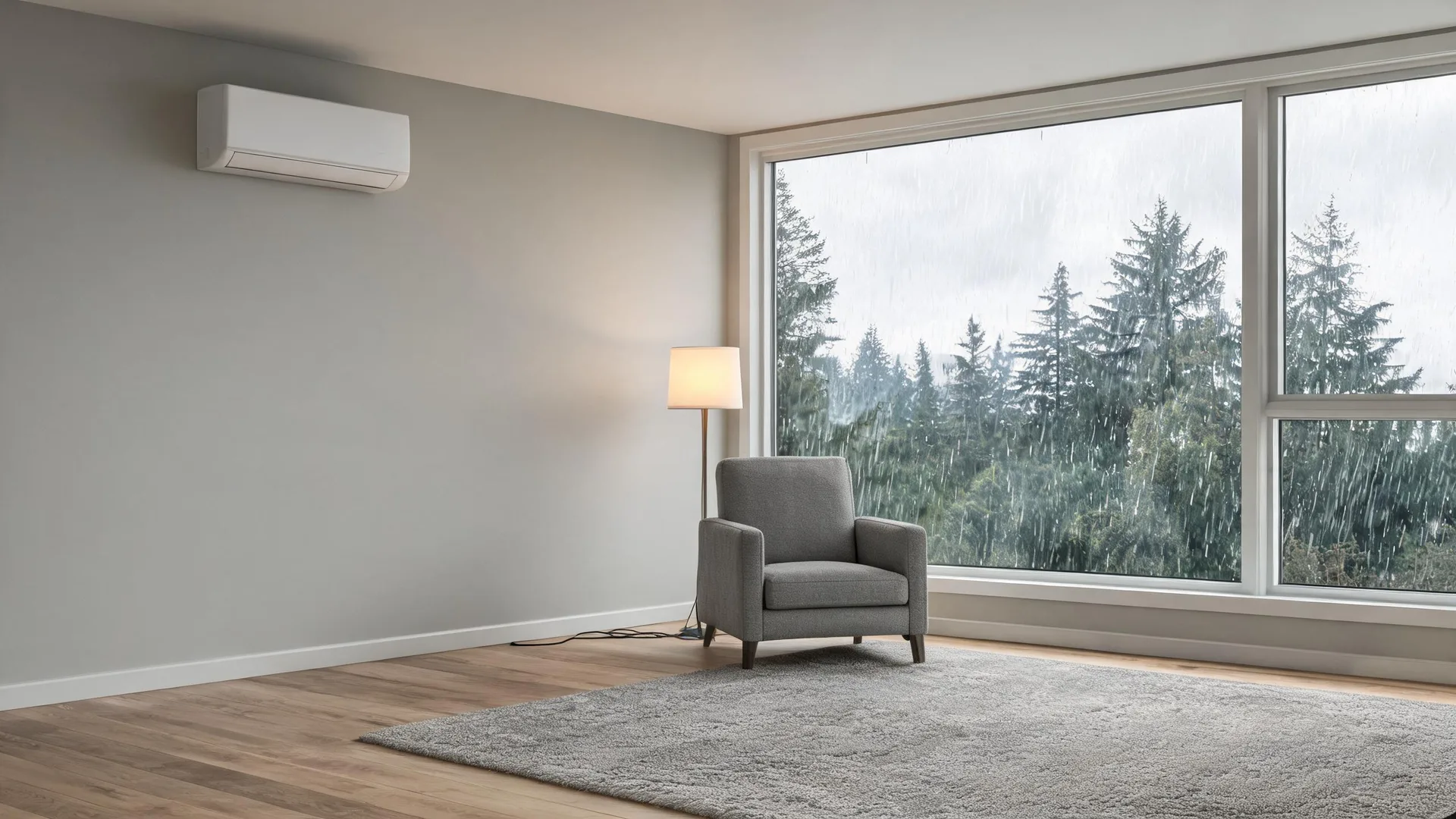
Gas heats most homes here
Just over half of Kenton County homes heat with utility gas, and most of the rest run on electric heat. A mini split adds cooling and a second way to heat a room without touching the gas furnace.
Takes about a minute. No obligation.
Just over half of Kenton County homes heat with utility gas, and most of the rest run on electric heat. A mini split adds cooling and a second way to heat a room without touching the gas furnace.
You don't have to pick one or the other. The mini split can handle a room the furnace struggles to reach, or carry the whole load in spring and fall so the furnace sits off.
NOAA nClimDiv, 1991–2020 normals
Every quote should say how many zones the system covers and the BTU rating for each indoor unit.
A unit sized for the whole house won't match one sized room by room, so get both quotes in the same terms before you compare the numbers.




Kenton County falls in climate zone 4A, which asks real work of both your furnace and your AC over the year. Any mini split installed here has to clear 14.3 SEER2 for cooling and 7.5 HSPF2 for heating, the same minimums as any other split-system heat pump. The federal standard doesn't carve out a separate rule for ductless systems, so a contractor quoting you a unit below those numbers isn't quoting something legal to install new. That floor is worth asking about by name when you compare quotes, not just the brand or the price.
Kenton County is a mix of older and newer homes in roughly equal numbers, and nothing about that changes what a mini split needs to do. Once it clears the SEER2 and HSPF2 minimums and the zones are sized right for the rooms they cover, a standard unit handles this climate fine. There's no reason to pay for more than that.
Find a contractorThe SEER2 and HSPF2 numbers on the label come from a full season of running, not one moment of peak output. A mini split earns that number by sitting at a low, steady output most of the time and only pushing hard on the toughest days. It gets there by varying its speed rather than switching between full blast and off. That's why the rating holds up over years of daily use instead of dropping off once the unit ages. It also assumes the indoor and outdoor units were matched to each other and sized to the room. An indoor unit that's too big for its room will short cycle, turning on and off more than the compressor is built for. When that happens the unit won't run anywhere near the number printed on the label.
A mini split is worked out by figuring the heat gain and heat loss of the specific room it serves. The windows, the exterior walls, what's above and below it all factor in. That's different from central systems, which get sized off the whole house at once. Each indoor unit gets matched to its room on that basis, not picked off a chart by square footage alone.
A unit too big for its room cools or heats the air fast and shuts off before it pulls the moisture out. The room ends up feeling clammy even at the right temperature. It also means the compressor is starting and stopping more than it's built for, instead of running steady at low output the way it's designed to. Bigger isn't the safe choice here. Matching the room is.
If there's a furnace or boiler already heating the house, nothing about it changes when a mini split goes in. It keeps running the way it always has, on its own thermostat, doing what it did before. The mini split doesn't tie into that system or take anything over from it. If a window unit or a space heater was covering the room before, that's what usually goes away once the new unit is in, since it's doing that job better now. An old ducted system that's on its way out doesn't have to come out on the same day either. Plenty of homes run both for years, the furnace carrying the cold months and the mini split picking up the shoulder seasons, until whoever owns the furnace decides its time is up.
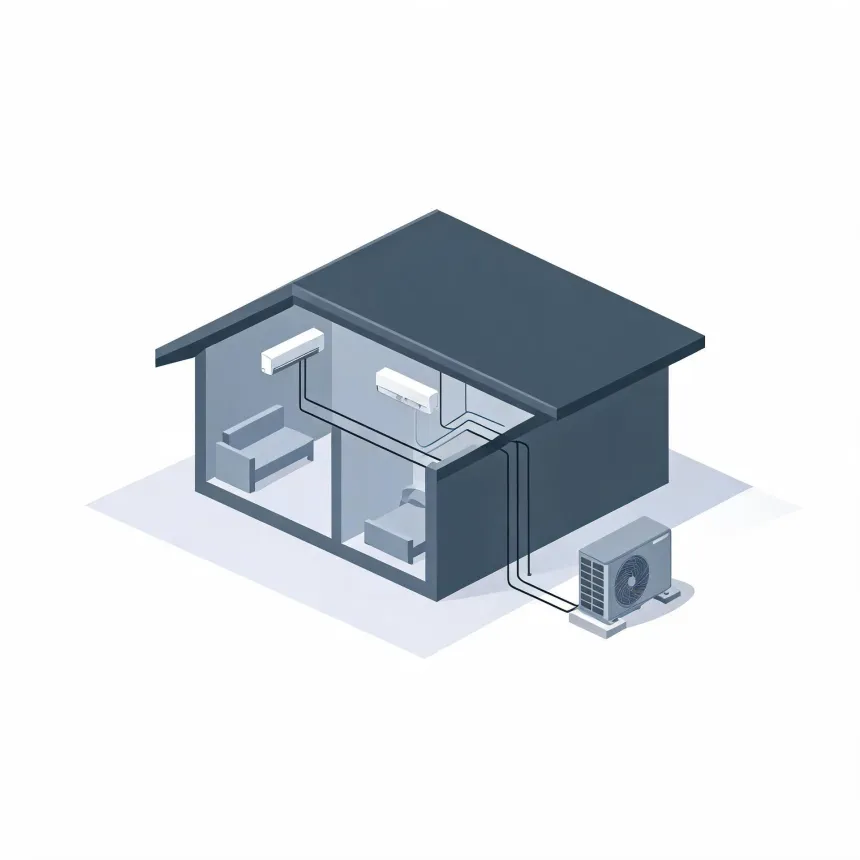
The cost of putting in a mini split comes down to how much equipment it takes and how hard it is to get the line set and wiring where they need to go. One indoor unit costs less to install than several. The outdoor unit needs a clear spot on an exterior wall or a pad nearby, and the distance between it and each indoor head affects how much line set and labor the job takes. Running the conduit through an exterior wall is usually straightforward, but a longer run, tight framing, or a wall that won't take a clean path all add time. A multi-zone system, where several indoor heads run off one outdoor unit, costs more than a single zone but less than installing a separate system for each room. Electrical work factors in too. Most outdoor units need their own dedicated circuit, and whether the panel already has room for it or needs upgrading changes the scope of the job before the first line set ever gets run.