



A white wall-mounted split air conditioner on a blue-grey wall, with a moonlit night sky visible through a nearby window.

Mini Split Installation in Central City, KY

Tell us about the job

Takes about a minute. No obligation.

New system or replacementMini-splitMuhlenberg County, KY
Step 1 of 2

What ZIP code is the job in?

Electricity in Kentucky ran about 12.79 cents per kilowatthour in 2024, cheaper than what most of the country pays. That changes the math on a mini split. The highest-efficiency unit on the shelf will cost more up front and take longer to earn that back in lower bills here than it would somewhere with pricier power. So the better question for this install isn't which unit has the top efficiency number. It's which one holds up through a power cut and keeps the house comfortable when the grid is the problem, not the bill.

7 months
October through April, your system heats
5 months
May through September, it cools
29°F
the average winter night it heats against
88°F
the average summer afternoon it cools against
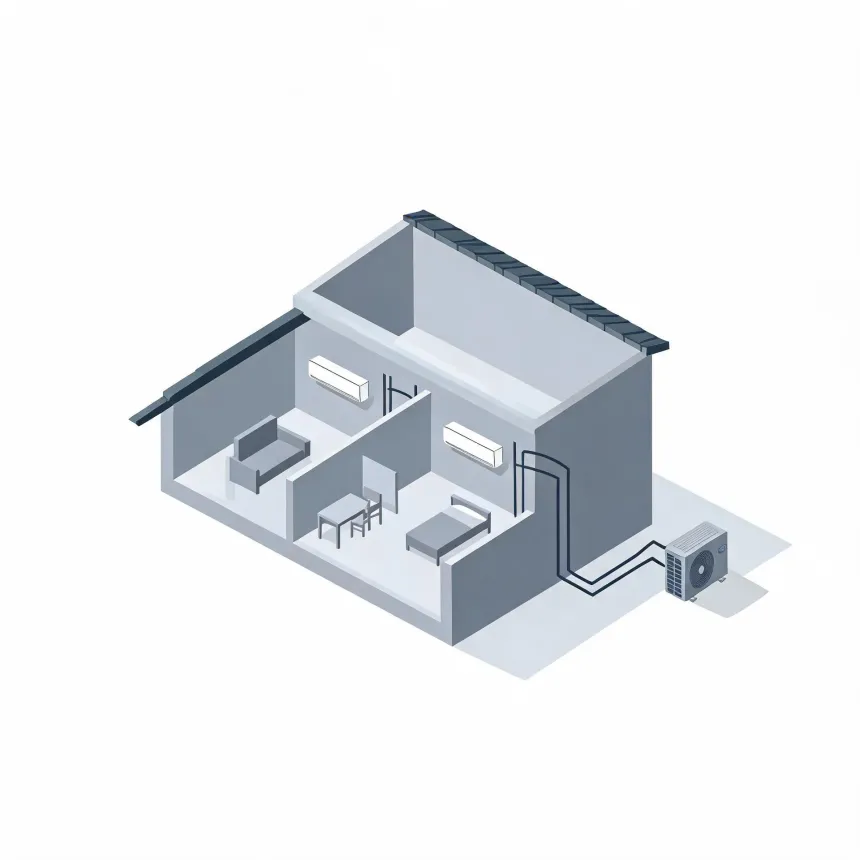
Isometric cutaway illustration of a gray house showing two wall-mounted indoor air conditioning units in separate rooms with furniture, connected by line sets to an outdoor condenser unit on a pad outside.
Your system heats October through April and cools May through September.

NOAA nClimDiv, 1991–2020 normals

Electricity heats 63.5% of homes in Muhlenberg County.

A mini split runs on electricity already, so this install does not change how the house is fueled, only how it is heated and cooled.

Five months of summer, nothing a standard size can't handle

Cooling runs May through September
Summer afternoons average 88°F
72 damaging wind events from 2015 to 2024

Muhlenberg County sits in climate zone 4A, which asks real work of both heating and cooling through the year. A mini split installed here has to clear the federal minimum for that. For a split-system heat pump, which is what a mini split is under the standard, that means 14.3 SEER2 for cooling and 7.5 HSPF2 for heating. That floor is already built into what a contractor can legally install, so it is not something to shop for separately. A system that clears it also tends to qualify for the federal energy efficiency tax credit, worth asking about once a specific unit is on the table.

Install before May, ahead of the heat

Cooling starts in May here and runs through September. Have the mini split in before then, and it's already running when the first hot stretch hits, not something you're trying to arrange in the middle of one.

Find a contractor
A white outdoor air conditioner condenser unit mounted on metal wall brackets against gray horizontal siding, with a blue sky and white clouds behind it.

The install is more than the unit on the wall

What drives the cost of this kind of install is mostly hidden before the work starts. Every indoor head needs a line set running to the outdoor unit, carrying refrigerant lines, a condensate drain and electrical wiring, and the distance and path that line set has to travel changes the labor involved. A straight run through an exterior wall costs less to install than one that has to go up through an attic or down through a crawlspace. Multi-zone setups, where several indoor heads tie back to one outdoor unit, cost more than a single-zone system because each added head needs its own line set and its own mounting work, even though they share one compressor. The electrical side matters too. A mini split needs a dedicated circuit, and if the electrical panel doesn't have room for one, that's added work before the unit itself ever goes in. Where the outdoor unit sits counts as well. It needs clearance on all sides for airflow and service access, and a mounting pad or bracket if the ground or wall it's going on isn't already suited to it. None of this shows up in the price of the unit itself. It shows up in what the house requires to get that unit running correctly.

Ask what each zone is sized for

A contractor should size every indoor head to the room it serves, based on that room's windows, exterior walls and layout, not just divide one total number evenly across heads. A head that's oversized for its room will short cycle, turning on and off too fast to pull moisture out of the air. One that's undersized will run constantly and still leave the room short of the set temperature.
Ask how the system handles the coldest nights

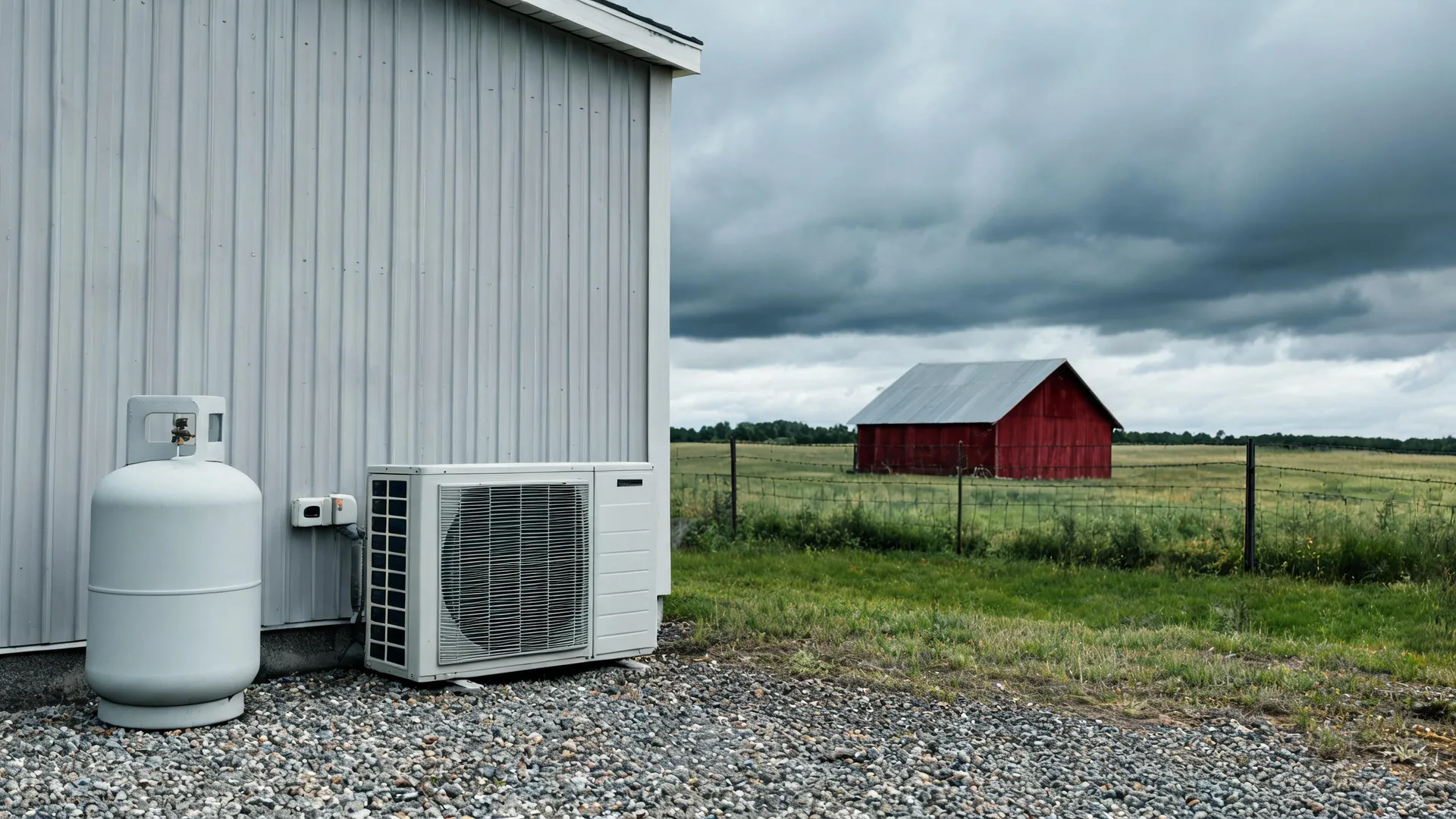
Every heat pump loses some capacity as the outdoor temperature drops, and manufacturers publish a performance rating that shows how much capacity is left at low temperatures. Some systems hold most of their output much further down than others, and some are built with backup heat strips for when the outdoor unit can't keep up on its own. Knowing which kind is being quoted matters more than the brand on the label.

Sizing a mini split isn't about matching the outdoor unit to the square footage of the house. A contractor works out a heat loss and heat gain calculation for each room, accounting for the windows, the exterior walls, the ceiling height and what's on the other side of each wall. Skip that step and the system is guessing. Too big, and the compressor ramps up fast, satisfies the thermostat, and shuts off before it's pulled the humidity out of the air, so the room feels cool but damp. Too small, and it runs flat out all day without ever catching up to the set temperature, especially on the hottest afternoons or the coldest nights. Either way the equipment wears faster, because neither short cycling nor constant running is what the compressor was built to do. The right size is the one that runs long, steady cycles most of the time, not the biggest unit that fits on the wall.

Install day starts outside, with the contractor marking where the outdoor unit sits and tracing the path each line set will take to the wall. Holes get drilled for the line sets before anything is mounted, and that's the point where a straight exterior wall run finishes fast and a run through an attic or crawlspace takes a lot longer. Once the indoor head is mounted and the line set connects it to the outdoor unit, the system gets evacuated with a vacuum pump to pull out moisture and air, because any left behind damages the compressor once refrigerant starts moving. After that the line set is charged, the electrical connections get tied into the dedicated circuit, and the contractor runs the system through both heating and cooling to check it's holding the temperature it's set to. A good installer also checks the drain line actually carries condensate away from the house before calling the job done, since a line that doesn't slope right will back up later.