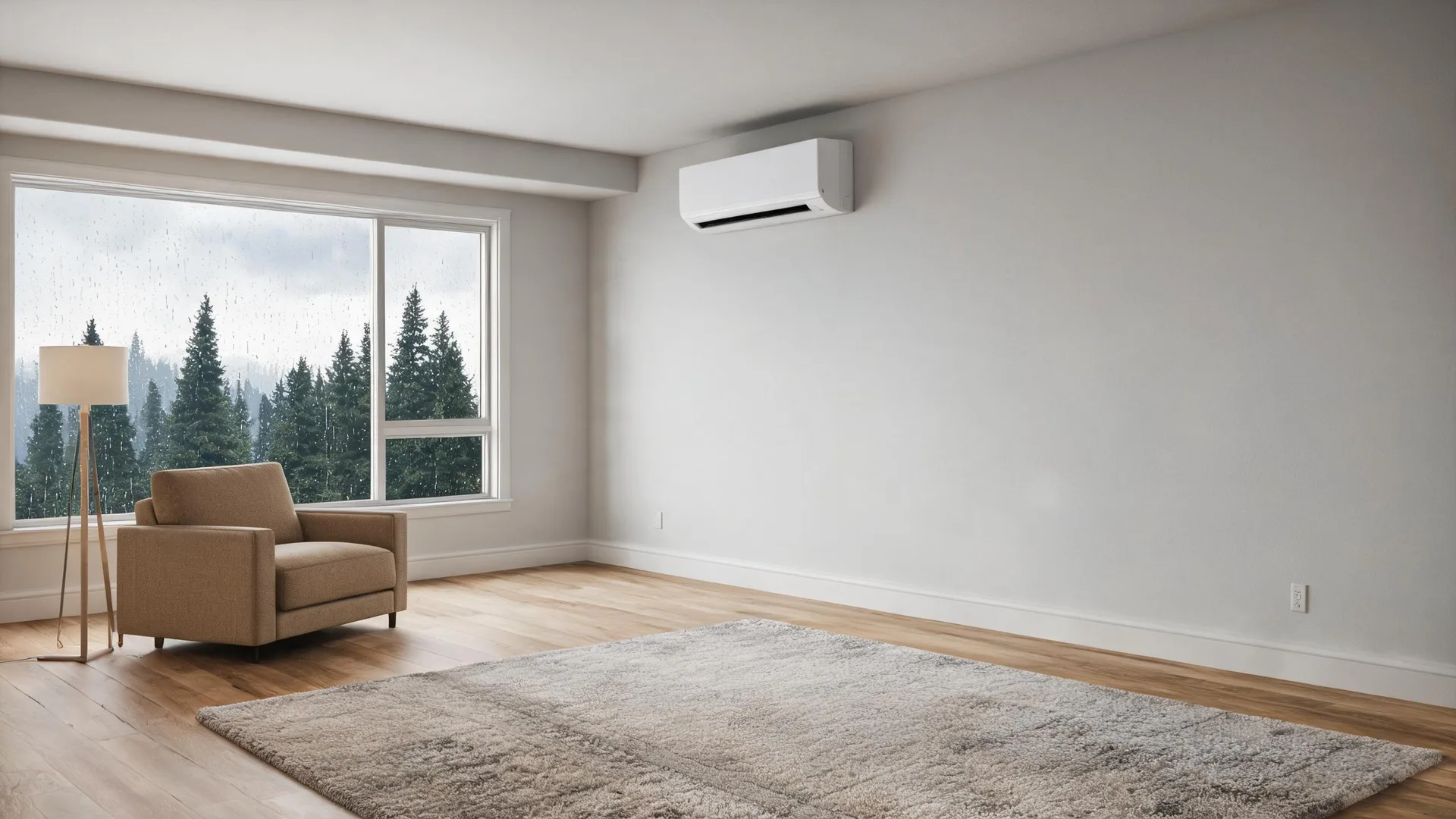
Most homes here run on electric heat
Electricity heats 65% of occupied homes in Meade County. Gas furnaces are the exception, not the rule, with utility gas at 12.6 percent and propane at 17.8 percent.
Takes about a minute. No obligation.
Electricity heats 65% of occupied homes in Meade County. Gas furnaces are the exception, not the rule, with utility gas at 12.6 percent and propane at 17.8 percent.
If your home heats with electric resistance or electric baseboard, a mini split takes over that job and does it for less power. No gas line to run, no flue to worry about.
NOAA nClimDiv, 1991–2020 normals
Kentucky electricity runs 12.79 cents per kilowatt-hour, well under the national average.
A mini split still beats electric resistance heat on cost, but a high-efficiency model earns back its extra price slower here than in a high-rate state.



Meade County sees its share of rough weather, with damaging wind the most common of it. None of that changes what size or tier of mini split you need. A standard single or multi-zone system handles the heating and cooling load here the same way it would anywhere in this climate. What's worth planning for instead is the power going out. Nearly a quarter of Kentucky households lost power for 24 hours or more in 2024, and a mini split won't run without it. Most units pick back up on their own once power returns, no relighting or resetting needed. If a backup generator is already part of your setup, check that it covers the outdoor compressor along with the indoor head.
Meade County falls in climate zone 4A, and federal rules set the efficiency floor for mini splits at 14.3 SEER2 for cooling and 7.5 HSPF2 for heating. That floor applies no matter how many zones you need. A federal tax credit is available toward the cost of a qualifying system, on top of whatever it saves on your power bill.
Find a contractorCooling runs May through September here, five months of the year. Getting a mini split installed in April means it gets tested before the heat actually arrives, not on the first hot day with a houseful of people waiting on it. It also means you pick the unit and the installer on your own schedule, not whoever can still fit you in once everyone else's AC is struggling too.
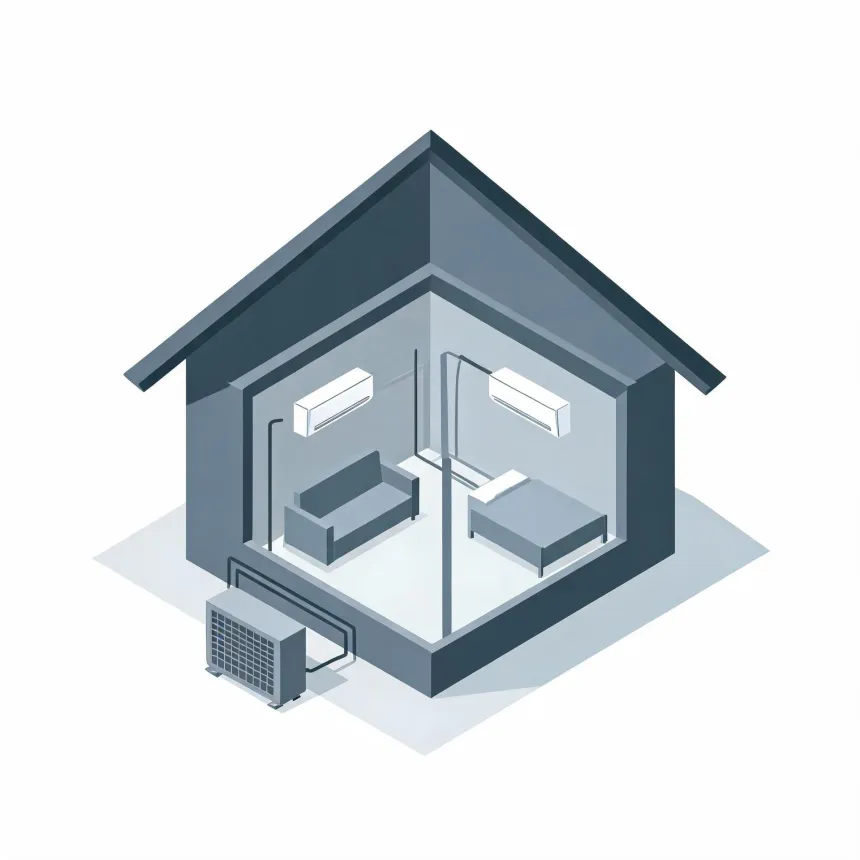
A single indoor head costs less than a multi-zone system tied to one outdoor unit. Each extra room you want heated and cooled separately means another indoor head, another line set, and a bigger outdoor unit to run them all. Deciding ahead of time which rooms actually need their own zone keeps the system from growing bigger than the job calls for.
Every indoor head needs a line set and a drain running back to the outdoor unit, usually through an exterior wall. A straight shot through one wall is quick work. Running lines up through an attic, across a long hallway, or down multiple floors to reach the outdoor unit takes more time, more material, and more cuts into finished walls or ceilings.
What happens to the old system depends on what's being replaced. If a window unit or electric baseboard is coming out, the contractor pulls it and patches the wall or the outlet behind it. If there's an existing central air system, the indoor coil and outdoor condenser get disconnected and hauled off, along with any ductwork that won't carry over. The refrigerant inside has to be recovered into a tank, not vented, so factor that step into the removal regardless of what the old system is. None of this is something to handle alongside the new install casually. A contractor pulling permits for the mini split should be the one disconnecting and removing what's there now, since they already know what's tied into it.
Installation starts with the outdoor unit and where it sits. It needs open space on all sides for airflow, and a level pad underneath, so the crew picks that spot before anything else happens. Mounting the indoor head is the easy part. The real work is the hole drilled through the wall to run the line set. That hole gets angled slightly so condensation drains outward instead of back into the house. The refrigerant lines, the drain line, and the electrical wiring all pass through it to reach the outdoor unit. Once everything is connected, the lines get pressure tested to check for leaks before any refrigerant goes in. Then they get vacuumed to pull out moisture and air. Either one left behind will wreck the compressor over time. After that the system runs through both heating and cooling to confirm it holds temperature and the thermostat or remote is actually controlling it.