




A lit brick residential street at dusk showing a row of two-story homes with covered porches and mature trees.

Heat Pump Repair in Winchester, KY

Tell us about the job

Takes about a minute. No obligation.

RepairHeat PumpClark County, KY
Step 1 of 2

What ZIP code is the job in?

Clark County asks real work of a heat pump both ways, cold winters and humid summers, so the system here is never just coasting. But it isn't fighting extremes either. Winter nights average 27°F, not the deep cold that pushes a heat pump to its limit night after night. That matters for repair. A unit that hasn't been run hard for years tends to have more life left in it, and a breakdown is more likely a part giving out than the system reaching the end of the road.

7 months
October through April, your system heats
4 months
June through September, it cools
27°F
the average winter night it heats against
85°F
the average summer afternoon it cools against
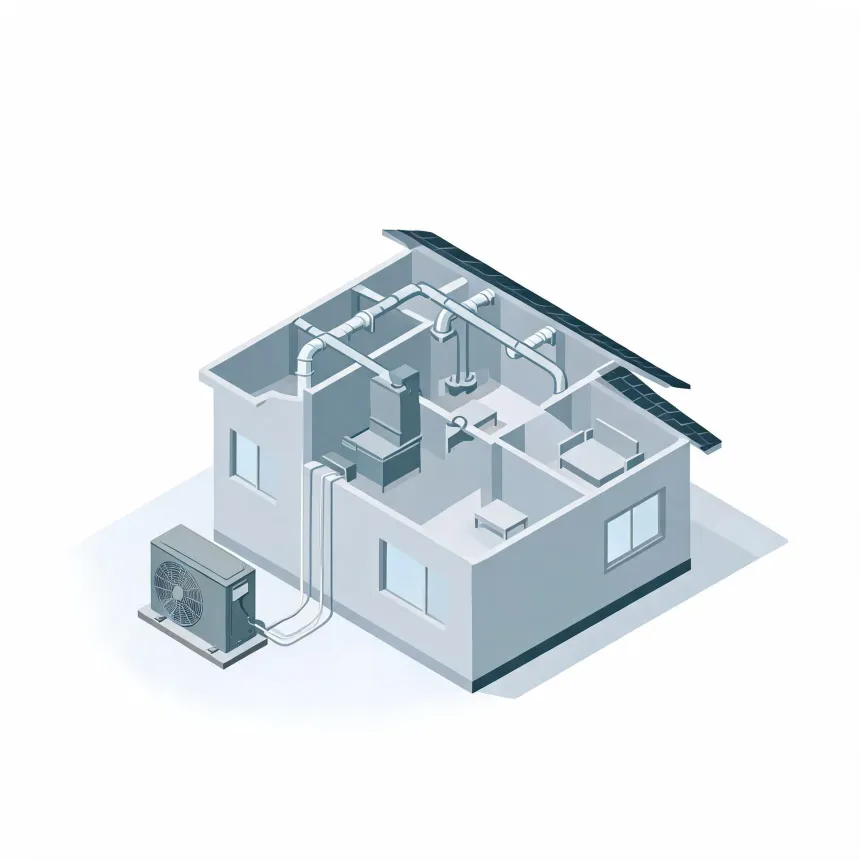
Isometric cutaway illustration of a single-story house showing interior ductwork, an air handler and rooms, with an outdoor condenser unit connected by refrigerant lines on a plain white background.
Your system heats October through April and cools June through September.

NOAA nClimDiv, 1991–2020 normals

Half the houses in Clark County were built in 1979 or later.

A heat pump that came with a newer house still has years of work left in it.

Most years here pass without a storm that touches your heat pump

67 severe weather events from 2015 to 2024
24% of homes statewide lost power a day or more in 2024
44 damaging wind events from 2015 to 2024

September is worth a call to get your heat pump looked at before heat starts up in October. If a part was already marginal, this is when it tends to show itself, right when the system switches over and has to carry the full load. A capacitor that's been weakening all summer can give out the first cold week it has to run heat instead of cooling. Same with a contactor or a sensor that's been marginal. Catching it in September means a repair, not a cold morning with no heat and an emergency call.

If your heat pump is still young, fix what broke

If your heat pump came with a newer house here, get the repair done rather than planning around a replacement. A part failing on a system with years left in it is a repair call, not the start of a bigger decision.

Find a contractor
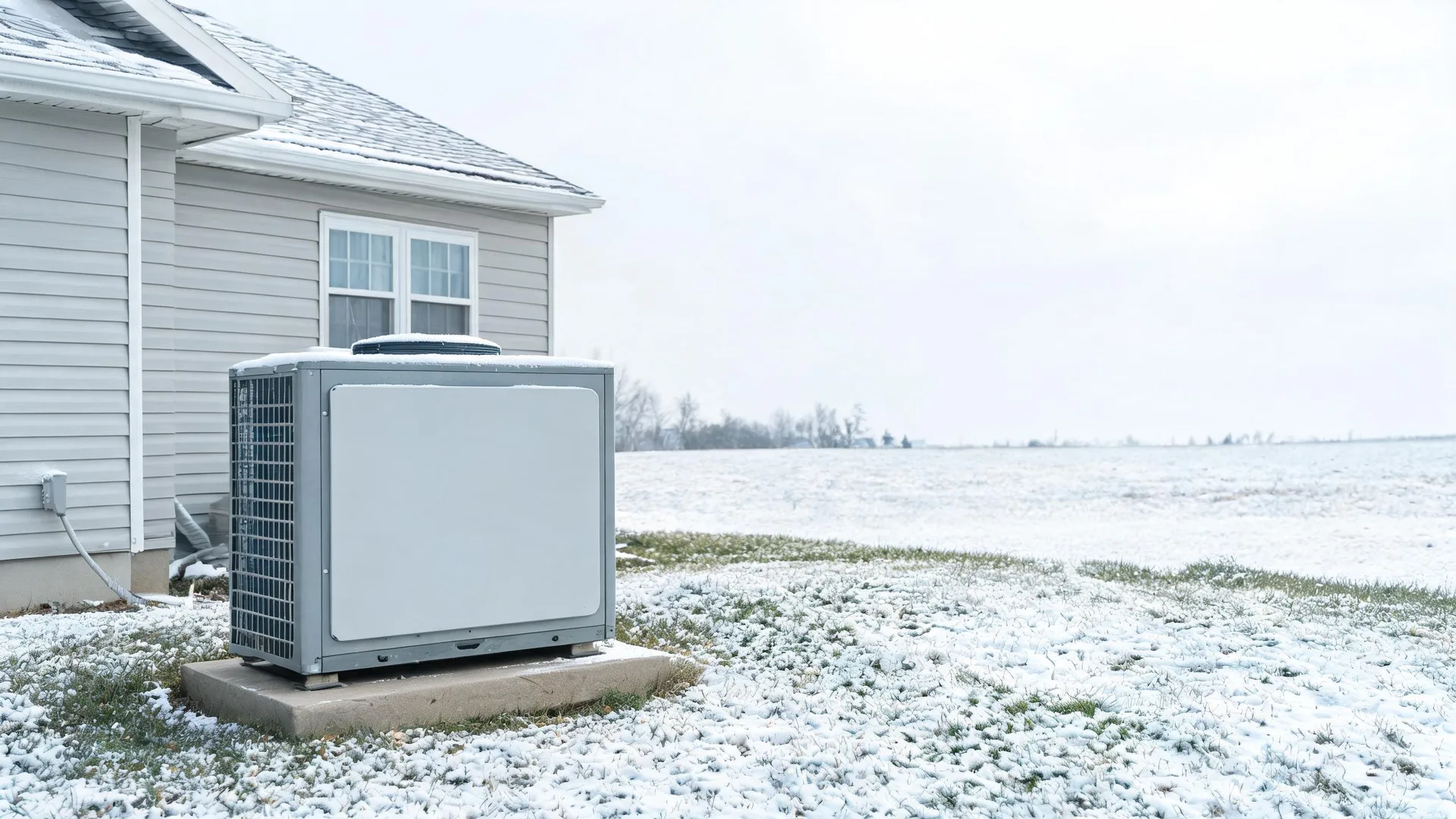
A gray air-source heat pump mounted on a concrete pad next to a house with gray vinyl siding, surrounded by gravel and flanked by green shrubs and white hydrangea flowers.

It hasn't been worked hard enough to wear out early

This heat pump runs on both ends of the year, but it isn't grinding through extreme cold to do it. That's worth knowing when something breaks. A part that fails after years of moderate work is usually just a part that wore out, not a sign the system is done. Get the failed part replaced and the unit should keep running the way it has been.

Capacitors and contactors go first

The run capacitor gives the compressor and fan motor the extra push they need to start. It weakens slowly, then stops doing its job on some ordinary day. The contactor switches power to the compressor every cycle, and those contacts pit and burn with age until they stick or stop making contact at all. Both are common failures and both are straightforward repairs on their own.
The reversing valve is the harder one

The reversing valve is what switches a heat pump between heating and cooling, the part that makes it different from a plain air conditioner. When it sticks, the system can get stuck in one mode or stop switching cleanly. You'll feel it as heat that won't come on, or air that never warms up even though the system is running.

Before you call, check the thermostat is set to heat and the setpoint is actually above room temperature. Look at the outdoor unit. If it's caked in ice beyond what a normal defrost cycle would leave, or if you can see frost that never melts off during the day, that's worth mentioning when you call. Check your breaker panel for a tripped switch, since a heat pump that won't start at all is sometimes that simple. Walk through the house and feel the vents. Air that's moving but not warm points to a different problem than no air at all. Change the filter if you haven't in a while, since a clogged one can starve the system enough to trip a safety switch and shut it down.

A failed part is almost always worth fixing on its own terms, apart from anything else going on with the system. If the compressor itself is bad, that's a different conversation, since the compressor is most of what makes the unit worth having. But a bad capacitor, a stuck valve, a worn-out contactor, none of that says anything about the compressor. Ask whoever comes out to tell you plainly what failed and whether it's a part or the compressor. If it's a part, fixing it brings the system back to exactly where it was before, running the way it always has.