



A row of dark-sided houses with brown shingled gable roofs behind tall trimmed hedges, with a mowed lawn in the foreground and overhanging tree branches against an overcast sky.

Heat Pump Repair in Shelbyville, KY

Tell us about the job

Takes about a minute. No obligation.

RepairHeat PumpShelby County, KY
Step 1 of 2

What ZIP code is the job in?

Shelbyville sits in a mixed climate, zone 4A, which means your heat pump works both sides of the year instead of leaning hard on one. Winters aren't brutal here. The overnight low averages 26°F across December, January and February, which is cold but not the kind of extreme that pushes a system to its limit night after night. A heat pump earns its keep here without getting run into the ground. That's worth knowing when something starts acting up, because the problem is more likely a part that's failed or aged out than a system that's been worked past what it can handle. Most of the time, that's a repair worth making.

7 months
October through April, your system heats
5 months
May through September, it cools
26°F
the average winter night it heats against
85°F
the average summer afternoon it cools against
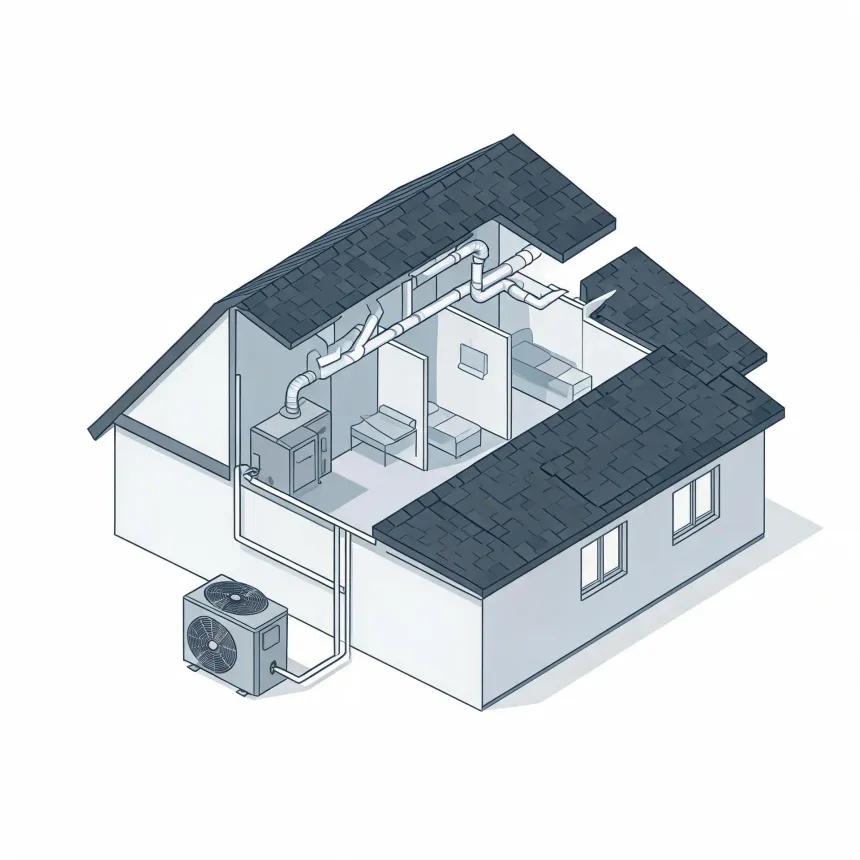
Isometric line illustration of a cutaway single-story house showing interior ductwork, an indoor air handler unit, and an outdoor condenser connected by refrigerant lines, with a dark shingled roof.
Your system heats October through April and cools May through September.

NOAA nClimDiv, 1991–2020 normals

Half the homes in Shelby County were built in 1993 or later.

A heat pump that came with a newer house still has years in it, and that makes repair the call worth checking first.

Shelby County doesn't put this system through anything out of the ordinary

88 severe weather events from 2015 to 2024
24% of homes statewide lost power a day or more in 2024
50 damaging wind events from 2015 to 2024

October is when heat here switches over, and that first cold snap is when a weak part usually gives out. A heat pump that's been sitting idle all summer gets asked to start cycling daily, and anything that was already marginal, a contactor, a capacitor, a low charge, tends to fail right at that turn. The same thing happens in reverse come April, before cooling starts in May. If your system is acting up right as the season changes, that's not a coincidence. That's the load finding the weak spot.

Worth fixing before you write it off

Get the repair looked at before you decide it's time to replace. A system that came in with a newer build still has years to give, and most problems at this stage are one failed part, not a system on its way out.

Find a contractor
A dark gray heat pump unit mounted on a concrete pad next to a house with gray siding and a stone veneer wall.

What you can check before anyone shows up

Before anyone comes out, there are a few things worth checking yourself. Look at the thermostat first. Make sure it's set to the mode you want and the batteries aren't dead, because a thermostat that's lost power can leave a system doing nothing at all. Check the breaker panel. A heat pump trips a breaker sometimes without any other warning sign, and resetting it once is a fair test. Walk outside and look at the unit itself. If the coil is covered in ice, or leaves and debris are packed against it, that's blocking airflow the system needs to work right. Clearing debris away from the unit is safe to do. Chipping ice off it is not, and running the system harder to melt it won't help either. Inside, check the air filter. A filter clogged with dust chokes airflow and can make a system run constantly without keeping up. Swapping it is something anyone can do. What you shouldn't touch is anything behind the access panels, the refrigerant lines, the electrical connections, the reversing valve itself. Those need a gauge set and a meter to read correctly, and opening that cabinet without them tells you nothing you can act on.

The reversing valve is the part unique to this machine

A heat pump has one part an AC doesn't have. The reversing valve switches it between heating and cooling. It moves every time the system changes direction, so it takes more cycling than almost anything else in the system. When it sticks, the system can get stuck in one mode. It might blow air that's not the temperature you asked for, or run without actually switching over.
Outdoor coil problems show up as ice or weak output

The outdoor unit sits through sun, rain and cold, and the coil on it is where a lot of failures start. A refrigerant leak, a failing defrost control, and a blocked coil can all show up the same way. Ice builds up on the outdoor unit, or the system runs without putting out the heat it should. Either sign is worth a tech's attention before the part it's stressing gives out too.

Most calls start with one of a few things. The system runs but the air coming out doesn't feel like it's doing anything, hot or cold. That's often low charge or a failing compressor. Short cycling, where it kicks on and off every few minutes instead of running a full stretch, usually points to a bad sensor or a dying capacitor. Then there's noise. A heat pump should run quiet. Grinding, buzzing or a hard clunk when it switches between heating and cooling means something's wearing out, often the reversing valve or the motor bearings. If you're hearing or feeling any of this, it's worth having someone look before the part that's struggling takes another one down with it.

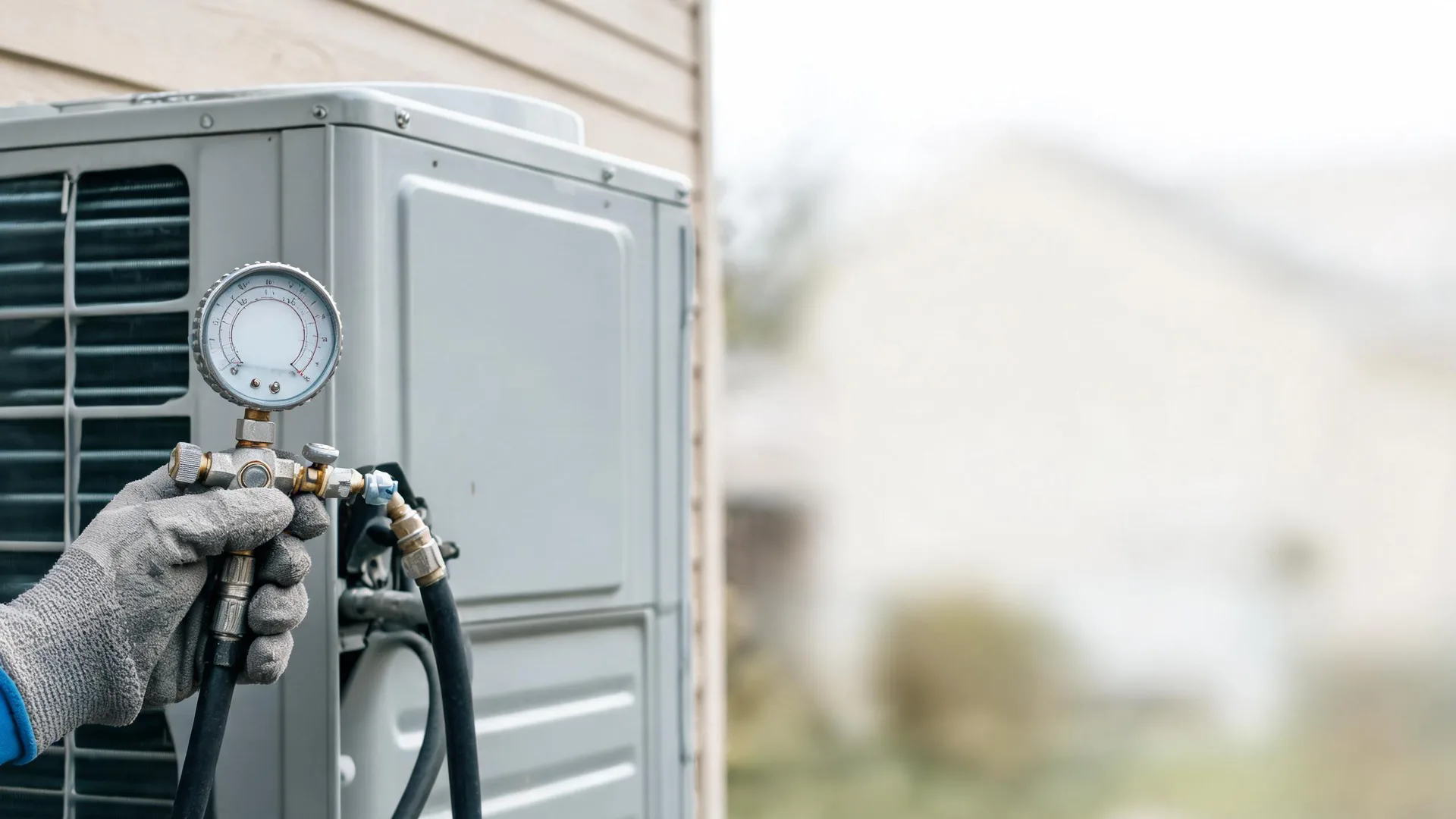
A diagnostic visit starts outside, not inside. A tech checks the outdoor unit first, reading pressures and temperatures off the refrigerant lines to see if the charge is where it should be. Low charge shows up fast on those gauges. So does a compressor that's struggling. From there it's the electrical side, the contactor, the capacitor, the board that tells the reversing valve when to switch. A multimeter finds a weak capacitor in a few seconds, long before it fails outright. If the complaint is ice or poor output, the tech runs the system in both modes to watch the reversing valve actually switch. A valve that's stuck halfway can look fine sitting still. None of this takes guesswork. Each symptom points to a small set of parts, and checking them in order is what tells you which one actually quit.