







A quiet residential street at dusk lined with illuminated two-story brick houses and mature trees.

Heat Pump Repair in Russellville, KY

Tell us about the job

Takes about a minute. No obligation.

RepairHeat PumpLogan County, KY
Step 1 of 2

What ZIP code is the job in?

Logan County sits in a zone that asks real work of a heat pump both ways, heating in the winter and cooling in the summer. That's not a strike against your system. It just means it runs a lot of hours across the year, and parts wear the way they would on any heat pump that works this hard in both directions. Wind comes through here often enough that outdoor units can take a hit, a bent fin or a knocked loose panel, without anyone noticing until the system starts acting up. None of that points to anything exotic. Most of the time the cause is a part you'd find failing in this unit anywhere, and the fix is the one a tech sees every week.

7 months
October through April, your system heats
5 months
May through September, it cools
30°F
the average winter night it heats against
88°F
the average summer afternoon it cools against
Isometric cutaway illustration of a single-story house with a dark gabled roof, showing interior rooms with ductwork leading to an indoor air handler and an outdoor condenser unit connected by lines on the ground outside.
Your system heats October through April and cools May through September.

NOAA nClimDiv, 1991–2020 normals

A heat pump that's struggling to hit temperature will keep drawing on parts already under strain.

Call before a weak capacitor or a failing contactor takes the compressor down with it.

October and May are when a weak part finally gives out

Cooling runs May through September
Heat runs October through April
69 damaging wind events from 2015 to 2024
Russellville heat pumps run in houses old and newHalf the homes in Logan County were built in 1978 or earlier, half later, and age isn't what decides this repair

Logan County sees damaging wind most years, and that's the main weather this heat pump has to sit through. It's not a pattern that makes Russellville different from the rest of this part of Kentucky. Outdoor units are built to take wind like that, but a bent fin or a loose panel can still happen without anyone noticing until the system starts acting up. Storms also knock out power, and when it comes back on, a heat pump doesn't always restart by itself. If yours went quiet after an outage, that's often a tripped breaker or a control board that needs a reset, not a sign anything exotic is wrong.

Get the usual fix

Nothing about this area is especially hard on it. It's most likely the usual problem with the usual fix.

Find a contractor
A man in a cap, dark shirt and tan work pants, seen from behind, carries a worn duffel bag as he climbs steps toward a dark green front door beside a potted shrub.
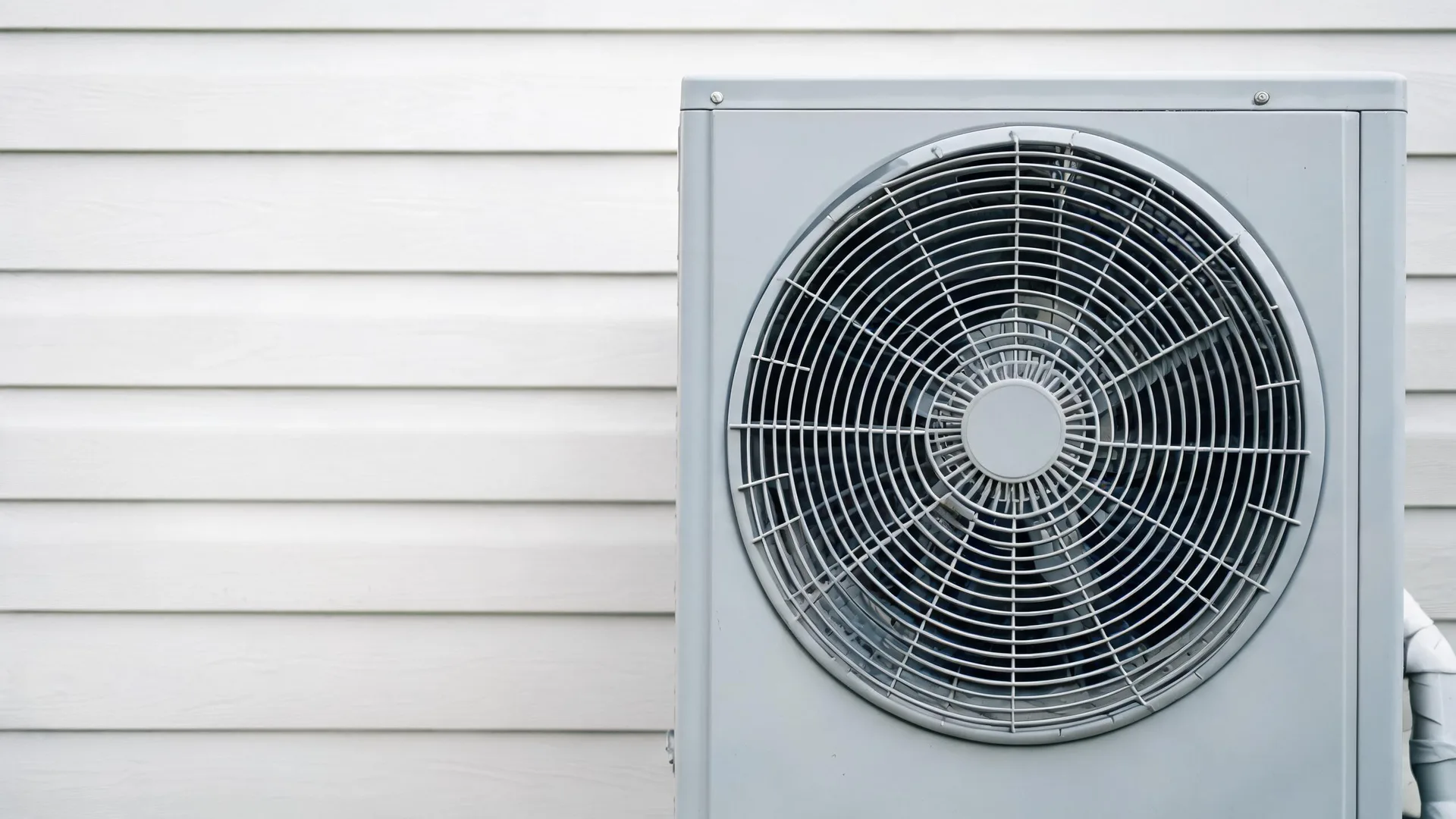
A residential heat pump outdoor unit mounted on a concrete pad next to a house with gray vinyl siding.

What to check before you pick up the phone

Check the thermostat first. Make sure it is set to heat or cool and the setpoint is actually past room temperature, not sitting right on it. If the filter has not been changed in a while, change it. A clogged filter chokes airflow, and a heat pump starved for airflow will run long and still miss the mark. Walk outside and look at the outdoor unit. Clear away leaves, mulch or anything piled against the sides, and make sure nothing is blocking the top where it needs to breathe. Ice on the outdoor coil outside of a normal defrost cycle, or the coil caked in dirt, is worth telling the tech about. Check the breaker panel too, especially after a storm or outage. A heat pump that runs but only blows air that feels barely warm or barely cool is pointing at the refrigerant side, not the thermostat or the filter, and that is also worth saying on the phone. None of this fixes a weak capacitor or a bad control board. It just rules out the simple stuff before anyone has to come out and find it themselves.

The reversing valve is the part unique to this machine

A heat pump switches between heating and cooling with a reversing valve, and that part alone sees more work than anything in a furnace or an AC unit that only runs one direction. When it sticks, the system can get stuck blowing cold air during a heating cycle, or it won't switch over at all. That's a part failure specific to heat pumps, not something a straight cooling system ever has to deal with.
The compressor rarely fails on its own

By the time a compressor fails, something else usually drove it there. A dirty outdoor coil, a low refrigerant charge, or a weak run capacitor all make the compressor work harder than it should, and run that way long enough and it burns out. Catching the smaller failure early is what keeps it from turning into a compressor replacement.

Short cycling is one of the clearest signs something's wrong. The system kicks on, runs for a couple minutes, shuts off, then starts again shortly after, instead of running a full steady cycle. That puts a lot of wear on the compressor every time it restarts. Hissing or bubbling near the indoor or outdoor unit usually means refrigerant escaping somewhere in the line, and that's not something that fixes itself or waits politely. A heat pump that runs constantly without ever quite hitting the setpoint is struggling, not just slow. Grinding, squealing or a hard metallic bang when the system starts are all worth calling in before they turn into something that leaves you without heat or cooling altogether.

A diagnostic visit starts outside at the unit itself, not with a clipboard of guesses. The tech checks refrigerant pressure, looks at the reversing valve, and watches how the compressor behaves when it starts up. Electrical readings come next, the capacitor, the contactor, the control board, since a reading out of range points straight at the failing part instead of leaving it a guess. Airflow gets checked too, both the indoor coil and the outdoor coil, because a system can have good refrigerant and bad electrical and still underperform if air isn't moving through it right. Most of this takes measurements, not guesswork, and a tech walks away from it able to name the part that's failing rather than just the symptom you called in about.